


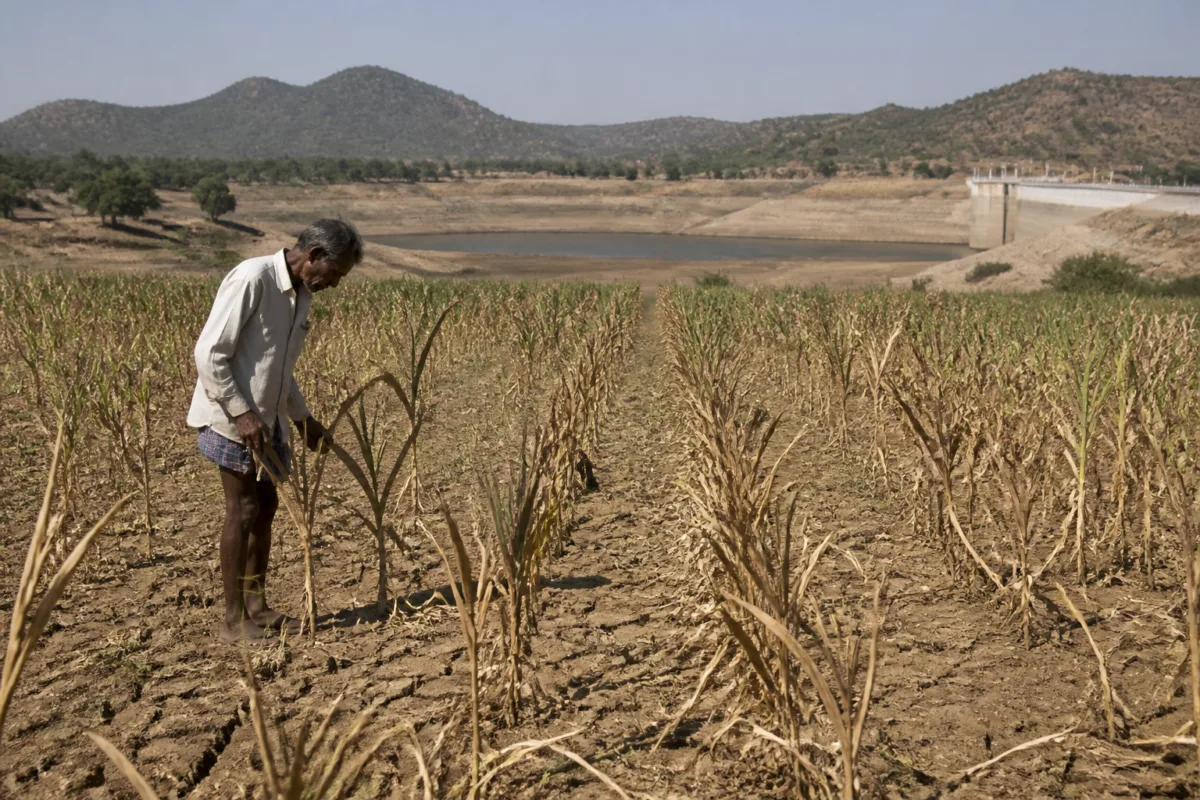
Hassan’s drought crisis has spread across all eight taluks, with crops damaged over 2,71,260 hectares and farmers still waiting for compensation from the Karnataka government. The district administration has sought approximately Rs 375 crore under State Disaster Response Fund guidelines to cover the losses.
Hassan, Holenarasipur, Channarayapatna, Arasikere and Arkalgud were declared drought-affected in the first phase. Alur and Belur were added later, followed by Sakleshpur. The declarations came despite Hassan’s proximity to the Western Ghats, as deficient rainfall reduced cultivation and damaged standing crops.
According to the agriculture department, agricultural crops were damaged across 1,72,973 hectares, while horticultural crops were affected over another 98,287 hectares. Against a sowing target of 2,86,186 hectares, only 1,73,409 hectares were cultivated because of rainfall shortages.
Arasikere recorded the highest estimated crop loss at Rs 109 crore, followed by Channarayapatna at Rs 101 crore, agriculture department joint director P Ramesh Kumar said. Compensation will be distributed after the government releases funds, according to the report.
Maize cultivation has been particularly affected. The crop was targeted across 1.1 lakh hectares, but white spiral disease affected nearly 76% of it. Ragi cultivation also suffered damage, adding to the losses faced by farmers in the district.
The drought has also exposed the connection between rainfall failure and reservoir-based irrigation. Paddy fields remained uncultivated because irrigation water was not released from the Hemavathi, Yagachi and Vatehole reservoirs. The shortfall meant that farmers could not use the planned cultivation area even before accounting for damage to crops that had been sown.
A central drought assessment team visited Hassan on October 3 and 4 to inspect the extent of crop damage. The district administration has already submitted its compensation proposal, but the funds had not been released when the report was published.
The delay also affects farmers enrolled in crop insurance. A total of 2,10,494 farmers have registered under the Fasal Bima Yojana, but eligible beneficiaries are still awaiting insurance payments. The pending assistance now covers both disaster compensation sought from the government and crop insurance claims linked to the damaged harvest.
The next step is the release of funds by the state government, after which the district administration is expected to distribute compensation to eligible farmers under the applicable SDRF guidelines.

