


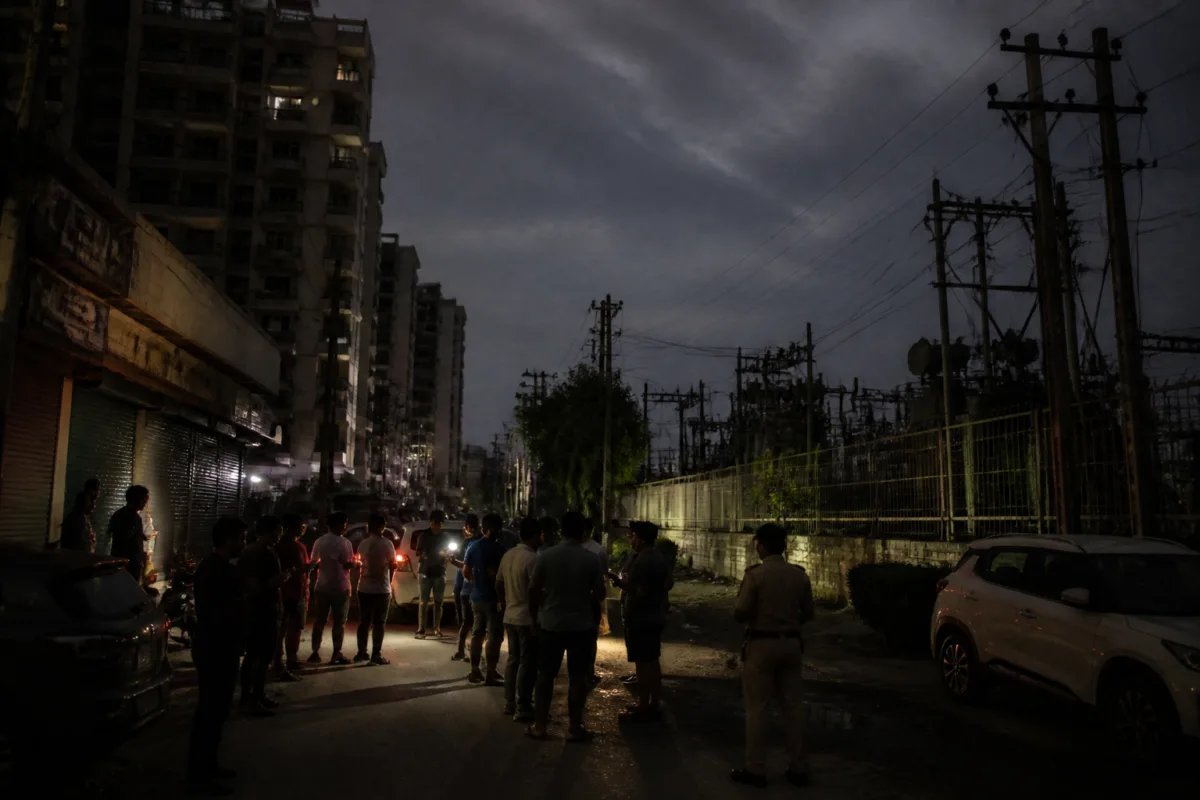
The Haryana power crisis has disrupted electricity supply across 23 districts, leaving around eight to 10 lakh homes without power and affecting water supply, schools, companies and industrial units in Gurugram, Faridabad, Palwal, Rewari and nearby areas. The disruption follows a strike by around 40,000 electricity employees protesting against privatisation.
The impact has been particularly severe in Gurugram and Faridabad. Around half of Gurugram and about 50 villages in the surrounding area were reported to be facing blackout-like conditions. In Faridabad, electricity supply was affected across nearly half the district for more than 24 hours, with homes, markets and industrial areas reporting disruptions.
The strike has also affected schools. More than 10 schools in Faridabad announced a holiday on Friday after power supply remained disrupted for over 24 hours. School managements informed parents through mobile messages, saying that normal academic activities were being affected by the outage.
Residents in several parts of Gurugram and Faridabad took to the streets as the disruption continued. In Gurugram, residents of Rajendra Park blocked Railway Road on Thursday evening after electricity remained unavailable since morning. Hundreds of people gathered on the road and raised slogans against officials and employees of the Dakshin Haryana Bijli Vitran Nigam. Police reached the spot and cleared the road after about an hour following an argument with residents.
In Faridabad, protests and road blockades were reported at Lakhani Chowk, Saran Chowk, the Ballabgarh-Tigaon Road, Parvatiya Colony, the Number Two electricity office and Pyali Chowk. Residents also gathered at substations in Sector 2, Ajronda, NIT-5, Palla and Kheri Gujaran. Villagers in Jharsetli blocked the National Highway, while residents in NIT-3 blocked traffic at Masjid Chowk. Police were deployed at several locations as tensions continued late into the night.
The disruption has affected water access in residential areas because pumps and household inverters stopped working. In Faridabad, the electricity department’s control room received around 2,500 complaints, but they could not be resolved immediately. Around 50 feeders were reported to be out of service, while production in some industrial units was reported to have fallen by about 50 per cent.
According to the report, 28 11-kilovolt feeders and one 33-kilovolt substation were shut in Gurugram, affecting electricity supply to around 50,000 homes. Faridabad reported 43 affected 11-kilovolt feeders and two 33-kilovolt substations. Palwal reported 30 affected 11-kilovolt units and three 33-kilovolt substations, while 22 feeders were reported shut in Rewari. Narnaul reported 40 closed 33-kilovolt substations and 21 affected 11-kilovolt feeders.
The report said one feeder generally supplies electricity to between 1,500 and 2,000 homes, indicating the scale of the disruption. Substation security was increased and police personnel were deployed in view of the possibility of confrontation at electricity facilities.
The managing director of the Dakshin Haryana Bijli Vitran Nigam was sending hourly updates on closed feeders and substations to Haryana Chief Minister Nayab Singh Saini and Power Minister Anil Vij. The updates are intended to track the effect of the strike and the restoration situation across southern Haryana.

