


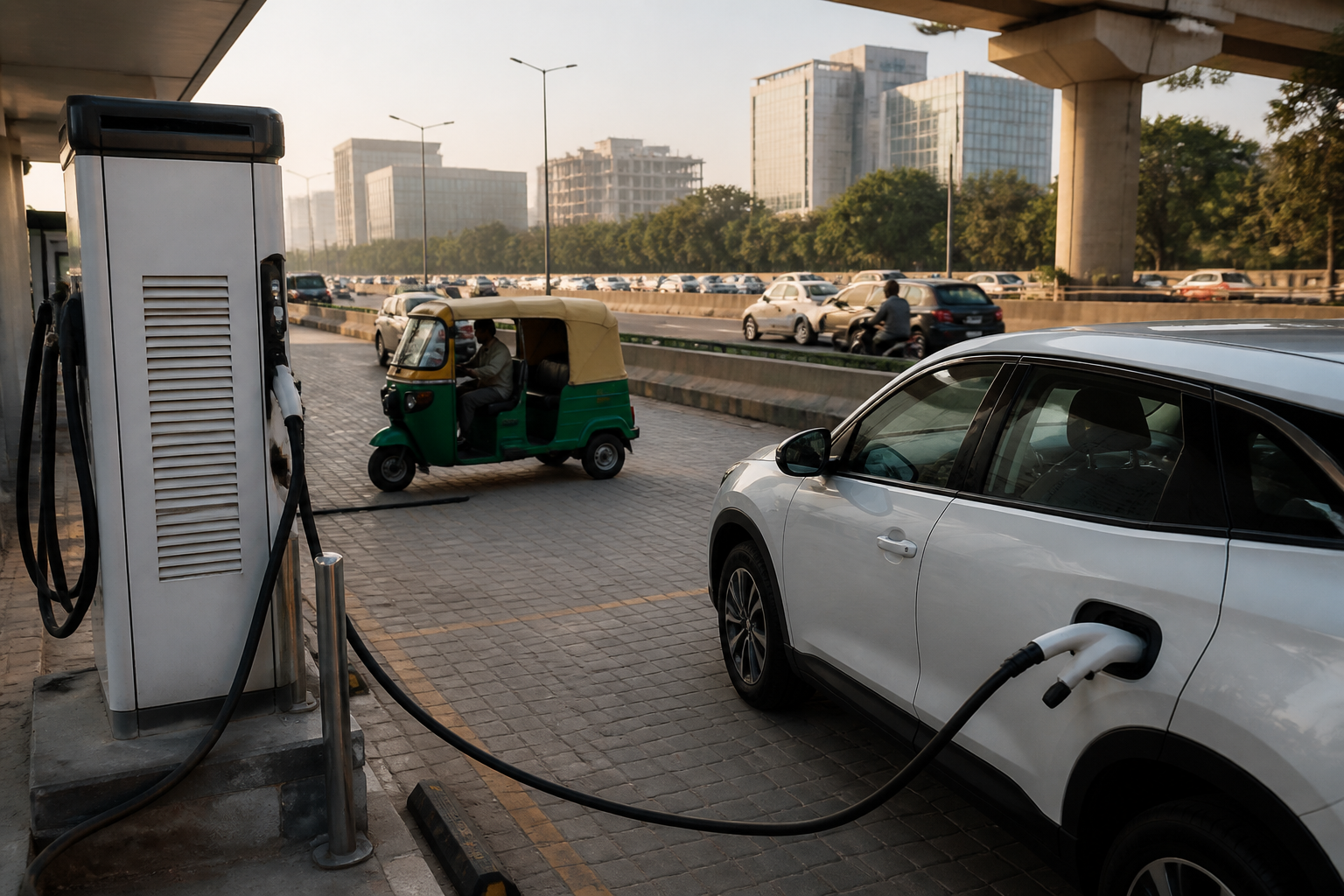
Gurugram is preparing to expand its electric vehicle infrastructure with a reported target of 1,067 charging stations and battery-swapping points as the administration seeks to reduce dependence on petrol and diesel vehicles and address air pollution in the city.
The plan includes a survey of potential locations across the Millennium City. According to Live Hindustan – NCR, the Municipal Corporation and district administration departments are examining petrol pumps, boosting stations, community buildings and major highways for installing the facilities.
The proposed locations include the Delhi-Jaipur Highway, Dwarka Expressway and Delhi-Mumbai Expressway, along with other highways in and around Gurugram. The reported objective is to make charging and battery replacement more accessible to electric two-wheeler, three-wheeler and car users.
A separate roadmap prepared for the fourth quarter of 2026 sets a target of installing 15 new EV charging points and 25 new battery-swapping points between October and December. The report said a citywide survey is currently under way to assess demand and identify suitable locations.
The expansion comes as the number of electric vehicles in Gurugram continues to rise. The report also said registration-fee exemptions are being provided for electric vehicles priced up to Rs 30 lakh as part of efforts to encourage adoption. It did not specify the number of vehicles that have benefited from the exemption or provide a completion deadline for the wider 1,067-point target.
Battery swapping is expected to be particularly relevant for electric two-wheelers and three-wheelers, which are used extensively for daily commuting and commercial trips. Unlike conventional charging, swapping allows a depleted battery to be replaced with a charged one, potentially reducing waiting time for drivers. The report described the facilities as a response to concerns over vehicles running out of power during journeys.
The charging expansion has also been linked to Gurugram’s air-quality targets. The administration is working towards an additional 10 per cent reduction in air pollution by December 2026, with a stated aim of bringing the average air quality index down to 170. The reported targets also include limiting PM2.5 to 81 micrograms per cubic metre and PM10 to 170 micrograms per cubic metre.
The report attributed previously activated charging points to official figures from the Bureau of Energy Efficiency, but did not provide the existing citywide count or identify the agencies responsible for operating the new facilities. The next steps identified in the report are the completion of the location survey and implementation of the fourth-quarter charging and battery-swapping targets.
