


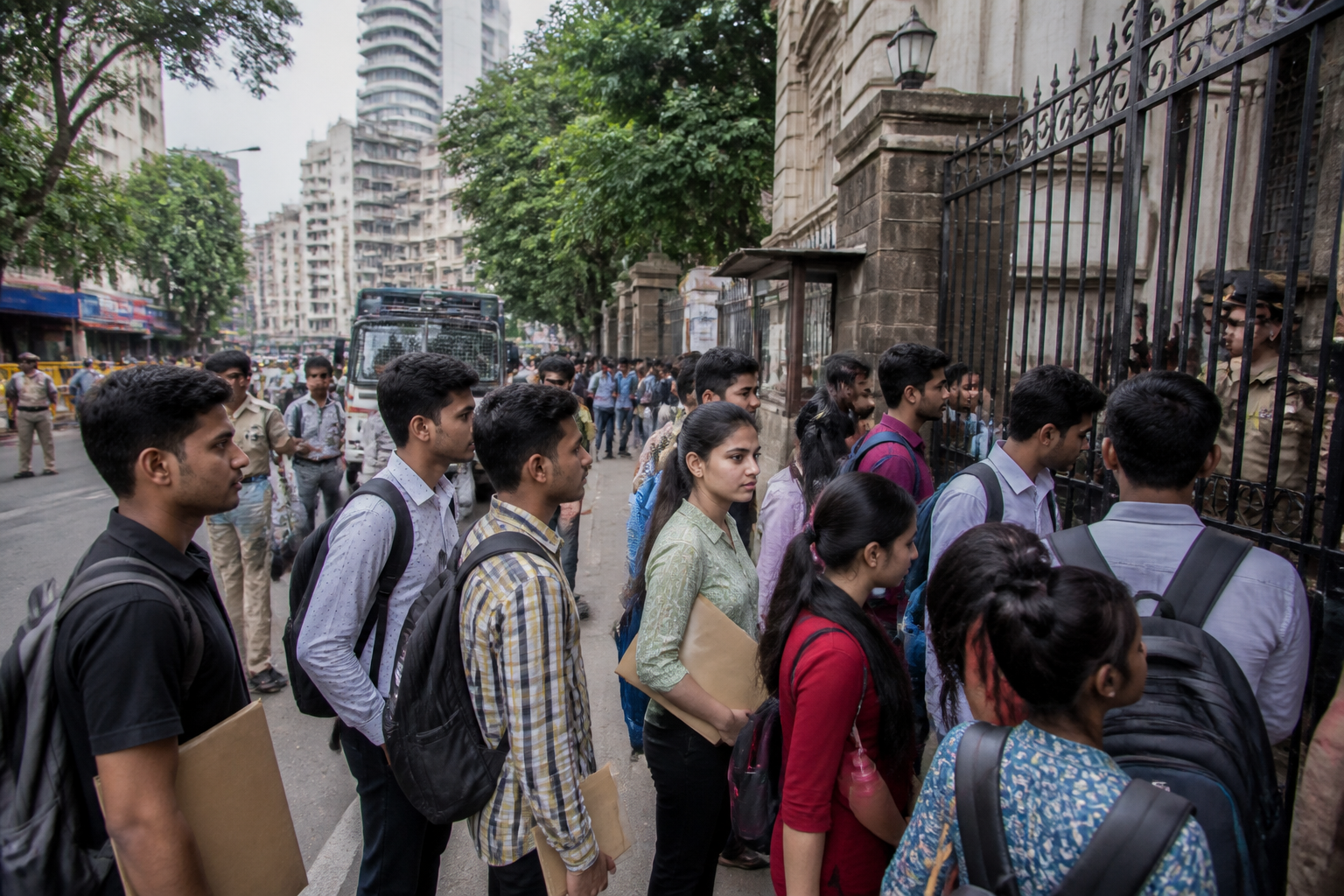
Maharashtra has raised annual hostel and living allowances for Scheduled Tribe students in major cities to Rs 80,000, a day after tribal students who marched from Nashik to Mumbai were detained and sent out of the city following protests over hostel facilities and conditions in ashram schools.
The state cabinet approved the revised assistance under the Pandit Deendayal Upadhyay Swayam Scheme for Scheduled Tribe students pursuing higher education outside government hostels. For students studying in Mumbai, Navi Mumbai, Thane, Pune, Pimpri-Chinchwad and Nagpur, the annual allowance has increased from Rs 60,000 to Rs 80,000.
The revised amount includes Rs 42,000 for food, up from Rs 32,000; Rs 28,000 for accommodation, up from Rs 20,000; and Rs 10,000 as a subsistence allowance, up from Rs 8,000. The assistance is transferred directly to eligible students’ bank accounts through the Direct Benefit Transfer system.
Officials said the Swayam Scheme was introduced in the 2016-17 academic year because the number of Scheduled Tribe students enrolling in different courses had increased while the capacity of government hostels remained insufficient. The scheme supports students who pursue education after Class 12 and do not secure admission to government hostels.
The cabinet also increased annual grants under the Bharat Ratna Dr Babasaheb Ambedkar Swadhar Yojana. The scheme covers Scheduled Caste and Neo-Buddhist students who are eligible for government hostels but cannot obtain admission. Students studying in Mumbai, Pune, Pimpri-Chinchwad, Navi Mumbai, Thane and Nagpur will now receive a total annual grant of Rs 80,000, divided into food, accommodation and subsistence components of Rs 42,000, Rs 28,000 and Rs 10,000 respectively.
The Swadhar assistance is available to students in Classes 11 and 12 and those enrolled in post-Class 12 vocational and non-vocational courses. It is intended to cover food, accommodation, subsistence costs and educational materials. Allowances have also been increased for students studying in other parts of Maharashtra, although the source report did not specify the revised amounts for those locations.
The cabinet further approved an increase in the honorarium of superintendents, cooks, helpers and watchmen working in 2,388 aided hostels for Scheduled Caste students. These hostels are run by voluntary organisations under the Social Justice and Special Assistance Department.
The decisions followed a protest by tribal students who had travelled from Nashik to Mumbai, beginning their march on September 28. Their demands included better facilities in tribal hostels and ashram schools, an inquiry into student deaths and action on scholarship and basic-amenity concerns. The students had been staying at the Congress party’s Tilak Bhavan office in Dadar after they were denied permission to assemble at Azad Maidan.
The students sought to meet Governor Jishnu Dev Varma on Monday to submit a memorandum. On Tuesday, most were taken back to Nashik in vehicles arranged with police assistance. The report said some students left after the state government assured them that their demands would be addressed in the coming months, while others were allegedly taken away forcibly. Congress workers had provided accommodation, food and medical assistance to students who faced health problems after travelling to Mumbai on foot without adequate food arrangements.
The state’s next steps will involve implementing the revised grants and honourarium payments under the respective tribal development and social justice departments.
