


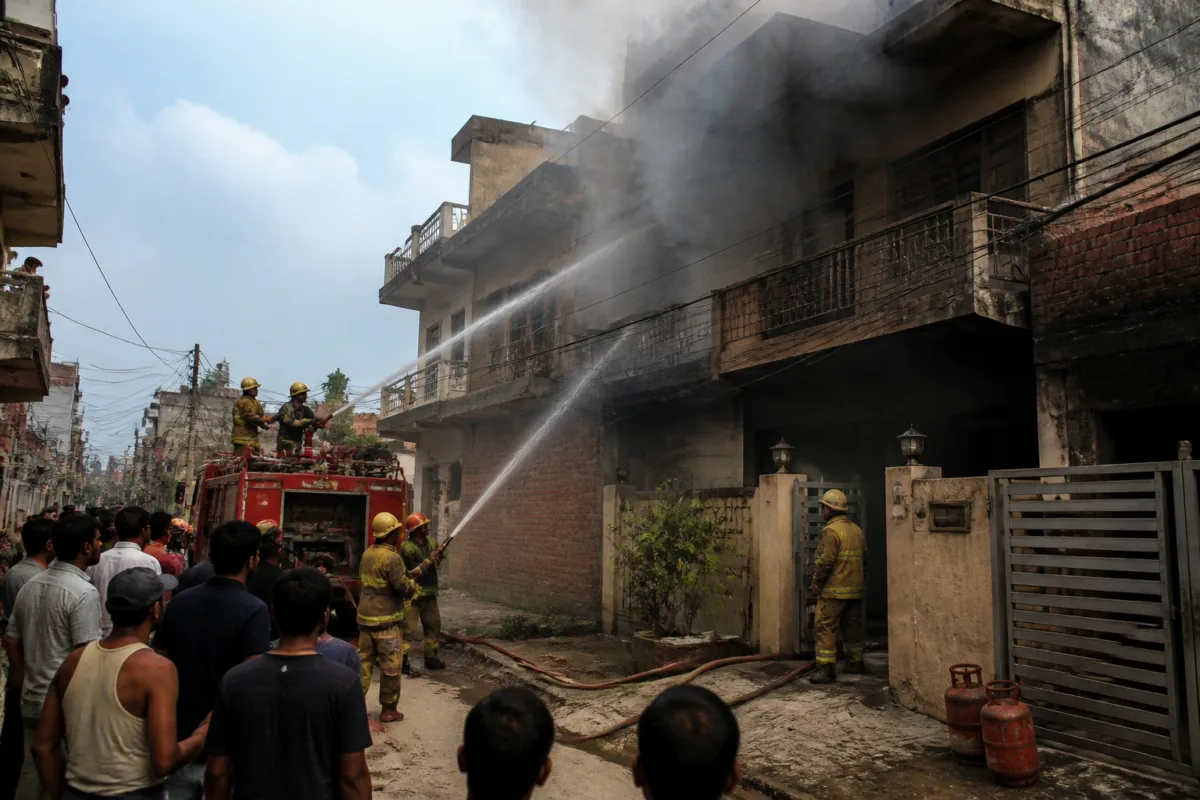
A house fire in Gurugram’s Dhoomsapur village triggered explosions involving two LPG cylinders on Tuesday morning, forcing residents of the densely populated NKV Colony near Jail Road to leave their homes. No one was inside the house when the fire broke out, and no casualties were reported.
The fire was reported at about 10:30 am after flames and thick black smoke began rising from the house. One LPG cylinder reportedly exploded after coming into contact with the fire, while the second cylinder developed a leak and caught fire. The blasts were heard across the surrounding area and caused panic among residents.
The homes in the colony are located close to one another, raising concerns that the flames could spread to adjoining properties. People came out of their houses after hearing the explosions and seeing the smoke. The affected building was unoccupied at the time, which prevented a potentially larger loss of life.
Residents who noticed the fire informed the fire department. Two fire tenders were dispatched from the Sector 29 fire station to the location. By the time fire crews arrived, the blaze had spread from the ground floor to the first floor of the house.
Household belongings, furniture and clothes kept inside the building were destroyed in the fire. Firefighters began spraying water after reaching the site and worked to prevent the flames from spreading to nearby homes. The fire was brought under control after an extended operation.
According to fire officials cited in the report, an electrical short circuit appeared to be the preliminary cause of the fire. The officials also said that the exact cause would be confirmed only after a detailed investigation. The report did not specify the extent of structural damage to the building or whether any neighbouring properties were affected.
The incident highlights the operational risks faced by emergency responders in closely packed residential areas, where homes are near one another and a fire involving domestic LPG cylinders can quickly become a wider neighbourhood emergency. In this case, the absence of occupants and the arrival of two fire tenders helped limit the immediate consequences, while the final cause remains subject to investigation.

