Gurugram Green Belts Target Better Rainwater Management
Gurugram is set to invest more than ₹8.60 crore in developing and maintaining green belts along seven major sector-dividing roads, linking urban landscaping with a practical drainage objective. The planned work covers stretches across sectors 47/49, 47/50, 43/53, 43/52A, 44/52, 45/52 and 46/51, where redesigned green spaces are expected to help manage rainwater during the monsoon.
Three tenders have already been floated for the project, according to officials. Contractors selected for the work will have six months to complete the initial development. Maintenance will then continue for three years, making the project more than a short-term landscaping exercise. The green belts will be designed to receive and absorb some of the rainwater flowing from surrounding roads and built-up areas. At selected locations, the ground level will be lowered to create additional capacity for runoff. This approach is particularly relevant to Gurugram, where rapid construction and extensive paved surfaces have reduced the amount of land available for natural water absorption. During intense rainfall, water can quickly accumulate on roads when drainage networks cannot handle peak flows. The planned Gurugram green belts could provide a relatively simple form of climate-resilient infrastructure by combining vegetation with stormwater management. Their effectiveness, however, will depend on site design, soil conditions, maintenance and whether drainage channels remain free from construction debris and other obstructions.
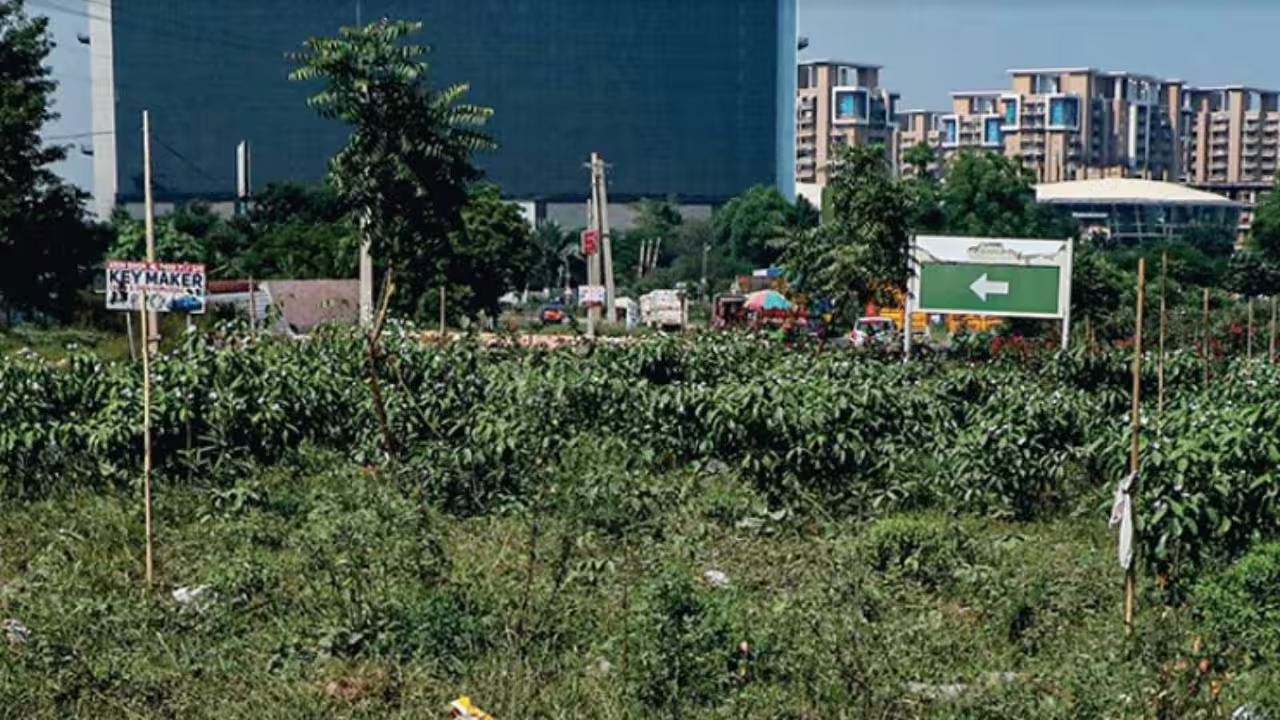
Officials said several existing green areas were cleared ahead of the monsoon, with accumulated material removed and ground levels adjusted at suitable locations. Such preparation can improve the ability of landscaped areas to receive runoff, although it is not a substitute for a well-connected citywide drainage network. The project also includes planting trees and shrubs and maintaining them for 36 months. From an urban planning perspective, the longer maintenance period is significant because newly planted vegetation requires sustained care to survive and establish. Well-maintained Gurugram green belts can provide benefits beyond appearance. Vegetation can help moderate local heat, improve the quality of public spaces and offer additional permeable surfaces within densely developed neighbourhoods. These benefits become increasingly relevant as the city adds housing, offices and transport infrastructure.
For residents, the immediate test will be visible during heavy rainfall. Green spaces must remain functional rather than becoming another area where silt, waste or standing water accumulates. The seven-road programme therefore offers Gurugram an opportunity to connect landscaping with everyday infrastructure needs. Its longer-term value will depend on whether the new green areas are integrated with drainage planning, protected from encroachment and maintained after the initial contract period.