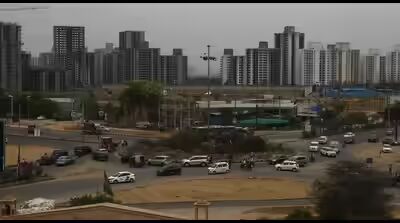
Gurugram Crackdown Reclaims Public Land Across Sectors
Gurugram has launched a coordinated enforcement drive to remove illegal constructions and reclaim public land, following judicial directions that have accelerated action across key residential and planned colonies. The campaign, now expanding across multiple neighbourhoods, underscores growing pressure on rapidly urbanising cities to restore shared spaces and enforce planning norms amid rising density and land stress.
The current Gurugram anti encroachment drive began in established localities and is being implemented in phases, with multiple teams targeting unauthorised structures ranging from boundary extensions and guard rooms to encroachments on parks and road margins. Officials indicate that several such structures persisted despite prior notices, prompting direct intervention to clear right-of-way zones and reopen access to public infrastructure. Urban planners say the initiative reflects a deeper structural issue in high-growth cities, where rapid real estate expansion often outpaces regulatory enforcement. Encroachments—whether by residents, informal operators, or commercial entities—gradually erode planned infrastructure such as footpaths, green belts, and drainage corridors, limiting mobility and increasing environmental vulnerability. The Gurugram anti encroachment drive is also tied to court-led scrutiny of building practices, particularly following concerns around high-density construction formats and their impact on infrastructure capacity. By focusing on licensed colonies as well as mixed-use areas, authorities appear to be signalling a shift towards stricter compliance in both formal and informal urban zones.
However, past experience suggests that removal alone may not ensure long-term change. Similar drives in recent years have reclaimed land for civic use, including water bodies and green areas, but have also highlighted the risk of re-encroachment in the absence of sustained monitoring and clear land-use enforcement. Experts argue that durable outcomes will depend on integrating enforcement with urban design and governance reforms. This includes better demarcation of public land, continuous surveillance, and clearer accountability between municipal and planning agencies. Without these, enforcement risks becoming cyclical rather than transformative. There is also a socio-economic dimension to the issue. Encroachments in Gurugram range from informal livelihoods to high-value real estate violations, making uniform enforcement both complex and sensitive. For lower-income groups, eviction can disrupt access to housing and services, while for formal developments, violations often point to regulatory gaps and weak oversight.
From a sustainability perspective, reclaiming public land can yield significant benefits. Restored green belts, open spaces, and water bodies contribute to urban cooling, improved drainage, and better air quality—critical factors in climate-resilient city planning. Reopening roads and footpaths also enhances mobility and pedestrian safety, aligning with people-first urban design principles. As the Gurugram anti encroachment drive progresses, its long-term impact will likely hinge on whether enforcement is followed by consistent land management and inclusive planning. For a city balancing rapid growth with environmental stress, the challenge is not just clearing space—but ensuring it remains public, accessible, and resilient.