


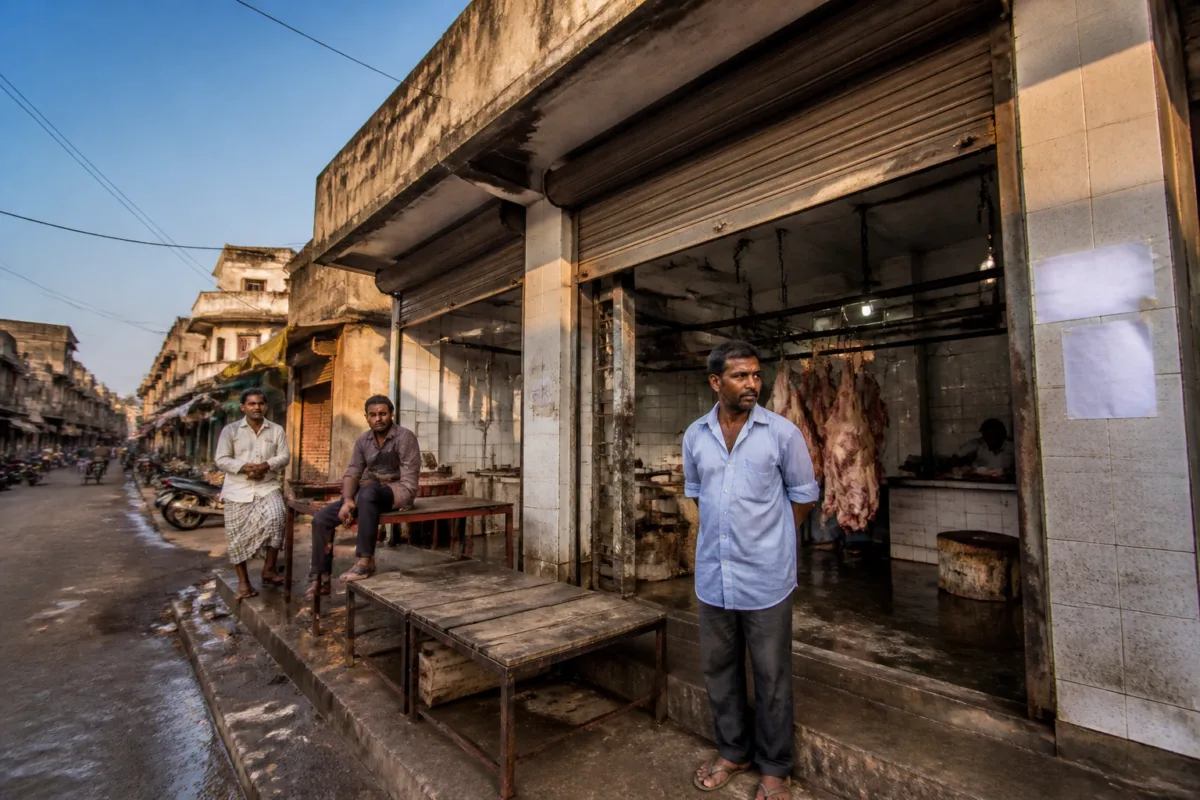
The Gujarat High Court has questioned Radhanpur Municipality’s decision to keep meat shops and slaughterhouses closed for four months, saying a restriction intended to respect religious sentiments could not remove around 30 people from their livelihoods for such an extended period.
The case was filed by slaughterhouse operators and meat sellers from Patan district against Radhanpur Municipality. The petitioners said they held licences from the Food Safety and Standards Authority of India (FSSAI) and challenged an order issued by the municipality’s chief officer on August 17, 2026.
The municipal order directed meat shops and slaughterhouses to remain closed for four months, citing the Paryushan festival and the arrival of Jain monks and visitors. The stated objective was to avoid hurting the religious sentiments of Jain residents and pilgrims visiting the area.
During the hearing, the court said that meat shops could be closed for the duration of Paryushan in line with the Supreme Court’s directions, but questioned the legal basis and reasonableness of extending the closure to four months. The court also asked the chief officer to explain under which law the order had been issued.
According to the report, the court observed that people’s preferences or objections regarding food could not be imposed on others. It also questioned whether the municipality would compensate shopkeepers for the losses caused by the closure. The court reportedly remarked that the municipality appeared sensitive towards animals but not towards people, in reference to the effect of the order on traders and workers.
The petitioners argued that the prolonged closure had removed about 30 people from their daily employment. They also questioned who would compensate them for the period during which their shops remained shut. The dispute therefore involved not only the regulation of slaughterhouses and meat sales, but also the limits of municipal authority over licensed commercial activity and the livelihood consequences of civic orders.
At the latest hearing, Radhanpur Municipality presented photographs and a panchnama stating that all the shops were open. The municipality also told the court that shopkeepers would not receive further notices related to the closure and that no adverse action would be taken against them on this issue.
The court did not consider the four-month restriction reasonable, while accepting that a closure during Paryushan could be permissible under the applicable Supreme Court directions. Following the municipality’s statement that it would not take further action against the traders, the petition was withdrawn, according to the report.
The proceedings leave the immediate four-month closure order without operational effect, while the legal dispute has also highlighted the need for municipal authorities to identify the statutory basis, duration and livelihood implications of restrictions imposed on urban businesses.

