


The Gujarat High Court has directed the state government to collect and submit data on stray dogs and cattle from 17 districts after finding that the information was not available, with the report required before Gujarat’s submission to the Supreme Court on October 30.
The direction was issued during a suo motu hearing concerning stray animals on roads. The Supreme Court has assigned the Gujarat High Court responsibility for examining the issue in the state, according to the report published by Gujarat Samachar.
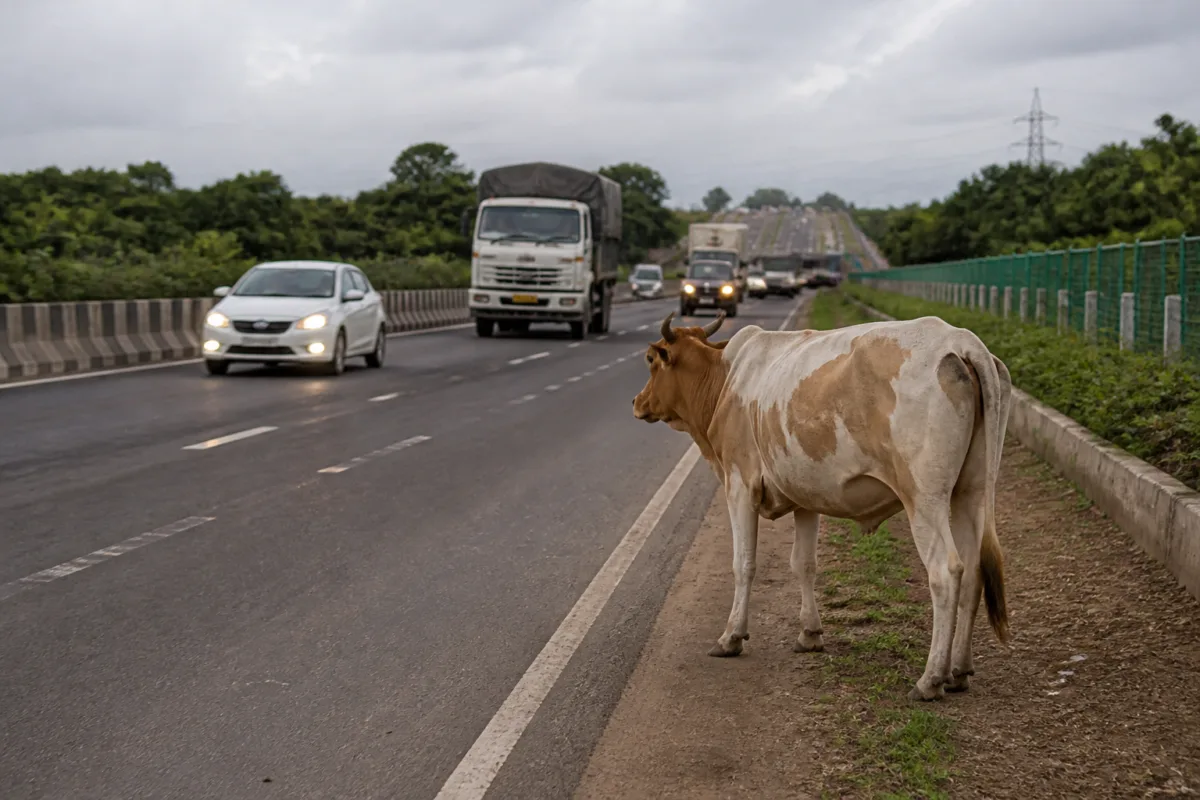
A division bench led by the Chief Justice questioned the National Highways Authority of India (NHAI) about the responsibility for preventing cattle from entering highways and the action taken after serious accidents. The court referred to a recent incident in which cattle suddenly appeared on a national highway and three to four people were killed.
The bench asked which authority would be accountable for such incidents and what steps had been taken by the highway authority to prevent their recurrence. The court also questioned the effectiveness of catching cattle and returning them to their owners without examining whether the animals could be kept away from high-speed roads.
NHAI reportedly told the court that placing cattle in gaushalas or imposing penalties on owners was the responsibility of the state government. In response, the state suggested that owners of captured cattle should face heavy fines. It also proposed installing railings on both sides of highways to prevent cattle from entering the carriageway.
The court noted that cattle may be entering highways to feed on greenery developed along the road. Vehicles on these routes travel at speeds of 100 to 120 kilometres per hour, the report said, leaving drivers with little time to respond when cows or buffaloes suddenly enter the road. The bench observed that even vehicles considered among the safest could not guarantee protection in such a collision.
The court also distinguished between cattle and stray dogs while considering possible measures. Barriers may help restrict cattle movement, but the bench noted that similar measures cannot prevent dogs from reaching highways. This raises separate enforcement and coordination challenges for highway agencies, local administrations and animal-control authorities.
The missing data from 17 districts is central to the court’s next review. Without district-level information on the number of stray dogs and cattle, accident patterns and the authorities responsible for capture, sheltering, penalties and prevention, the scale of the highway safety problem remains difficult to assess.
The Gujarat government has been directed to gather the information and place it before the High Court by October 30, when the Supreme Court is due to receive the state’s report. The hearing will determine what data has been compiled and what further measures may be required from the agencies responsible for road safety and stray-animal control.

