


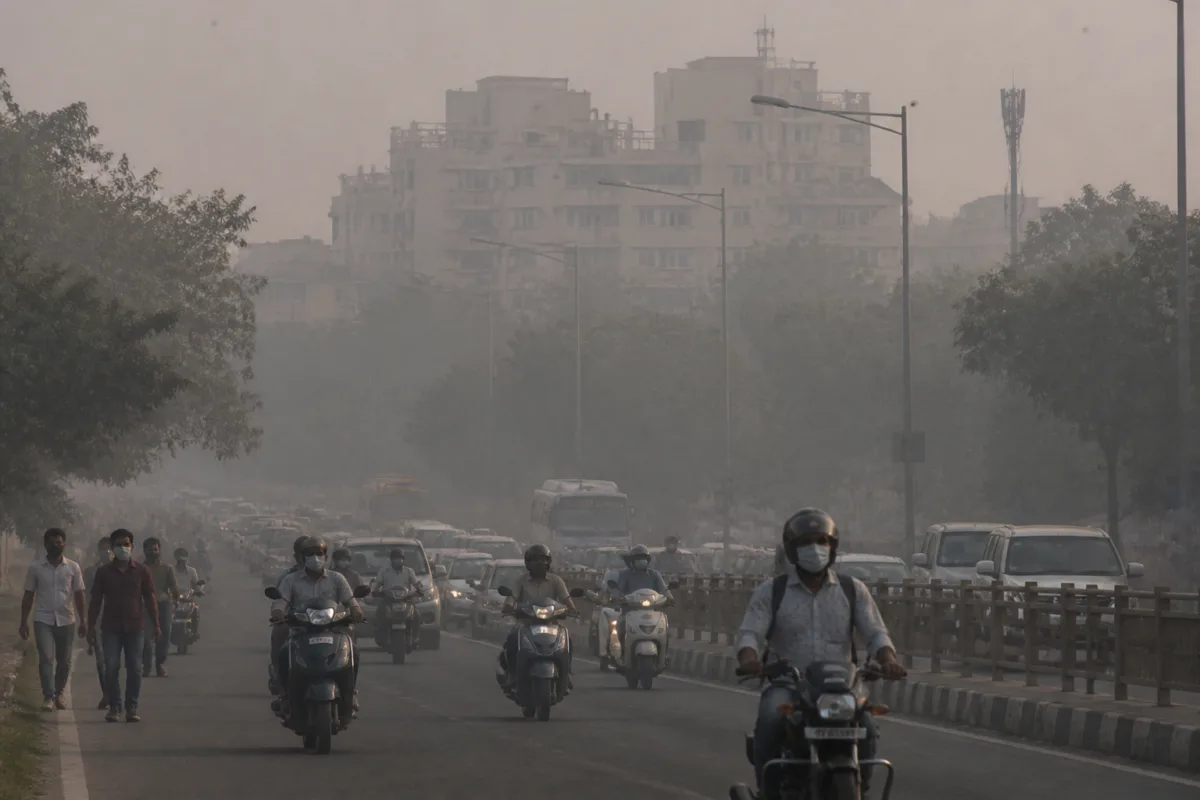
Gujarat’s air quality reportedly deteriorated to hazardous levels after Diwali fireworks, with Vadodara recording an average Air Quality Index above 1,100, followed by Rajkot, Surat and Ahmedabad, according to a report by Nav Gujarat Samay. The report attributes the deterioration to extensive firecracker use across the state during the festival night.
The report says Vadodara recorded the worst air quality among the major cities covered, with its average AQI crossing 1,100. It also cites an AQI of 1,041 in Rajkot, 932 in Surat and 636 in Ahmedabad. These figures, if confirmed by the relevant air-quality monitoring authorities, would indicate a sharp deterioration from normal urban air conditions and a serious short-term pollution episode.
The reported pollution was linked primarily to smoke from fireworks. The article says the concentration of fine particulate matter, including PM2.5, increased substantially after the celebrations. Such pollution can reduce visibility and worsen breathing conditions, particularly for children, older people and residents with existing respiratory illnesses. The report says doctors advised people to avoid unnecessary outdoor exposure and use masks.
The reported pattern also shows how a common urban activity can create sharply different pollution burdens across cities. Vadodara, Rajkot, Surat and Ahmedabad have different urban forms, traffic patterns, industrial profiles and monitoring locations, but the supplied report does not provide enough information to establish why the cited readings varied so widely. It also does not specify whether the figures represent hourly peaks, daily averages or readings from individual monitoring stations.
That distinction is important because AQI figures need to be read alongside the time of measurement, pollutant concentration, monitoring location and method used to calculate the index. The supplied report does not name the monitoring agency or provide a government bulletin, station-level reading or other primary document supporting the numbers. The figures should therefore be treated as reported claims pending confirmation from the relevant air-quality authorities.
The episode highlights the need for timely public information when pollution rises sharply after large festivals. Residents need clear, location-specific advisories on outdoor activity, vulnerable groups and changes in air quality through the day. Municipal bodies and pollution-control authorities also need monitoring data that can distinguish temporary spikes from broader city-wide deterioration.
Nav Gujarat Samay’s report places Vadodara at the centre of Gujarat’s post-Diwali pollution episode, with Rajkot, Surat and Ahmedabad also recording severe conditions. Confirmation of the cited readings, the monitoring stations involved and the duration of the spike will be necessary to establish the full scale of the event.

