


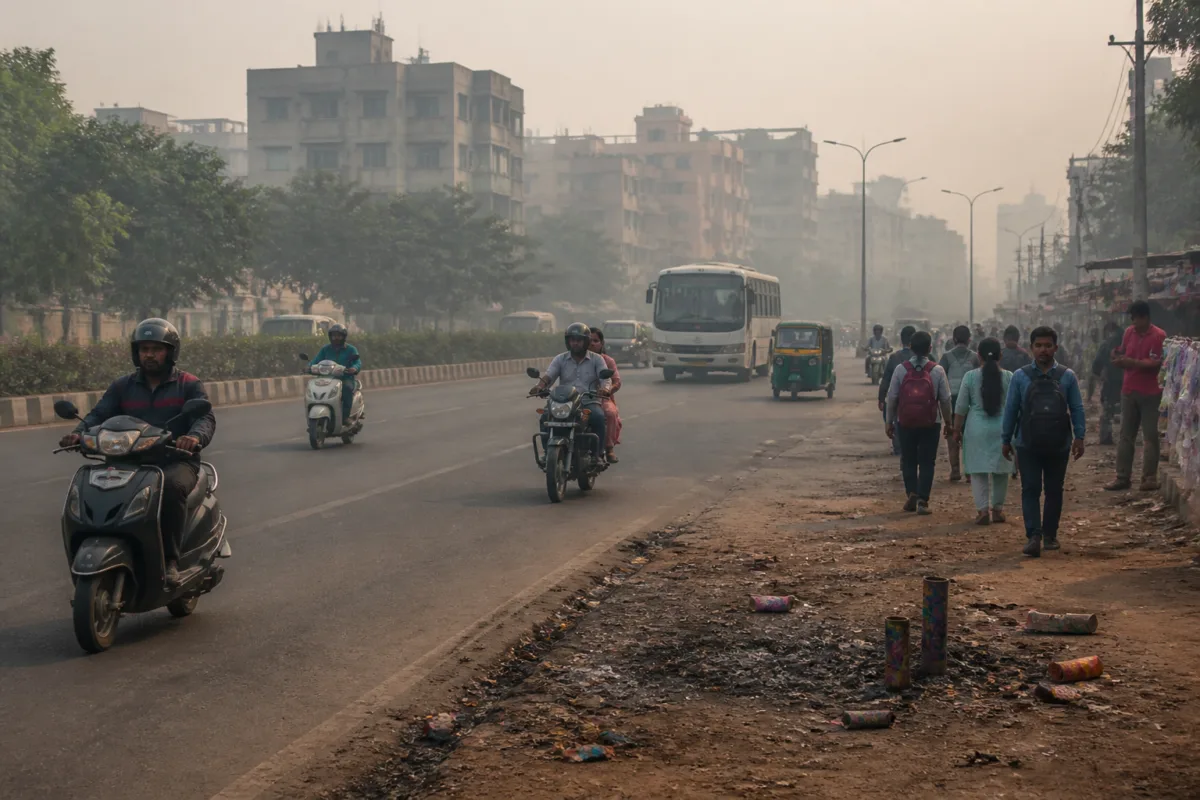
Bhubaneswar’s air quality moved into the ‘poor’ category after Diwali celebrations, with the city recording an average Air Quality Index (AQI) of 206 at 11.30 am on Monday, according to officials. The deterioration was attributed largely to firecracker use, including continued bursting late into the night despite restrictions on the permitted time window.
The Central Pollution Control Board classifies AQI readings between 201 and 300 as poor. The category is one level above ‘moderate’, which covers readings between 101 and 200, and indicates a deterioration in ambient air conditions that is particularly relevant for people with respiratory illnesses, children and older residents.
Niranjan Mallick, chief environmental scientist at the Odisha State Pollution Control Board, said the rise in pollution levels was a concern for vulnerable groups. The official figures showed that nearby Kataka recorded an AQI of 192 at the same time, placing it in the moderate category.
Other locations in Odisha also reported elevated readings. Talcher recorded the highest AQI among the locations listed, at 281, while Bileipada reported 258. Angul recorded 186 and Raurkela 178. The readings place Talcher and Bileipada in the poor category, while Angul and Raurkela remained in the moderate category under the CPCB scale.
Officials linked the sharp rise in pollution in Bhubaneswar, Kataka and Anugola to the use of firecrackers during and after Diwali celebrations. The increase reflects how short-duration emissions from festive activity can affect city-level air quality, particularly when firecrackers continue beyond the period permitted by authorities.
The Odisha government had allowed the use of green or environment-friendly firecrackers between 7 pm and 9 pm on Diwali. However, officials said people continued bursting crackers in Bhubaneswar and Kataka late into the night. The extended activity raised concerns over the duration of exposure to pollutants in residential and urban areas.
The AQI readings provide a snapshot of conditions at 11.30 am on Monday and may change as local pollution levels and atmospheric conditions change. The immediate official concern remains the effect of the deteriorated air quality on children, elderly people and residents with respiratory ailments.

