


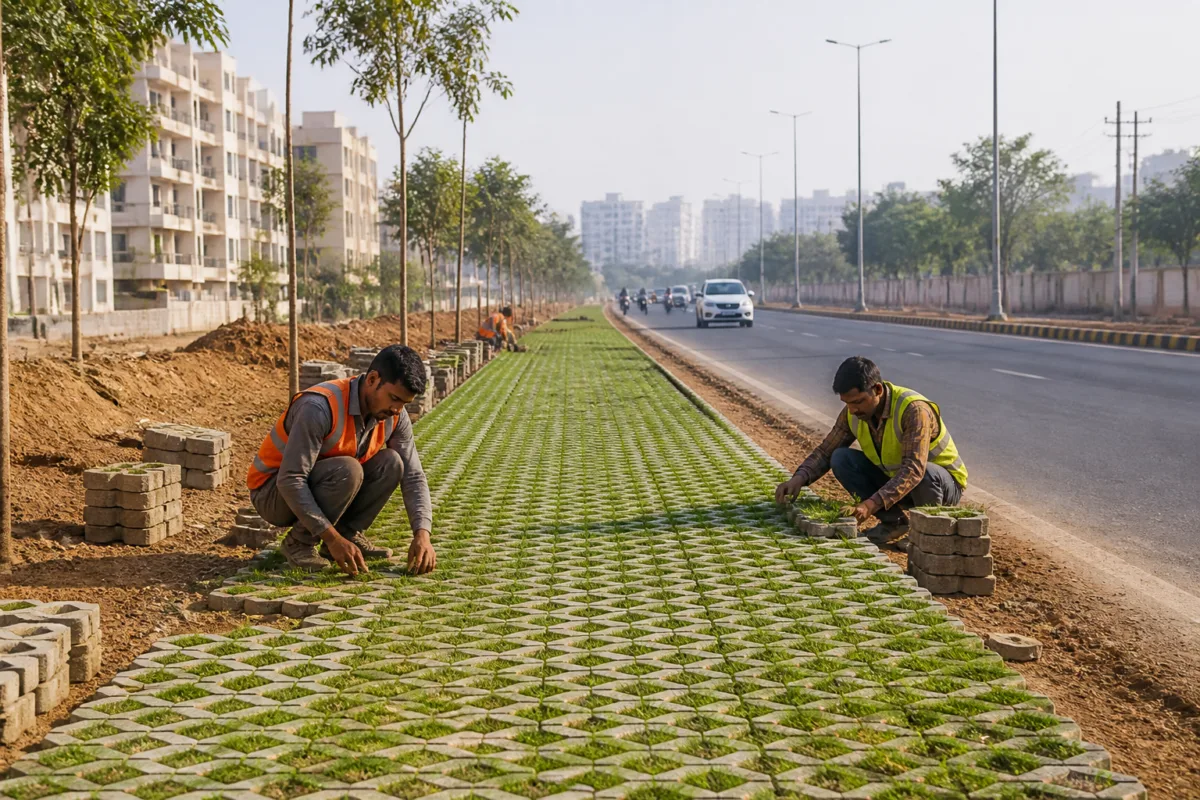
Greater Noida Authority has started installing grass grids along the 130-metre road to reduce dust from exposed roadside soil, increase greenery and allow rainwater to seep into the ground. The initiative has begun on the road connecting Gaur Chowk in Greater Noida West to Sirsa.
The work involves placing interlocking blocks on footpaths and vacant roadside spaces. The blocks have gaps through which grass can grow, while their permeable design allows rainwater to move below the surface instead of remaining on top of paved areas.
The authority said the intervention is aimed at addressing dust generated from open soil along roads. Such exposed patches can become sources of dust when vehicles pass nearby or when wind moves across the surface. Organising these spaces with grass grids is intended to reduce the amount of loose soil available to be carried into the air.
The blocks are being manufactured using a design that combines surface stability with open spaces for vegetation. According to the report, the gaps can support grass growth and permit rainwater infiltration. The arrangement is also expected to assist drainage and groundwater recharge, although the supplied report does not provide measurements of the area covered, the quantity of blocks being installed or the volume of water expected to enter the ground.
The first phase has been taken up along the 130-metre road, which the Greater Noida Authority is also planning to develop as a model road. The road begins at Gaur Chowk in Greater Noida West and extends towards Sirsa. The authority has not specified in the report how long the current installation will take or whether the same treatment will be extended to other roads.
The initiative links roadside design with two persistent urban management concerns: dust from unpaved or uncovered land and the loss of permeable ground surfaces. Instead of leaving roadside gaps as exposed soil, the grass-grid approach is intended to create a surface that can support vegetation while continuing to receive rainwater.
Greater Noida Authority CEO N. G. Ravi Kumar said development work should give special attention to the environment and that grass grids were being used for this reason. The authority has described the work as part of efforts to improve the appearance of the 130-metre road and support environmental protection.
The immediate implementation details, including the total length of the road to be covered, the maintenance plan for the grass and the schedule for any wider rollout, were not included in the report. The next stated milestone is the continuation of the grass-grid work on the 130-metre road as the authority plans its development as a model road.

