


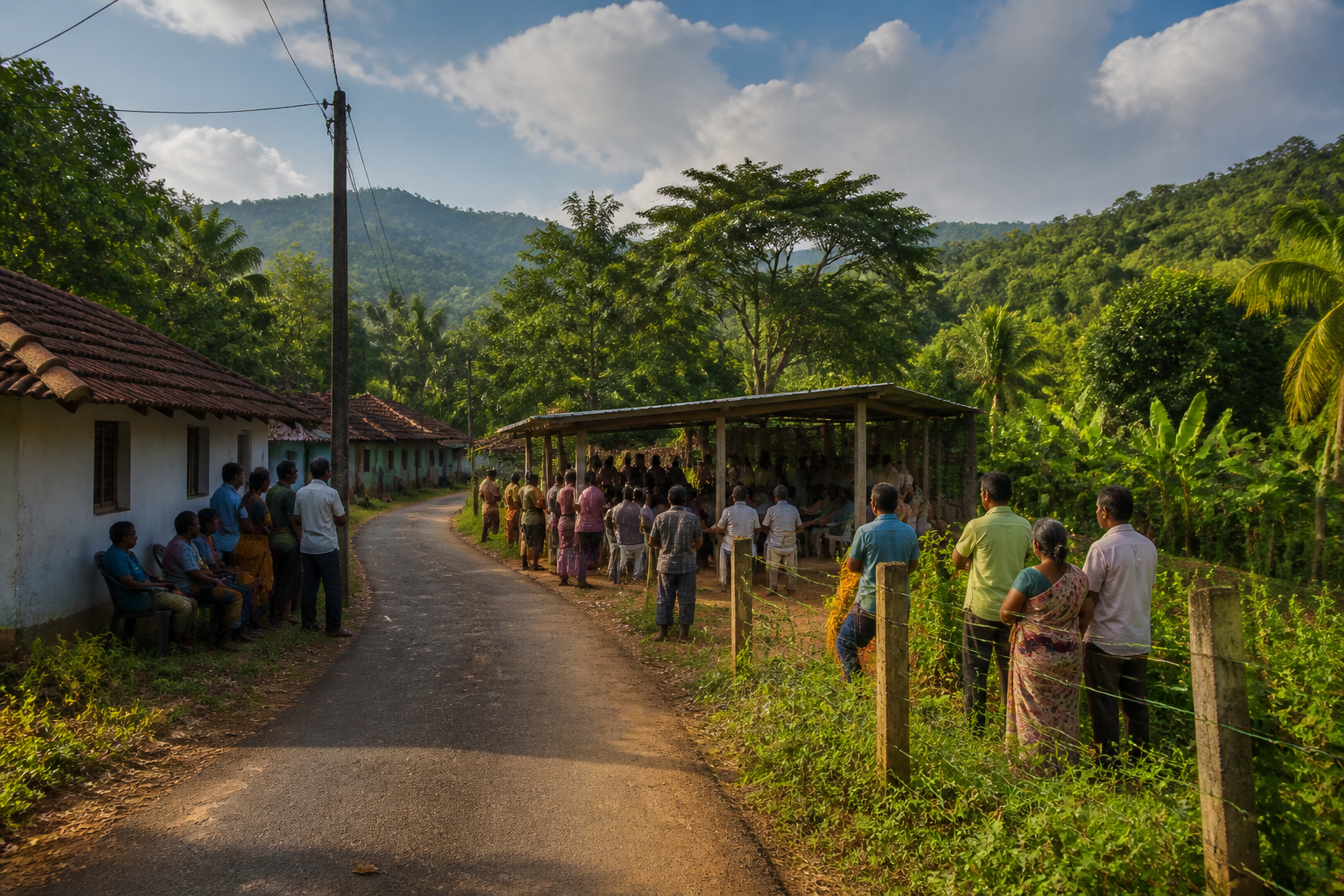
Residents of Mhaisal and Kamarkand in Goa have sought exclusion from the proposed Western Ghats ecologically sensitive area (ESA) list, saying the designation could restrict housing construction, repairs, roads, plantation fencing and other livelihood-related activities.
At a special gram sabha of Kirlapal-Dabhal, villagers passed a resolution demanding that both villages be removed from the ESA proposal. The gram sabha also resolved to forward objections received from residents to the authorities on the same day to meet the deadline for filing them.
“Our demand is that both villages be excluded from the ESA. If the entire villages cannot be excluded, then at least the residential areas and private properties in these villages should be kept out,” a villager said.
Residents said the proposed designation could affect basic amenities and everyday construction activity. “If these villages are brought under the ESZ, residents will not be able to build or repair their houses, roads cannot be built in the villages, and fencing for plantations will not be allowed,” another villager said.
Sarpanch Damodar Bandekar backed the villagers’ position. Their objections come as the Union environment ministry processes its fifth draft notification this year for the Western Ghats ESA in Goa.
The draft proposes 108 Goa villages, covering 1,461 sq km across the talukas of Sattari, Canacona, Dharbandora and Sanguem, for inclusion in the ecologically sensitive area. The proposal has become a point of conflict between environmental regulation and the development needs of communities located within or near the Western Ghats landscape.
The Goa government has opposed the proposed list since 2024. It initially sought the exclusion of 47 villages and later reduced its demand to 21 villages. The state is now seeking a final list containing 87 ESA villages.
Under the draft notification, mining, quarrying and sand mining would be prohibited within the proposed ESAs. Existing mines would have to be phased out within five years of the final notification or on the expiry of their leases, whichever comes earlier.
The draft notification remains open to public objections for 60 days. After the objection period ends, the government will consider whether to issue the final notification. The Kirlapal-Dabhal gram sabha’s resolution adds a village-level objection to the state’s wider effort to alter the proposed list before that process is completed.
