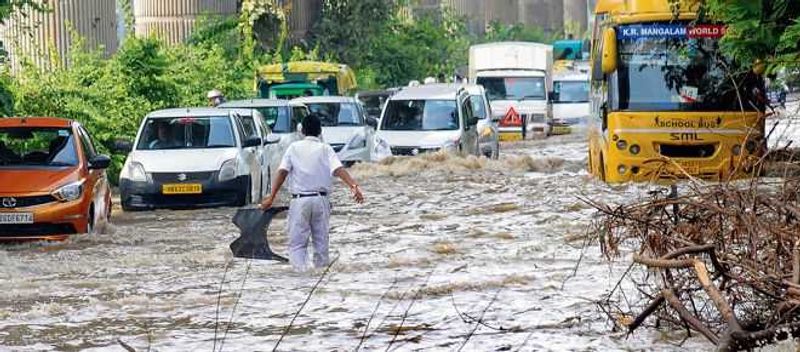
Gurugram’s urban planners have moved to safeguard a critical electricity node ahead of the monsoon, after repeated waterlogging exposed vulnerabilities in the city’s infrastructure network. The metropolitan authority has urged the state transmission utility to construct a protective embankment around a key substation in Daultabad, underscoring growing concerns around flood resilience in rapidly urbanising corridors. The facility plays a central role in powering residential clusters along the Dwarka Expressway as well as older parts of the city. It also supports a major water treatment system that supplies a significant share of Gurugram’s daily drinking water. Any disruption here could trigger cascading effects across essential urban services, from housing to water security.
Officials familiar with the proposal indicate that the recommended intervention involves building a ring-shaped earthen barrier designed to withstand extreme flood levels associated with the Najafgarh drainage basin. Alongside this, plans include waterproofing sensitive electrical infrastructure and installing permanent high-capacity pumping systems to manage excess storm water. These measures are being positioned as long-term safeguards rather than temporary fixes. The urgency stems from last year’s monsoon, when the substation experienced severe inundation, forcing emergency responses such as the deployment of mobile pumps. While the immediate crisis was managed, it exposed systemic gaps in storm water planning and infrastructure resilience issues increasingly common in India’s fast-growing urban regions.
However, the proposal has also revealed institutional friction. Officials from the transmission utility have pointed to overlapping responsibilities, suggesting that storm water management falls within the remit of local urban authorities. This lack of clarity reflects a broader governance challenge in Indian cities, where multiple agencies often share fragmented control over infrastructure systems. Urban development experts argue that such coordination gaps can delay climate adaptation efforts. As rainfall patterns become more erratic due to climate change, infrastructure designed for older weather norms is proving inadequate. In cities like Gurugram where rapid real estate expansion has altered natural drainage integrated planning is becoming critical.
The push for a flood barrier around the Daultabad facility highlights a shift towards climate-resilient infrastructure, but also raises questions about preparedness timelines. With the monsoon only weeks away, implementation speed will be crucial. Beyond this single site, the episode reflects a larger need for Indian cities to embed resilience into core infrastructure planning. Protecting power systems from flooding is not just an engineering task it is central to ensuring continuity of urban life, economic activity, and basic services in an era of increasing climate uncertainty.