


A report of residents from Odisha’s Gajapati district crossing into Andhra Pradesh to vote in rural elections has exposed unresolved questions over electoral rolls and voter identity management along the inter-state border. The claim remains unverified, with local police saying they had no information confirming that people crossed over to cast ballots.
According to the Times of India report, residents of Gangabad panchayat in Rayagada block allegedly voted in Sabakota panchayat under Manjusha mandal in Andhra Pradesh. Haribandhu Karjee, a former sarpanch of Gangabad, said some residents from the Odisha panchayat had reportedly participated in the Andhra Pradesh rural polls conducted on Thursday.
Karjee also claimed that the names of around 200 residents from Gangabad appeared on electoral rolls in Andhra Pradesh. The report did not establish how many people, if any, crossed the border or voted, and it did not provide documentary evidence of duplicate voter registrations.
The allegation comes against the backdrop of competing electoral activity in villages located near the Odisha-Andhra Pradesh boundary. Officials from Ganjam and Gajapati districts had earlier urged residents of border villages not to participate in elections conducted by Andhra Pradesh after learning that some residents allegedly possessed voter identity cards from both states.
The existence of voter identity documents in two states, if confirmed, would raise questions about the maintenance and updating of electoral rolls in border settlements. It would also place the issue within a wider administrative problem: residents living close to state boundaries may interact with institutions, markets and public services on both sides, while their formal electoral registration is expected to remain tied to their ordinary place of residence.
The report identified eight villages in Ganjam district and six villages in Gajapati district as being located close to the Andhra Pradesh border. These settlements require coordination between state and district administrations because electoral disputes can quickly become law-and-order concerns when polling takes place in neighbouring jurisdictions.
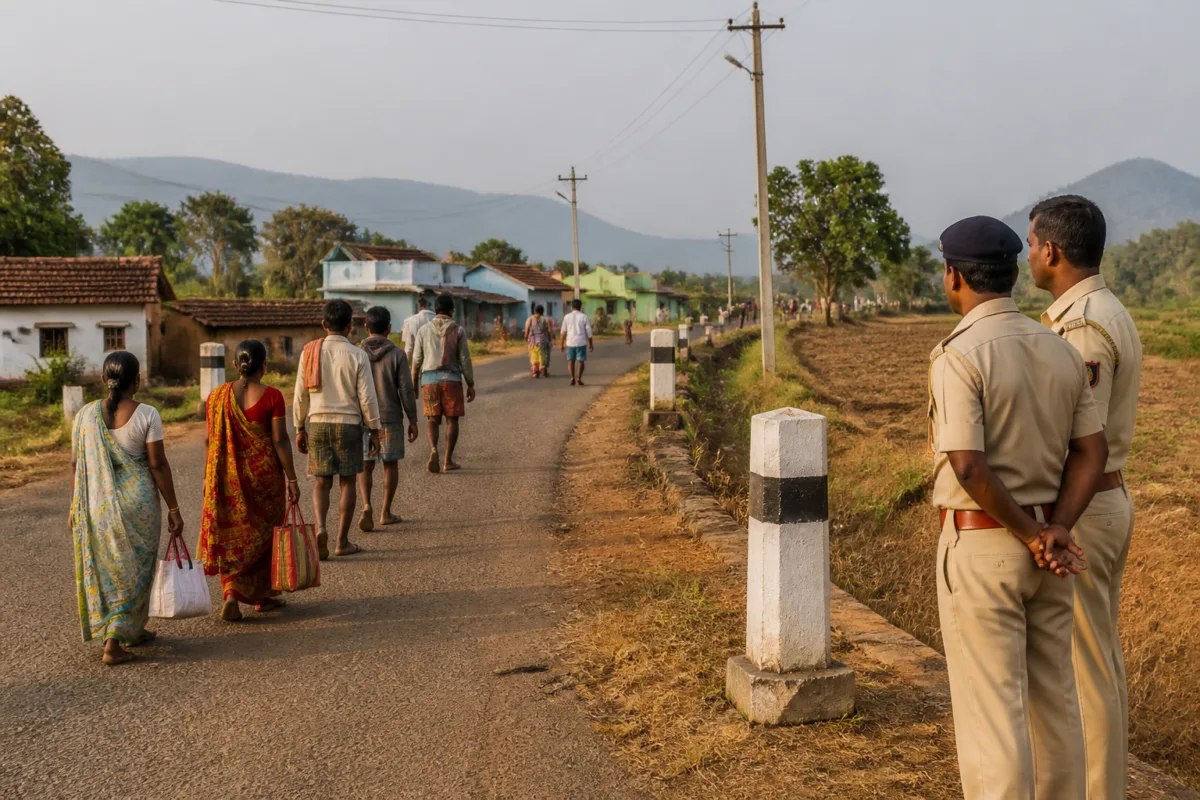
Police deployment was reported along the border to prevent a law-and-order situation. Madhabanand Nayak, the sub-divisional police officer in Paralakhemundi, said personnel were deployed in the area but added that there was no scope for police to know whether people had cast votes in Andhra Pradesh. Police therefore confirmed a security presence, not the alleged voting activity.
The competing accounts underline the evidentiary gap at the centre of the episode. The former sarpanch’s statement indicates a local allegation based on voter-roll information, while the police response makes clear that officials did not have verified information about crossings or voting. The supplied report does not include a response from Odisha or Andhra Pradesh election authorities, nor does it cite a formal roll-verification exercise.
For the claim to be established, the relevant electoral authorities would need to verify the names, addresses and registration details appearing on the rolls in both states and determine whether any voter was registered more than once. Until that process is documented, the allegation should be treated as a reported claim rather than a confirmed account of cross-border voting.

