


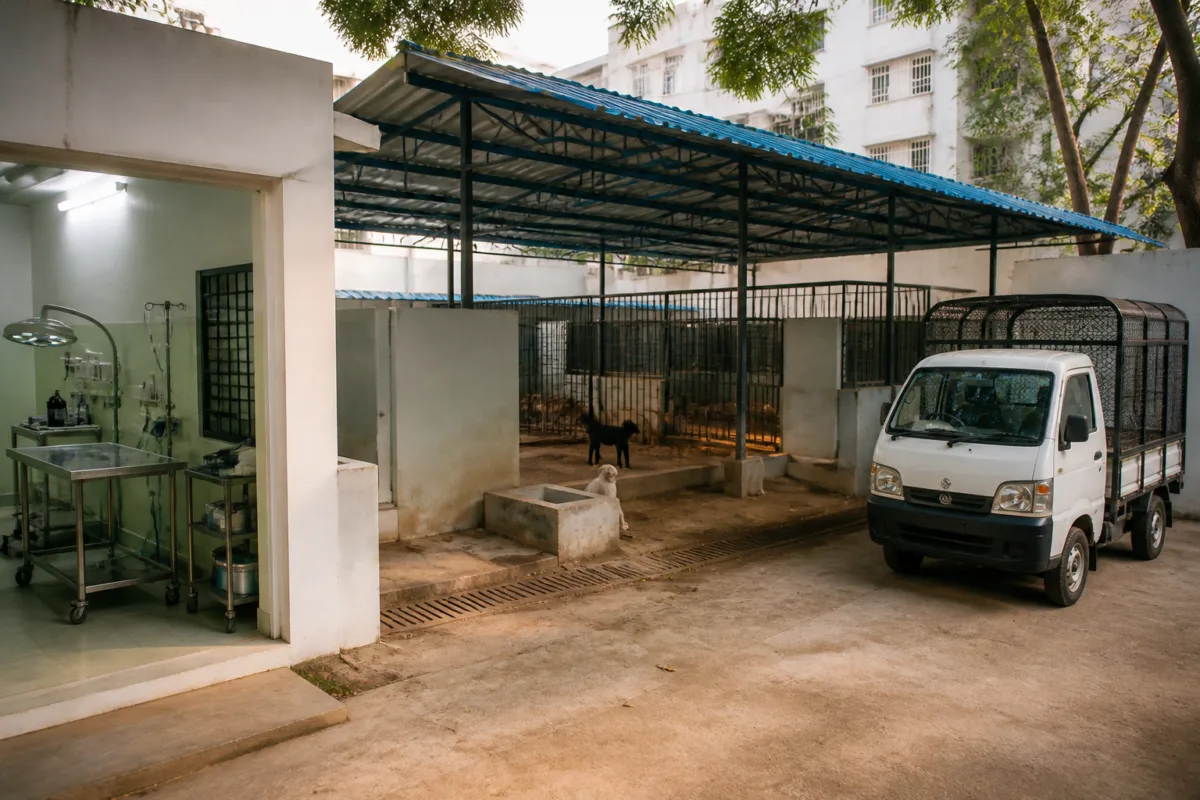
The Fathullaguda Animal Care Centre in Hyderabad is set for faster shelter construction and operational upgrades after Malkajgiri Municipal Corporation Commissioner T Vinay Krishna Reddy directed officials to strengthen stray-dog management, veterinary services and animal welfare procedures during an inspection on Monday.
Reddy reviewed the centre’s infrastructure, services, animal-care arrangements and operational procedures, and instructed officials to expedite the pending construction of the animal shelter. He also directed them to make the centre fully operational at the earliest, according to Telangana Today.
The inspection focused on how the municipal corporation handles captured stray dogs before they are released. Officials were told to implement established sterilisation and vaccination protocols and return the animals to the locations where they were captured, in accordance with prescribed guidelines and regulations.
The commissioner also examined the centre’s veterinary facilities, including ultrasound scanning equipment. Officials were directed to ensure regular maintenance so that the equipment remains operational. The instruction places equipment upkeep alongside shelter construction as part of the centre’s readiness to provide animal-care services.
The condition and maintenance of dog-catching vehicles were also reviewed. Reddy called for regular cleaning and timely repairs to keep the vehicles suitable for field operations. The vehicles are part of the civic system used to capture stray dogs for treatment, sterilisation and vaccination procedures.
The review also covered a proposed electrical crematorium for the hygienic and scientific disposal of animal carcasses. The progress of the facility was examined during the inspection, although the report did not specify its construction timeline, capacity or current stage of completion.
The directions bring several parts of stray-dog management into one administrative review: the construction of a dedicated shelter, the functioning of veterinary equipment, the condition of capture vehicles, compliance with sterilisation and vaccination procedures, and the disposal of animal carcasses. The report did not provide details of the centre’s present capacity, the number of animals it is expected to handle or the deadline for completing the pending works.
The next steps identified in the inspection are the acceleration of shelter construction, continued maintenance of veterinary equipment and dog-catching vehicles, implementation of sterilisation and vaccination protocols, and further progress on the proposed electrical crematorium.

