


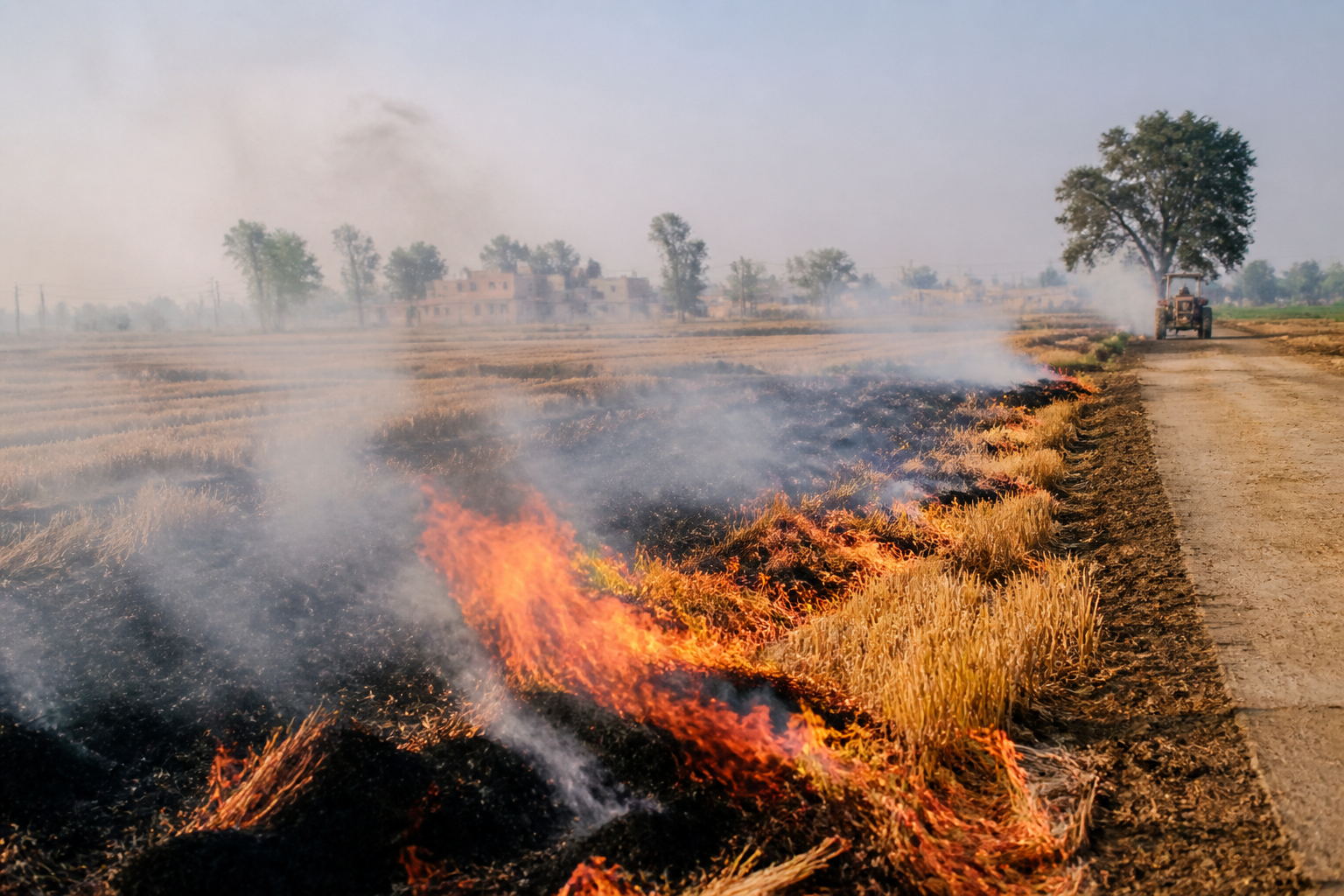
Punjab accounted for 63 of the 137 farm-fire cases reported across six north Indian states since September 15, even as Madhya Pradesh recorded the highest number of incidents on October 1 and began narrowing the gap, according to data cited by the Times of India.
Of the 23 stubble-burning cases reported from three states on October 1, Madhya Pradesh recorded 14, followed by Uttar Pradesh with five and Punjab with four. Punjab’s cumulative share stood at 46% of the cases reported since the start of the crop-residue burning season.
Uttar Pradesh has recorded 37 farm fires since September 15, while Madhya Pradesh has reported 31. Haryana has recorded three cases, Rajasthan two and Delhi one. Together, the 137 incidents have been reported from 39 districts across the six states.
Punjab has recorded farm fires in 10 districts. Amritsar has reported the highest number of incidents in the state, with 38 cases. It was followed by Tarn Taran with nine, Ferozepur with five, Gurdaspur with three, and Moga with two. Faridkot, Fazilka, Hoshiarpur, SAS Nagar, SBS Nagar and Patiala have each reported one case.
The latest figures show that the distribution of farm fires is changing as the season progresses. Punjab continues to lead in cumulative cases, but Madhya Pradesh’s 14 incidents on October 1 were more than the combined cases recorded in Punjab and Uttar Pradesh on that day.
Authorities have also begun taking penal action in Punjab. One first information report has been registered in Patiala under Section 223 of the Bharatiya Nyaya Sanhita for disobedience to an order duly promulgated by a public servant.
Environmental compensation of Rs 60,000 has been imposed in 12 cases, according to the report. Of this amount, Rs 30,000 has been recovered. Red entries have been made in land records in nine cases, while warning and show-cause notices have been issued to four nodal or supervisory officers.
The enforcement measures place individual incidents alongside administrative accountability. The action reported so far includes penalties for alleged crop-residue burning, changes to land records and notices to officials responsible for monitoring or supervision. The reported figures do not provide a state-wise comparison of recoveries or penalties beyond the Punjab cases described.
The six-state count will continue to be shaped by the pace of harvesting and residue disposal in the coming days. For now, Punjab remains the largest contributor to the cumulative total, while the daily figures indicate a rise in activity in Madhya Pradesh. The authorities’ next steps include continued monitoring, action in reported cases and follow-up on the penalties and notices already issued.
