


The Faizan Ahmed case has entered another procedural turn nearly four years after the IIT Kharagpur student was found dead on campus, with the West Bengal government asking Calcutta High Court to allow a fresh medical board to examine conflicting post-mortem findings. The request has reopened a central question in the case: why has the investigation remained unsettled despite a second post-mortem, judicial observations and an order for a court-monitored probe?
The immediate issue before the court is not a final determination of how Faizan died. It is whether a new panel of medical experts should review the evidence before the investigation proceeds further. The state told the court that “diverse medical information” had emerged during the investigation and that a fresh medical opinion was therefore required. Justice Md. Shabbar Rashidi has listed the matter for September 29 to consider the prayer.
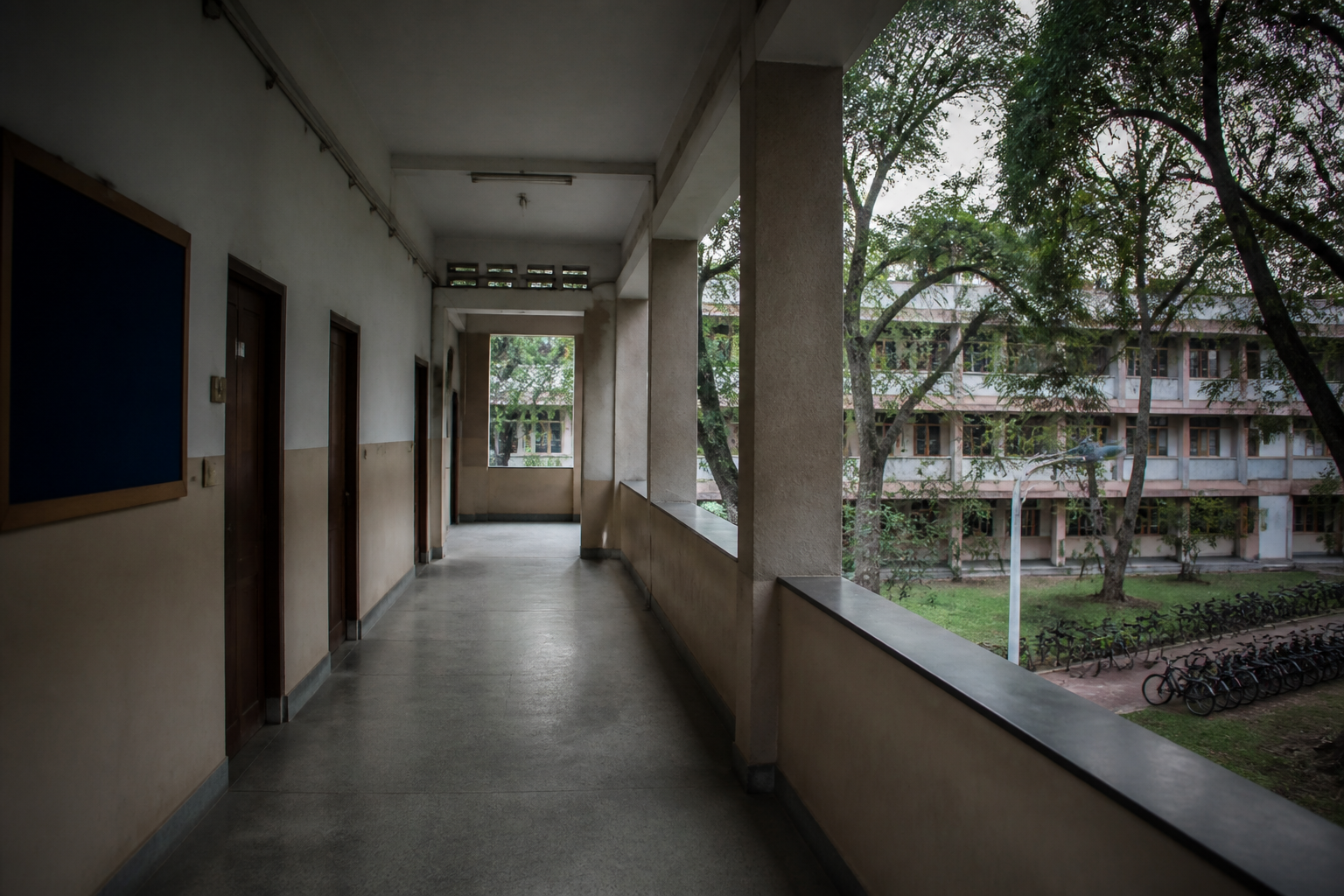
That procedural dispute matters because the case sits at the intersection of campus safety, institutional responsibility and the reliability of forensic systems. Faizan, a third-year mechanical engineering student, was found dead in a room at Lala Lajpat Roy Hall of Residence on the IIT Kharagpur campus in October 2022. His family alleged that he had been murdered by senior students after refusing to participate in ragging. The supplied court proceedings and reports do not establish that allegation as fact, but they show that the circumstances of the death remain contested.
The first post-mortem, conducted at Midnapore Medical College and Hospital in October 2022, was described as inconclusive. After an order of Calcutta High Court, Faizan’s body was exhumed from a burial ground in Dibrugarh, Assam, and a second post-mortem was conducted in May 2023. The second report suggested that the death could be homicidal, creating a sharp difference between the two medical assessments.
That difference is the foundation of the current legal and investigative uncertainty. The state says the discrepancies justify a fresh board. Faizan’s family has opposed the request, arguing that the investigation should proceed on the basis of the second report, which was prepared after the court ordered the exhumation and examination.
## How the Faizan Ahmed case reached this point
The high court had already examined the significance of the second post-mortem. In an order dated June 2, 2023, Justice Rajasekhar Mantha referred to findings that Faizan died from “profuse bleeding causing hemorrhagic shock and combined effect infused over chest and over head”. The observations were attributed to forensic expert Ajay Gupta, who prepared the second report.
Justice Mantha also observed that the death could be “homicidal in nature” and expressed surprise that vital aspects of the body had been missed by the doctors who conducted the first post-mortem, according to the report supplied by Telegraph India. The court subsequently ordered a probe by a CID-led special investigation team in light of the second report.
The second post-mortem was later challenged in proceedings involving IIT Kharagpur. A division bench comprising then Chief Justice T.S. Sivagnanam and Justice Hiranmay Bhattacharyya rejected a petition by the institute in August 2023. The bench also did not accept the state government’s opposition to handing over the investigation to a court-monitored SIT.
In its August 16, 2023, order, the division bench noted that the second post-mortem had been conducted on the court’s orders. It held that the second report would supersede the first and that the investigation should proceed on its basis. The latest request for a fresh medical board therefore does not arise in an empty legal space. It comes after earlier judicial directions had already assigned greater weight to the second report.
## The institutional problem behind a medical dispute
At one level, the disagreement is about forensic interpretation. At another, it is about how institutions respond when the first account of a death is later questioned. A post-mortem report is not merely a medical document in a case involving a student residence. It can determine whether an incident is treated as an unexplained death, an accident, suicide or a possible homicide. When the first report is described as inconclusive and a later report suggests homicide, every subsequent investigative decision becomes more consequential.
The record described in the supplied material shows several institutions operating at different stages: IIT Kharagpur, the hospital that conducted the first post-mortem, the forensic expert who prepared the second report, the state government, the CID-led SIT and the high court. The family’s allegation of ragging places additional pressure on the institutional response, because the question is not limited to what happened in one room. It also concerns whether warning signs, student complaints or campus practices were properly examined.
The information available does not establish whether senior students were responsible for Faizan’s death or whether ragging caused it. It does establish that the family has repeatedly sought a thorough investigation and that the courts have intervened in the handling of the body, the second post-mortem and the investigative structure. That pattern indicates a breakdown in confidence between the family and the authorities handling the case.
Rehana Ahmed, Faizan’s mother, said Assam chief minister Himanta Biswa Sarma had written to his then Bengal counterpart Mamata Banerjee after her son’s death, seeking intervention for a thorough investigation. She also said she met West Bengal chief minister Suvendu Adhikari on July 30 to seek an expedited probe. Her account, as reported, is that there has been no progress despite these interventions.
## Why the fresh board request is significant
The state’s request could be understood as an attempt to resolve medical contradictions before the investigation advances. The additional advocate-general told the court that the decision followed the emergence of diverse medical information during the investigation. In a case where the first and second reports point in different directions, the government may regard an expert board as a way to establish a more defensible medical position.
But the family sees the request differently. Its lawyer argued that the court had already considered the second report and that the investigation should proceed on that basis. The family has questioned why a new board is being sought after four years and after the division bench held that the second report should supersede the first.
This disagreement illustrates the institutional cost of delay. Each additional review may be presented as a safeguard for accuracy, but it can also extend uncertainty for the family and delay the examination of other evidence. The supplied material does not say whether the fresh board has been constituted, what its proposed terms of reference would be, or how long its examination would take. Those details will determine whether the request is a limited clarification or another major stage in a prolonged process.
The court’s role has also expanded because the ordinary institutional chain did not settle the matter. The high court ordered the second post-mortem, assessed its significance, rejected a challenge by IIT Kharagpur and directed a CID-led SIT. The latest hearing shows that judicial supervision has not eliminated disagreement over the evidence. It has instead become the forum in which the state, the institute and the family contest the next procedural step.
## What the case says about campus accountability
Residential campuses are managed environments with defined authorities, security arrangements and internal disciplinary systems. When a student dies inside a hostel, the credibility of the response depends not only on the final forensic conclusion but also on whether the institution preserves evidence, communicates clearly with the family and cooperates with an independent investigation.
The case materials supplied here do not provide a complete account of IIT Kharagpur’s internal actions after Faizan’s death, nor do they establish the findings of the CID-led SIT. They therefore cannot support a conclusion about institutional culpability. They do, however, show that the role of the institute and the handling of the second post-mortem became part of the legal proceedings. That alone makes the case relevant to the broader question of how large residential educational institutions are held accountable when a death occurs on campus.
The unresolved timeline is particularly important. Faizan died in October 2022. The second post-mortem took place in May 2023. The division bench’s order came in August 2023. The state’s latest request was placed before the court in September 2026, nearly four years after the death. The chronology does not by itself prove investigative failure, but it demonstrates how long the dispute over the basic medical account has continued.
For families, such delays carry a practical consequence: the investigation remains focused on procedural and evidentiary questions long after the original incident. For institutions, the case shows that early handling of a death can shape years of litigation. For the justice system, it raises the difficulty of reconciling competing expert findings without allowing procedural review to become an indefinite substitute for investigation.
The next stage will depend on Calcutta High Court’s decision on September 29. The court will have to consider the state’s request for a fresh medical board against the earlier judicial finding that the second post-mortem should supersede the first. Until that decision and any subsequent investigative findings, the precise circumstances of Faizan Ahmed’s death remain unresolved.
