


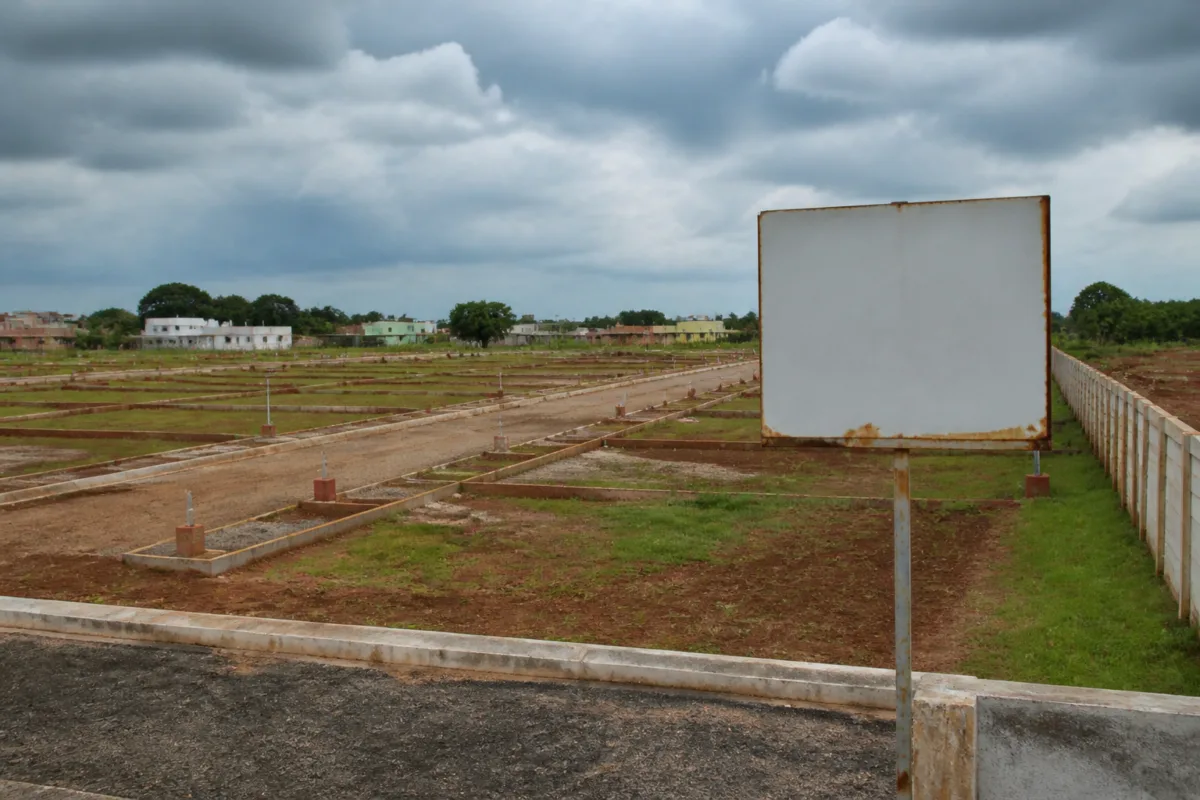
The Enforcement Directorate’s physical possession of the Vitthal Green housing project in Durg has turned a land development scheme into a visible enforcement landmark in the alleged Chhattisgarh liquor money-laundering case. The action concerns a project with 354 residential plots and one commercial plot, but its significance extends beyond the property itself: it shows how alleged proceeds of a public-sector-linked criminal network can be traced into land purchase and development, and how those assets can move from private control to state custody under the Prevention of Money Laundering Act.
The ED said it took possession of the Rs 26.43-crore project at Jangiri village on November 14. Officers erected a signboard and affixed a possession notice at the site. The project was developed by Baghel Developers, a proprietorship firm of Chaitanya Baghel, the son of former Chhattisgarh chief minister Bhupesh Baghel. The agency alleges that Rs 18.90 crore of proceeds from the alleged liquor scam was routed into the development of Vitthal Green.
The distinction between the project’s stated value and the alleged funds invested in it is important. The ED has described Vitthal Green as a Rs 26.43-crore real estate project, while alleging that Rs 18.90 crore in proceeds of crime was invested in its development. According to the agency, Rs 10 crore was infused in cash and another Rs 8.90 crore was entered through firms as bank transactions against cash. The agency alleges that the transactions were intended to project the assets as untainted.
These claims remain allegations in an ongoing money-laundering case. The reported action is an enforcement measure under the PMLA and is not, by itself, a final judicial finding that the project represents criminal proceeds. The ED’s account places Chaitanya Baghel at the apex of the alleged liquor syndicate and says he maintained accounts of its illicit collections. The agency also alleges that he channelled the proceeds into land purchases and development activity.
The underlying investigation began with an FIR registered by the Economic Offences Wing and Anti-Corruption Bureau in Raipur. The ED alleges that a syndicate operated through the state excise department and the Chhattisgarh State Marketing Corporation Limited between 2019 and 2022. Its alleged proceeds exceeded Rs 2,883 crore, according to the agency. The money was allegedly generated through illegal commissions on liquor procurement, the sale of unaccounted liquor through government shops and commissions from distillers.
The case illustrates why land development can become a significant destination for alleged illicit funds. A plotting project converts money into land, roads, layouts and saleable parcels, creating an asset that can be held, transferred or presented as the outcome of ordinary business activity. In this case, the ED alleges that money entered the project through both cash and formal bank entries. The agency’s allegation therefore concerns not only the source of the funds, but also the way those funds were represented within a development enterprise.
The physical possession of Vitthal Green also gives the enforcement action a direct connection to residents and prospective property buyers. The project comprises hundreds of residential plots, meaning that the consequences of the proceeding may extend beyond the person under investigation to purchasers, brokers, lenders, contractors and others connected with the site. The supplied report does not establish how many plots have been sold, whether construction has begun, whether buyers have registered titles or what immediate instructions have been issued to them. Those details remain important to the project’s urban and legal consequences.
For local residents, a possession notice changes the administrative status of a property even when the wider proceedings are not complete. A site that may have been marketed as a conventional housing or plotted development is now identified by the investigating agency as an asset connected to alleged money laundering. The report does not state whether residents have been asked to vacate, whether development work has stopped or how access and maintenance will be managed. It also does not establish whether any third-party claims over individual plots have been adjudicated.
The reported sequence of actions shows the layered nature of the PMLA process. The ED said properties including Vitthal Green and agricultural land in Durg were provisionally attached in November 2025. The PMLA adjudicating authority in New Delhi confirmed the attachment in March 2026. The latest step is physical possession of the housing project. In practical terms, the sequence moves the property from an attachment order to a more visible form of agency control, although the supplied material does not set out the final legal outcome or any subsequent judicial ruling.
Chaitanya Baghel was arrested by the ED in July 2025 and later released after a prosecution complaint was filed before the special PMLA court in Raipur, according to the report. The reported prosecution complaint and release do not resolve the allegations. They indicate that the case has proceeded through investigation and court-related stages while the properties connected by the agency to the alleged proceeds have remained subject to attachment proceedings.
The institutional structure matters because the alleged funds are linked to a system involving government procurement, excise administration and state-run liquor retailing. The ED’s allegation is not limited to an isolated private transaction. It describes a network that allegedly used channels associated with the state’s liquor system to generate commissions and unaccounted sales, before moving part of the money into land and development. The case therefore raises questions about how financial controls in public-facing commercial systems detect irregular collections and how investigators trace those funds after they enter the property market.
The role of the land project is also significant from a governance perspective. A plotted development depends on land acquisition, ownership records, layout activity, financial transactions and eventual dealings with buyers. When an enforcement agency alleges that development capital came from criminal proceeds, each of those layers becomes relevant to the asset trail. The supplied report does not provide the project’s approval history, land title details, sales records or the identities of buyers and financiers. Without those documents, it is not possible to determine the extent to which the alleged proceeds affected the wider project or its purchasers.
The figures in the case show the scale difference between the alleged wider network and the particular asset now in possession. The ED has alleged proceeds exceeding Rs 2,883 crore from the liquor syndicate, while the amount it says was invested in Vitthal Green is Rs 18.90 crore. The project’s stated value is Rs 26.43 crore. These numbers do not establish the final value of the alleged proceeds or the legal status of the property, but they show how a large alleged financial network can be connected to a specific, identifiable urban asset.
The case also demonstrates the importance of distinguishing between ownership, possession and confiscation. The ED has taken physical possession after the attachment was confirmed by the adjudicating authority, but the supplied material does not say that the property has been finally confiscated. Nor does it state how the project will be administered during the proceedings. For the built environment, that distinction affects whether development continues, whether transactions are permitted and how the rights of third parties are treated.
The larger urban question is what happens when real estate becomes the endpoint of an alleged public-sector corruption or money-laundering chain. Land is not a passive store of value once it is converted into a housing project. It creates expectations among buyers, changes the surrounding settlement pattern and depends on public and private infrastructure. A legal action against the asset can therefore produce consequences that are wider than the dispute between the agency and the accused developer.
The available evidence confirms that the ED has taken possession of Vitthal Green, that the project contains 354 residential plots and one commercial plot, and that the agency connects part of its development funding to alleged liquor-scam proceeds. It also confirms the reported path from provisional attachment in November 2025 to confirmation in March 2026 and physical possession in November 2026. What remains uncertain is the status of individual plot buyers, the operational condition of the project and the eventual findings of the special PMLA court. Those are the next facts required to understand whether the enforcement action will remain primarily a property proceeding or become a wider disruption for the Durg housing market.

