


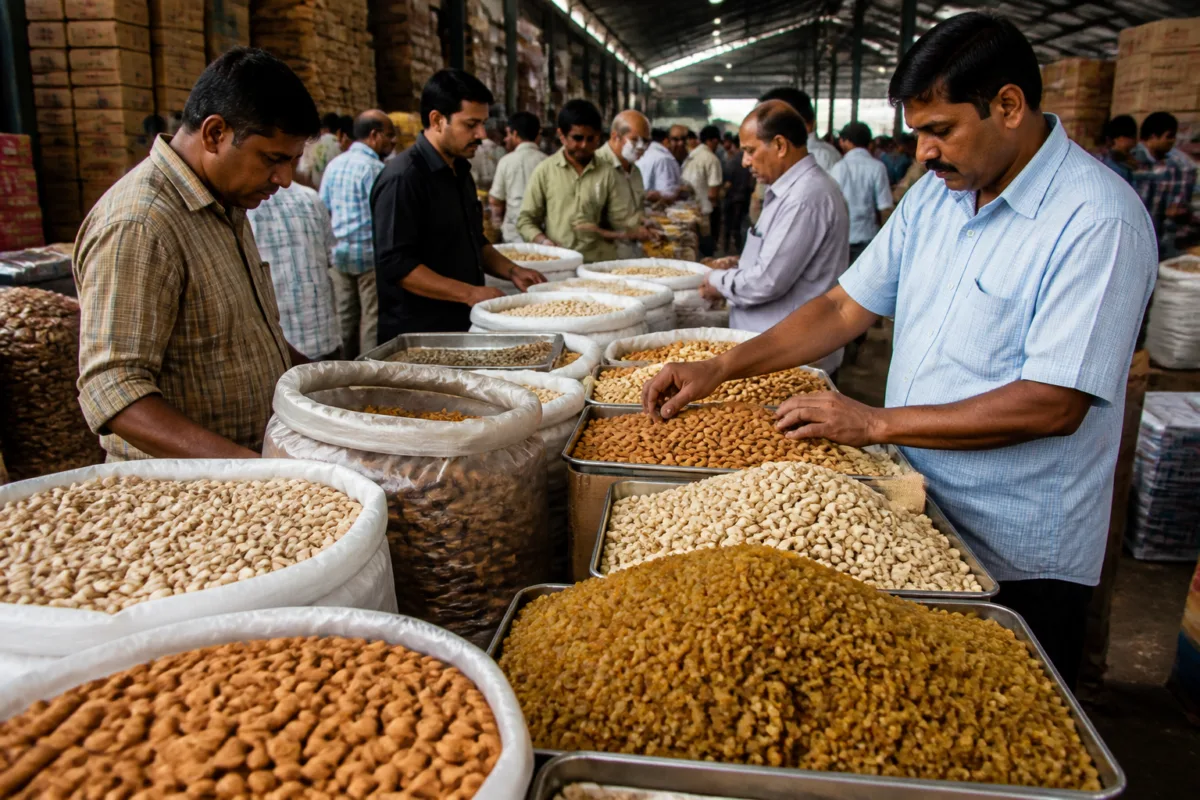
Dry fruit prices have risen sharply ahead of Diwali 2026, pushing festive sales at Navi Mumbai’s APMC wholesale market down to between 10 and 15 per cent of usual levels, traders told Mid-Day. Almonds and pistachios have recorded some of the steepest increases as import costs, freight charges and supply disruptions affect the market.
Almond prices have climbed to about Rs 950 per kg from nearly Rs 750 per kg last year, while pistachios are selling at approximately Rs 1,500 per kg compared with around Rs 1,200 previously. Traders said the increase is not uniform across every variety, and cautioned that social media claims suggesting that all dry fruits have become unaffordable are misleading.
Gopal Mutha, partner at Bhagirath Mutha and Company, attributed the price pressure to three factors: geopolitical tensions involving Iran, lower crop production and higher international freight costs. Traders cited an estimated 30 per cent decline in crop production. Mutha also reported that freight charges, earlier ranging between 500 and 800, had risen to nearly 8,000, although the basis of that comparison still requires confirmation.
The disruption is also affecting the time taken for imported consignments to reach Mumbai. Dinesh Rameshlal Dang of Kandhar Traders at the APMC Market in Vashi said dry fruits that previously arrived from Afghanistan in around 20 to 25 days were now taking nearly three months. He attributed the longer transit time to the Iran conflict, elevated freight costs and increased import expenses.
Dang said consumers were reluctant to buy dry fruits in the quantities they had purchased during earlier Diwali seasons. The reported fall to 10-15 per cent of normal festive business covers products including almonds, cashews, raisins, pistachios, apricots and figs, which are commonly purchased for household consumption and gifting.
The effect is visible beyond wholesale prices. Retailers are reporting that customers are reducing the size of their purchases or moving away from premium dry-fruit boxes altogether. In festive gifting, some buyers are choosing blueberries, strawberries, blackberries, homemade chocolates and traditional Diwali faral instead.
Navi Mumbai’s APMC market is a key wholesale point for the movement of food commodities into the Mumbai region. The reported disruption shows how international supply conditions and freight costs can reach urban consumers through wholesale markets, retailers and seasonal purchasing patterns. The current account, however, does not establish how long the higher prices or reduced arrivals will continue.
Traders’ immediate concern remains the Diwali sales period, when demand for dry fruits normally rises because of gifting and household purchases. The market’s next indicator will be whether supplies improve and whether retailers see a recovery in festive buying before the season ends.

