


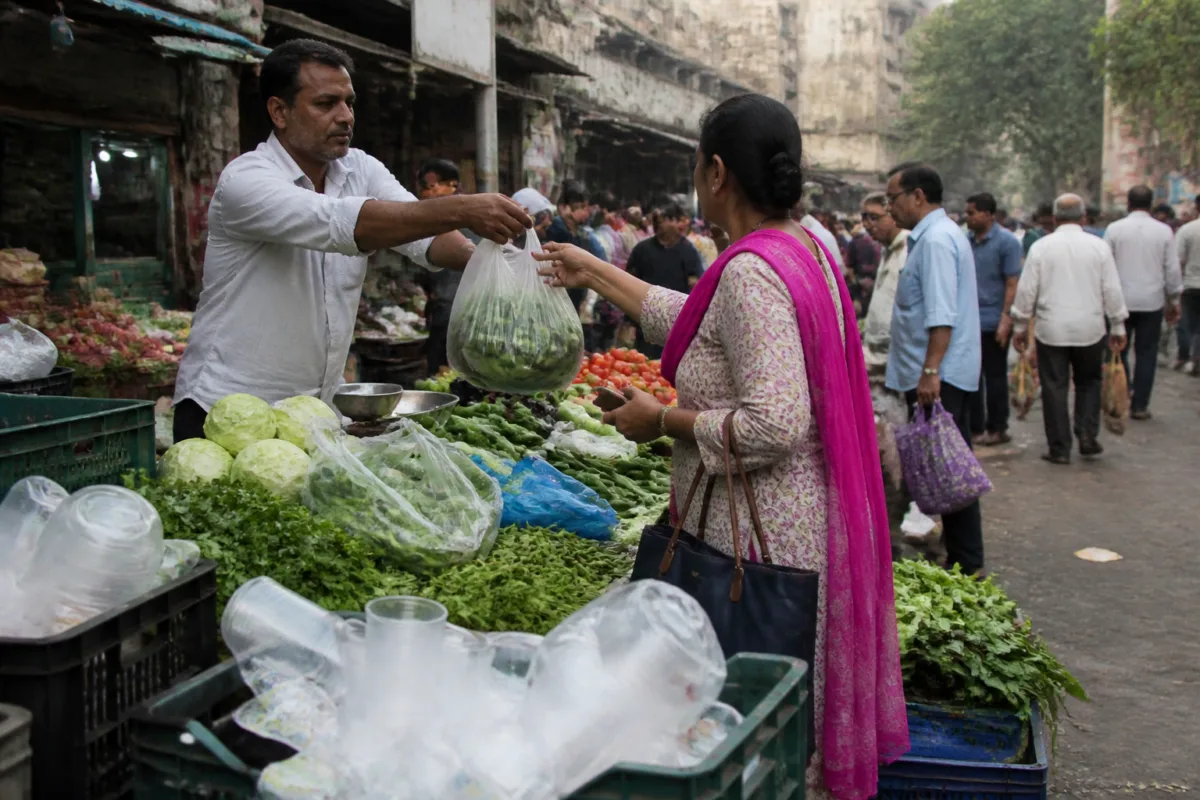
Four years after the Centre’s ban on identified single-use plastic items, their continued use in Delhi’s markets is exposing the gap between regulation and enforcement, according to a report by Jagran.
The report says plastic bags, cups, glasses, straws and spoons remain in use at weekly markets, vegetable mandis, juice shops and roadside stalls. It describes plastic packaging being used for vegetables and other goods, despite enforcement campaigns, raids and challans by civic and pollution-control authorities.
The persistence of these products makes the issue larger than individual rule-breaking. If retailers are penalised while manufacturers, suppliers and stockists continue to operate, enforcement does not address the source of the supply, the report argues. It also raises questions about whether establishments facing action are inspected again and how many have faced challans, seizures, sealing or prosecution.
The report further calls for transparent records of enforcement and investigation of allegations of illegal collections linked to inspections. These claims are presented as issues requiring examination; the report does not provide verified figures or findings from such investigations.
Cost and convenience are also identified as barriers. Small traders may find alternatives more expensive, while customers often expect a bag with their purchase and may not carry reusable bags from home. This creates a practical implementation problem: a ban is harder to sustain when compliant products are less affordable or less readily available than the prohibited ones.
Paper, cloth and other environmentally preferable alternatives therefore need to be available at prices that small businesses can manage. The report refers to a list on the Central Pollution Control Board’s website containing about 300 manufacturers and sellers of compostable products. It says more work is needed on production capacity, market availability and costs before such alternatives can substantially reduce dependence on banned plastic.
For Delhi’s markets, the enforcement challenge is consequently tied to both governance and market design. Raids and penalties may have limited lasting effect if supply channels remain accessible and traders lack affordable substitutes. A more durable approach, as indicated by the report, would combine action across manufacturers, stockists and retailers with transparent follow-up records and practical support for compliant alternatives.
The report does not provide a citywide estimate of ongoing single-use plastic consumption or a consolidated record of enforcement outcomes. Those figures would be needed to measure the scale of non-compliance and assess whether the ban is producing a sustained reduction in plastic use. For now, the continued visibility of banned products in everyday markets remains a sign that implementation has not matched the intent of the rule.

