


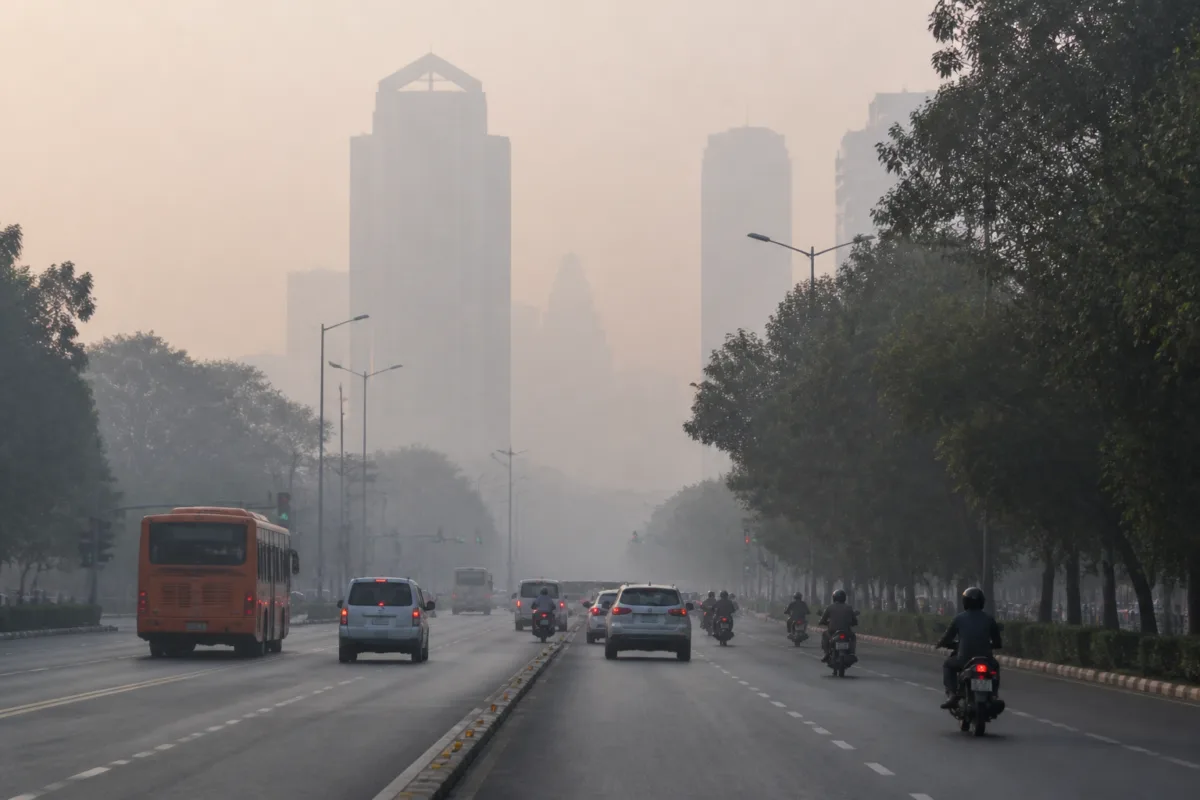
Delhi weather is set to turn colder this week as north-westerly winds bring cooler air from the Himalayan region, with temperatures expected to fall by 2 to 3 degrees Celsius across the national capital and the wider NCR. The India Meteorological Department has also forecast light to moderate fog in several areas during the morning until November 21.
Parts of Delhi recorded light drizzle early on Sunday, including Palam, Lodhi Road and Aya Nagar. The rain and cloud cover were linked to the influence of a western disturbance, while the change in wind direction is expected to shape conditions over the coming days.
At Safdarjung, Delhi’s standard weather station, the minimum temperature on Sunday was 18.6 degrees Celsius, which was 5.1 degrees above normal. The maximum temperature stood at 29.4 degrees Celsius, or 0.9 degrees above the seasonal average. The relatively warm readings followed several days of bright sunshine and cloud cover that kept both daytime and nighttime temperatures above normal.
The forecast indicates a sharper decline from Monday. The maximum temperature is expected to remain between 26 and 28 degrees Celsius, while the minimum may range from 14 to 16 degrees Celsius. Between November 17 and 21, the maximum temperature is forecast to stay around 25 to 27 degrees Celsius.
The minimum temperature is expected to remain between 13 and 15 degrees Celsius on November 17 and November 21. It could fall further to between 12 and 14 degrees Celsius from November 18 to 20. The IMD has forecast largely clear skies across Delhi-NCR through November 21, but morning mist or light fog may occur in several locations, with moderate fog possible in some areas.
The weather shift is also linked to conditions in the higher reaches of Uttarakhand. Snowfall was reported on high-altitude peaks in Badrinath and Chamoli district following the western disturbance. The resulting north-westerly flow is expected to carry colder air from the Himalayan region towards Delhi-NCR.
Sunday’s drizzle, stronger winds and increased air movement brought a temporary improvement in Delhi’s air quality index, which fell by 77 points to 290. That reading remained in the ‘poor’ category. The relief may not last, however, as wind speeds are expected to weaken during the evening over the week.
The report said Delhi’s air quality could return to the ‘very poor’ category over the next two days. For residents, the forecast therefore combines colder mornings, reduced visibility in some locations and continued pollution stress. The weather department’s current outlook indicates no further rain for Delhi-NCR during the week, with the next significant changes likely to come through temperatures, wind direction and morning visibility.

