


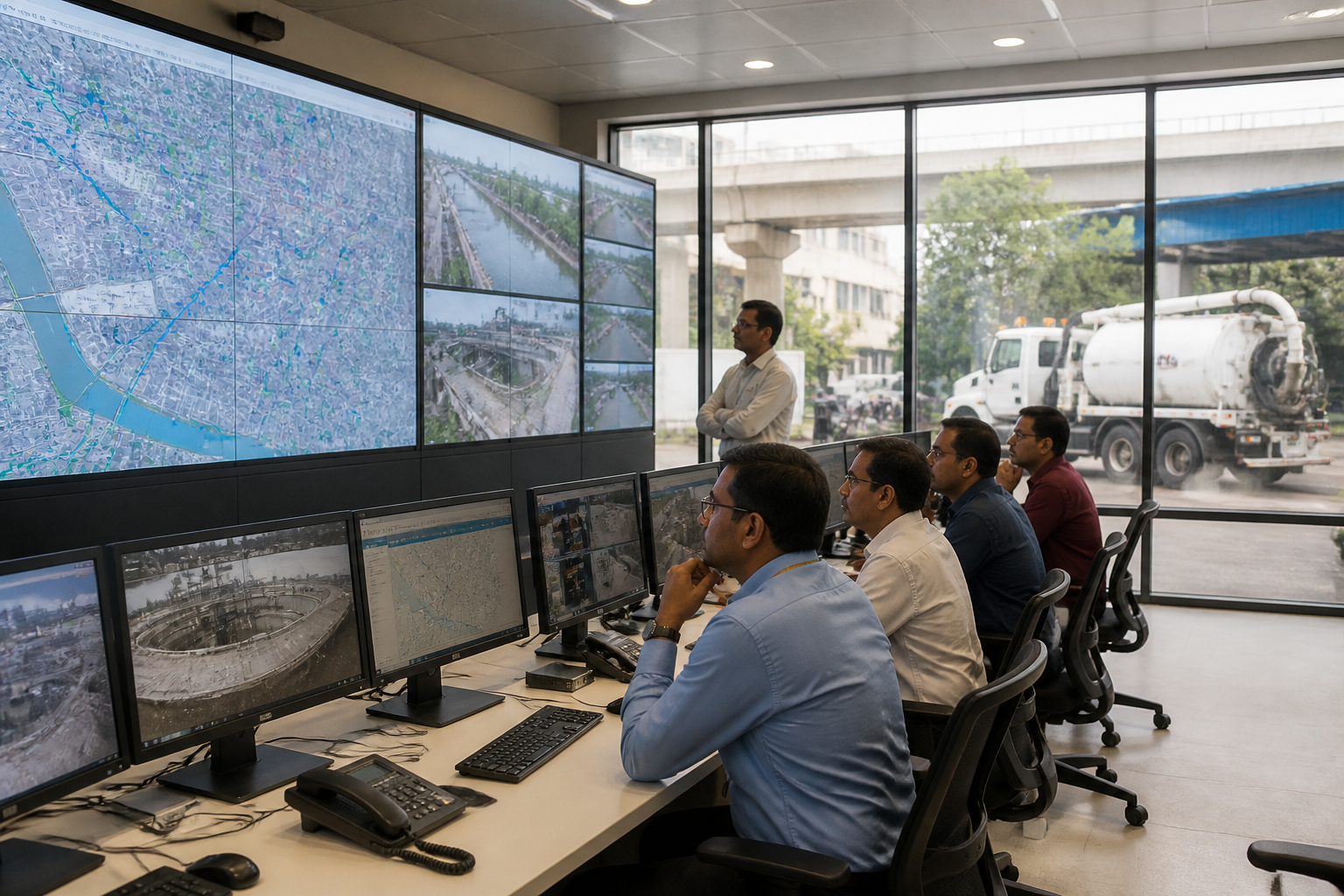
Delhi is set to use artificial intelligence to anticipate pipeline bursts, identify low-pressure areas and track water-network repairs after Water Minister Parvesh Sahib Singh inaugurated an Intelligent Command and Control Centre and flagged off a dedicated emergency response vehicle on Wednesday.
The facilities were launched at JWIL Infra Limited’s office on Shivaji Marg as part of an effort to reduce water loss, speed up repairs and improve responses to consumer complaints. The new command centre will bring multiple sources of information into a single monitoring platform for officials overseeing the city’s water-supply network.
The Intelligent Command and Control Centre, or IC³, will integrate data from Supervisory Control and Data Acquisition systems, Geographic Information Systems, smart meters, consumer complaints, maintenance records and GPS-enabled field vehicles. This will allow officials to monitor network conditions, identify vulnerable locations, track repair teams and review complaints through one dashboard.
The system will also use AI and digital-twin technology to anticipate possible pipeline bursts, assess demand patterns and identify areas experiencing low water pressure. The stated objective is to help officials address potential disruptions before they escalate into larger service failures. The platform is intended to combine network data with field-level information, including the location and movement of repair vehicles.
“For us, water management is not just about supplying water. It is equally important to prevent wastage, identify problems quickly and ensure that people do not have to suffer because of a pipeline leak or an avoidable disruption,” Singh said, according to the report.
The announcement places monitoring and response at the centre of Delhi’s water-management operations. Pipeline bursts, pressure problems and delayed repairs can affect both the continuity of supply and the volume of water lost before it reaches consumers. The new system is designed to give officials a consolidated view of these problems rather than requiring information to be reviewed separately across different systems.
Alongside the command centre, the dedicated emergency response vehicle has been equipped with high-capacity submersible dewatering pumps, a 60 kVA generator and essential repair equipment. Its independent power supply will allow response teams to undertake emergency operations even in locations where electricity is unavailable.
The vehicle is intended to support field operations during urgent water-related incidents, while the command centre will provide the monitoring and coordination layer. Together, the two facilities link digital surveillance with on-ground repair capacity, according to details released about the launch.
The report did not specify the number of water assets covered by the platform, the locations initially designated as vulnerable, or a target for reducing leakage and repair times. It also did not provide a timeline for the system’s full operational rollout. The next stage will involve using the integrated dashboard, AI tools and emergency response equipment in routine water-network monitoring and incident response.

