


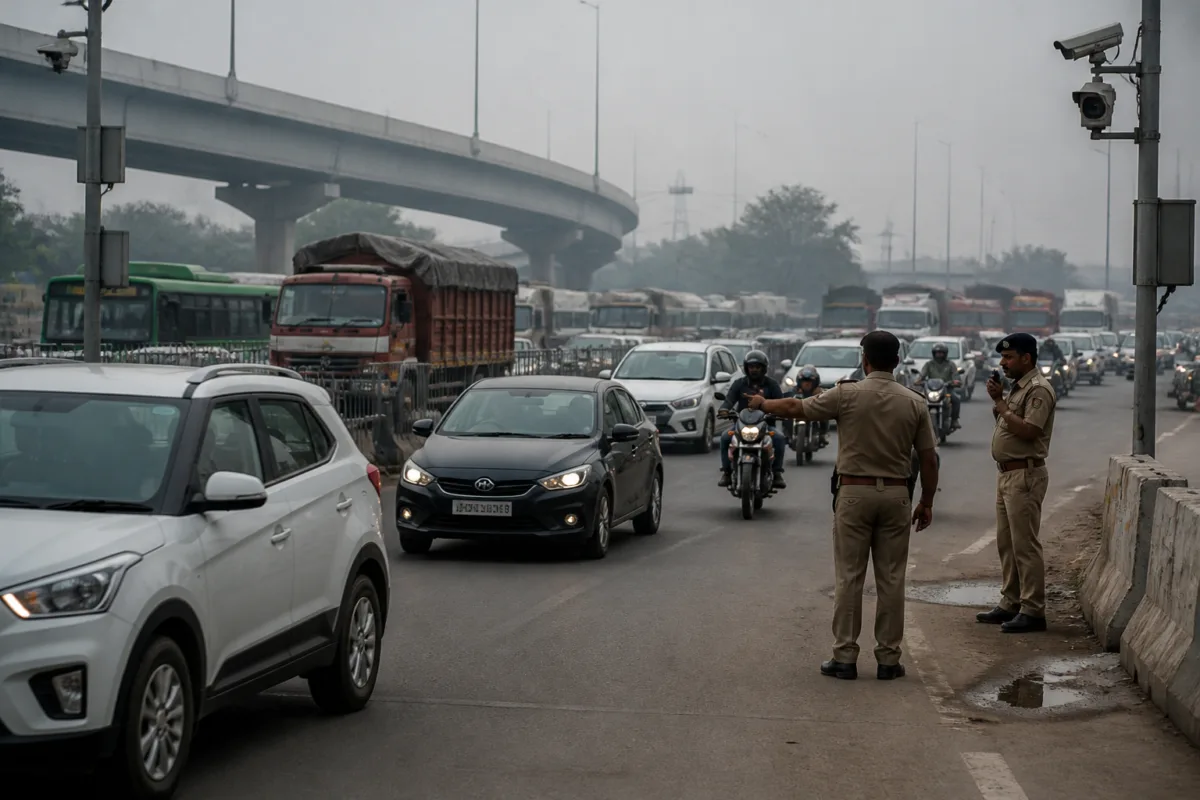
Delhi is preparing to restrict the entry of petrol and diesel vehicles below the BS-VI emission standard from November 1, a winter pollution-control measure that could affect commuters, freight operators and transport businesses across the National Capital Region until January 31, 2027.
The proposed restriction would apply to vehicles registered before April 2020, when BS-VI standards came into force for new vehicles. Unlike earlier restrictions focused mainly on cars and commercial vehicles, the measure is also expected to cover two-wheelers for the first time. Vehicles entering Delhi from Gurugram, Faridabad, Noida, Greater Noida and Ghaziabad could be affected if they do not meet the BS-VI standard.
The restriction would cover private cars, goods-carrying commercial vehicles and motorcycles powered by petrol or diesel. The Delhi Transport Department is preparing to increase surveillance at the city’s borders, using automatic number plate recognition cameras and other monitoring systems to identify vehicles. Around 300 personnel are also expected to be deployed at entry points for enforcement.
The scale of the potential disruption is linked to the daily movement of vehicles between Delhi and neighbouring NCR cities. According to figures cited in the report, around 200,000 vehicles travel to Delhi each day from Gurugram and Faridabad. As many as 70 per cent of these vehicles are reportedly below the BS-VI standard. More than 400,000 sub-BS-VI vehicles are said to enter Delhi from Noida and Greater Noida, with BS-IV vehicles accounting for more than half of that number and private petrol cars forming a substantial share.
Ghaziabad also records around 400,000 sub-BS-VI vehicle movements to and from Delhi, according to the figures cited. If the restriction is implemented as reported, daily commuters, traders and operators supplying goods to the capital may have to alter their travel and delivery arrangements. The report does not specify alternative arrangements or exemptions for affected vehicle owners.
The transport sector has raised concerns about the proposed measure. Harish Sabharwal, national president of the All India Motor Transport Congress, has opposed the planned restriction on BS-IV vehicles and said it could affect the movement of around 250,000 trucks in Delhi. He warned that the measure could affect transport businesses, vehicle operators’ livelihoods and the supply of goods to the city.
Anil Chhikara, a former deputy commissioner in the Transport Department, has called for a review of the policy. He said restricting vehicles only on the basis of their manufacturing year or emission category may not be practical, and suggested that BS-IV vehicles in good condition should receive relief after pollution and mechanical fitness checks at authorised automated testing centres.
BS-IV emission standards were in force in India from April 1, 2010, to March 31, 2020. BS-VI standards became applicable to new vehicles from April 1, 2020. The report notes that while some older BS-IV vehicles may already have reached prescribed age limits, many vehicles registered between 2018 and 2020 may still be in working condition. The Transport Department’s border-monitoring preparations and the proposed November 1 start date are the next milestones identified in the report.

