


Delhi’s Special Intensive Revision (SIR) of electoral rolls has moved beyond a routine exercise in updating voter records. With around 47.5 lakh electors classified as “uncollectible” and removed from the draft roll, the Election Commission’s effort to identify eligible residents who may have been left out has become a test of how the city’s electoral administration reaches people who are mobile, displaced, undocumented in local records or difficult to locate.
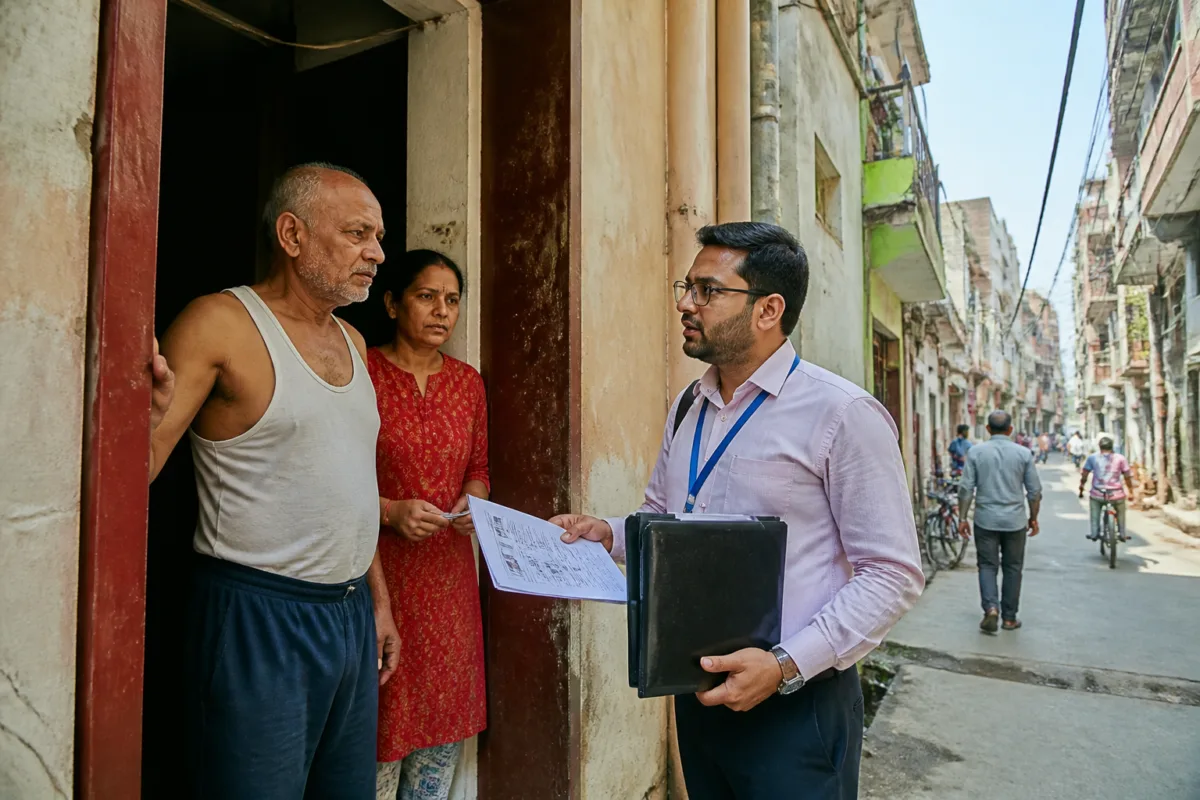
The Delhi Chief Electoral Officer’s office ordered a special re-verification drive on October 14, according to The Indian Express, asking booth-level officers (BLOs) to revisit voters marked absent, shifted, dead or duplicate in the ASDD list. The stated purpose is to determine whether any eligible elector was wrongly excluded and to facilitate enrolment through Form 6, the application used to register as a new voter.
The exercise is significant because the revision has produced a sharp difference between the number of electors on the previous roll and the number included in the draft roll published on August 31. Delhi had around 1.45 crore electors before the SIR began in June. The draft roll included approximately 97.5 lakh voters, while nearly 47.5 lakh were classified as uncollectible after BLOs recorded them as absent, shifted, dead or having duplicate entries, among other reasons.
That classification does not automatically establish that all those voters were ineligible. It indicates that BLOs could not confirm their status through the revision process. The latest directive therefore places a new responsibility on the field-level electoral machinery: officials must check whether people recorded as absent or shifted continue to live at the address and whether their names were removed by mistake.
One directive issued by an Electoral Registration Officer, and cited by The Indian Express, asked BLOs to complete “100% re-verification” of the ASDD list within seven days. Where an elector marked as absent or shifted is found residing at the address, the BLO is expected to obtain a Form 6 application for enrolment. BLOs have also been instructed to keep proper records and carry sufficient blank forms during their house-to-house visits.
The process is taking place alongside another layer of verification. Of the 97.5 lakh electors included in the draft roll, around 33.1 lakh were issued notices to establish their eligibility for inclusion in the final roll. About 13.79 lakh were flagged because they could not link themselves to the electoral roll from the previous SIR, while 19.33 lakh were identified for what the authorities described as “logical discrepancies” in their enumeration forms.
According to a statement from the Delhi Chief Electoral Officer’s office cited in the report, 26 lakh of the 33.1 lakh notice cases had been resolved. BLOs have been visiting households to collect documents from electors who received notices. The shift from asking all such voters to attend hearings at local election offices to conducting house-to-house visits changes the administrative burden for residents, but it also increases the workload and record-keeping obligations of the field staff.
The distinction between these two groups is important. Electors who received notices are already present in the draft roll but must establish their eligibility. Those described as “left out” are not included in the draft roll and must seek enrolment through Form 6 if they are found eligible. The CEO’s office has directed that physical Form 6 applications should not be refused, that they must be digitised within two days of receipt and that forms should not be rejected on frivolous grounds.
The data supplied in the report shows that the formal enrolment response has so far been limited compared with the scale of the revision. Between August 31 and October 16, only 2.3 lakh Form 6 applications had been filed. The figure includes new applications during a period when tens of lakhs of electors had been removed from the draft roll as uncollectible or were being asked to establish their eligibility.
The number should not be read on its own as proof that eligible residents have been excluded. It does, however, show the administrative challenge of converting a large-scale identification exercise into a functioning correction mechanism. A voter who is not on the draft roll must know that Form 6 is required, obtain or complete the form, provide the necessary information, and ensure that the application is accepted and digitised within the prescribed process.
That chain can be difficult for residents whose address has changed, whose neighbourhood has undergone demolition or redevelopment, or who do not have stable access to official paperwork. The report states that weekend enrolment camps have been organised in Delhi since September 20, including camps for homeless people, those displaced by demolitions, transgender residents and sex workers. These categories underline how electoral administration intersects with the city’s patterns of mobility, displacement and informal or insecure residence.
Delhi’s urban population is not static. Residents move between rented homes, informal settlements, worksites and temporary accommodation. Demolitions can displace households without immediately creating a clear administrative trail at their new location. People without stable housing may be physically present in the city but difficult to match with a conventional address-based verification system. A revision process that depends heavily on household visits must therefore account for both the reliability of address records and the practical ability of residents to receive information.
The role of BLOs is central to this system. They are the officials who translate electoral records into street-level verification. In the latest exercise, they are expected to conduct visits for electors who received notices, re-check the ASDD list, identify eligible people missing from the draft roll, distribute or collect Form 6 applications, maintain records and ensure that physical applications enter the digital system. The report also indicates that several BLOs had received communication verbally or through WhatsApp groups but had not received a formal order at the time of reporting.
That detail points to an institutional issue within large public exercises: the quality of implementation depends not only on the formal order but also on how quickly instructions reach the officials responsible for carrying them out. Field staff must know which lists to revisit, what evidence to collect, how to record the outcome of a visit and how to handle a resident who says a deletion is incorrect. In a process involving millions of records, inconsistent instructions can produce uneven outcomes between constituencies.
The SIR timeline adds pressure to the exercise. The deadline for filing Form 6 applications is October 31, while the final SIR roll is scheduled for publication on December 4. This creates a limited period for left-out electors to learn about the process, submit applications, have them digitised, respond to any further requirements and have their cases considered before the final roll is published.
The Election Commission’s decision to run a special drive is part of a wider response to concerns over deletions. The Indian Express reported that the commission directed 20 states and Union Territories where the exercise had been completed to conduct special drives for voters left out of the rolls. Civil society groups and political parties have raised concerns that eligible electors may have been deleted during the process.
Those concerns remain claims raised by stakeholders and do not, by themselves, establish the final number of wrongful deletions. The available figures do establish the scale of the administrative task. Delhi began with around 1.45 crore electors, included 97.5 lakh in the draft roll and classified approximately 47.5 lakh as uncollectible. It also issued notices to 33.1 lakh people on the draft roll, of whom 26 lakh cases had reportedly been resolved by the time of the cited statement.
The next stage will show how many cases are corrected through re-verification and how many residents use Form 6 to seek enrolment. It will also indicate whether the special camps and house-to-house visits reach the groups most exposed to gaps in address-based administration. The final roll, scheduled for December 4, will be the formal milestone, but the quality of the process will depend on whether each application and re-verification outcome is recorded transparently and within the stated timeline.
Delhi’s SIR has therefore become more than a count of names on an electoral list. It is an administrative test involving data accuracy, field verification, documentation, household mobility and access to public institutions. The facts currently available show both a large deletion exercise and a corrective mechanism being put in place. What remains to be established is how many eligible electors were left out, how many are successfully re-enrolled and whether the final roll reflects the city’s population as it actually lives and moves.

