


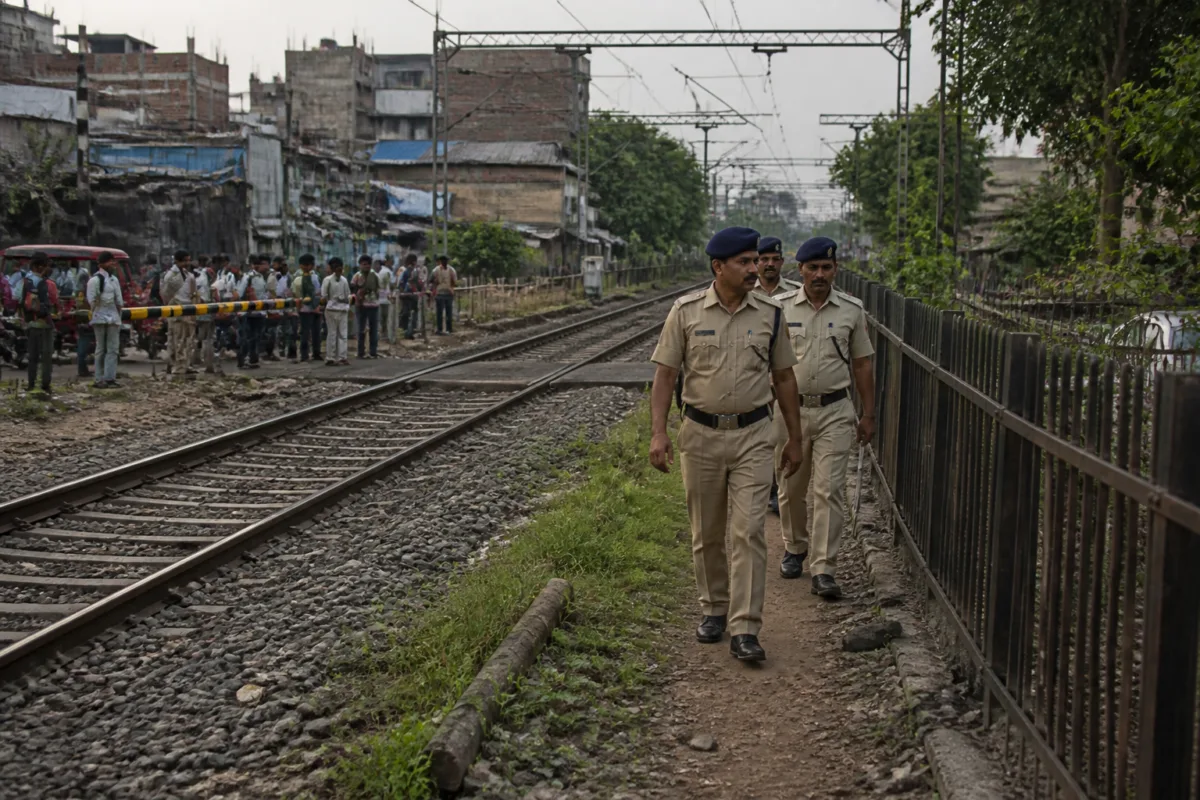
Delhi railway trespassing cases have more than doubled this year, with the Railway Protection Force catching 6,379 people for unauthorisedly crossing or entering railway tracks up to September 10, compared with 3,147 during the corresponding period in 2025.
Data cited by the RPF showed that fines collected during the period also increased sharply, from about Rs 14 lakh last year to Rs 31 lakh this year. Officials attributed part of the rise to the implementation of provisions under the Jan Vishwas Act by the Delhi division from June 19.
Before the new process was introduced, people caught trespassing had to be produced before a court. RPF officials said the procedure could be lengthy, and that violators who pleaded financial inability to pay were sometimes allowed to pay less than the prescribed penalty or were released without paying the full amount, depending on the judicial magistrate’s discretion.
Under the new provisions, a fixed penalty is prescribed under the relevant sections without requiring a court appearance, officials said. Since June 19, 4,084 people have been caught under the provisions and Rs 20.4 lakh has been collected in fines.
The enforcement figures come as railway authorities continue to identify trespassing as a serious safety concern on active lines. RPF data showed that 2,160 bodies were found on railway tracks in 2025, compared with 1,406 during the corresponding period this year. Officials said trespassing was one of the major reasons behind such incidents, while also identifying suicides and other causes in relation to deaths on railway tracks.
RPF officials said Delhi-NCR has several stretches where people regularly cross railway lines to reach workplaces, markets and nearby destinations. Ten trespassing-prone sections have been identified, including Mangolpuri–Mundka–Shakur Basti, Bijwasan–Gurgaon, Adarsh Nagar and the section between Badli and Delhi Azadpur railway stations.
According to officials, the risk is heightened by the presence of densely populated unauthorised colonies and residential clusters close to railway tracks, gaps in fencing and boundary walls, inadequate road overbridges and a shortage of designated passageways. Some residents take shortcuts across active tracks to save time rather than use available crossing points, officials said.
The issue therefore extends beyond individual violations to the way settlements and movement routes have developed around railway land. Where homes, workplaces and markets are located close to tracks but safe crossings are limited, daily pedestrian movement can repeatedly bring residents into conflict with railway safety rules.
Senior divisional security commissioner of the RPF, Ashutosh Pandey, said action was being taken under Section 147 of the Railways Act against people crossing tracks without authorisation. The RPF is also conducting awareness workshops, coordinating with the Government Railway Police and deploying personnel at platforms, identified trespassing-prone stretches and level-crossing gates.
The latest enforcement drive will continue alongside these awareness programmes and personnel deployments across the identified sections, according to the RPF.

