


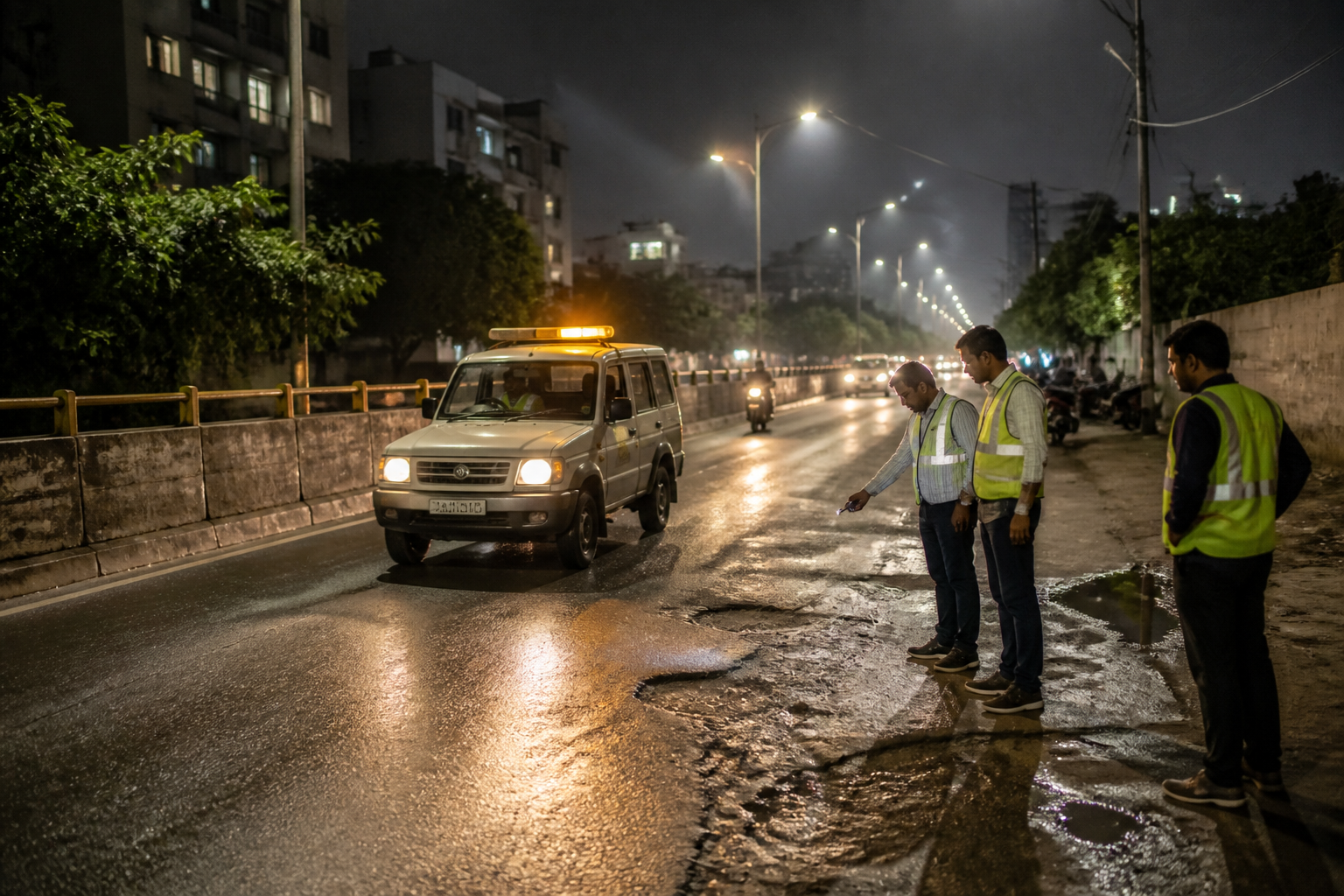
Delhi PWD will begin inspecting roads at night under a 110-day pilot in the department’s North-East division, with the aim of identifying potholes, damaged railings and other maintenance problems before they remain unresolved for longer periods. The department has issued a tender to hire a separate vehicle service for the inspections.
According to the tender, the hired service will be used to check road conditions at night and report problems to the relevant officials. The inspection teams will record potholes, damaged road surfaces, broken roadside sections, railings and other road-related facilities requiring maintenance.
The initiative is intended to help the department identify locations requiring repairs in time and communicate the information for action. The report does not specify a fixed response deadline for officials after an issue is reported, nor does it detail the number of inspection vehicles to be deployed.
The pilot will start in the North-East division, which has been selected for the initial experiment. The service will continue for 110 days under the tender issued by the division. The department’s next steps will depend on the implementation of this trial and the maintenance information generated through the night inspections.
The move comes against the backdrop of Delhi PWD’s responsibility for around 1,440 kilometres of roads. The department also maintains bridges, foot overbridges, underpasses and other road facilities, making continuous monitoring a major operational task across the capital.
Road conditions can deteriorate because of constant traffic pressure, waterlogging during rainfall, road subsidence and the formation of potholes. Roadside infrastructure such as railings can also be damaged. These problems may be harder to identify at night, particularly at locations with inadequate lighting, while daytime inspections may not capture how defects affect roads during darker travel hours.
The night inspection system is therefore designed to add another layer to the department’s maintenance monitoring. Its stated purpose is not only to observe the condition of roads after dark but also to reduce the time between the discovery of a defect and the transmission of information to officials responsible for repairs.
The tender-based arrangement also places the pilot within a defined service period rather than creating a permanent inspection system immediately. The supplied report does not state whether the department will publish inspection findings, measure repair turnaround times or expand the arrangement to other divisions after the 110-day period.
For residents and road users, the practical impact will depend on whether night inspections lead to faster repairs of defects and damaged facilities. The Delhi PWD has not provided, in the supplied material, a timetable for the start of field inspections or a public mechanism for tracking complaints identified through the pilot. The North-East division’s 110-day experiment is the immediate milestone for assessing the system.
