


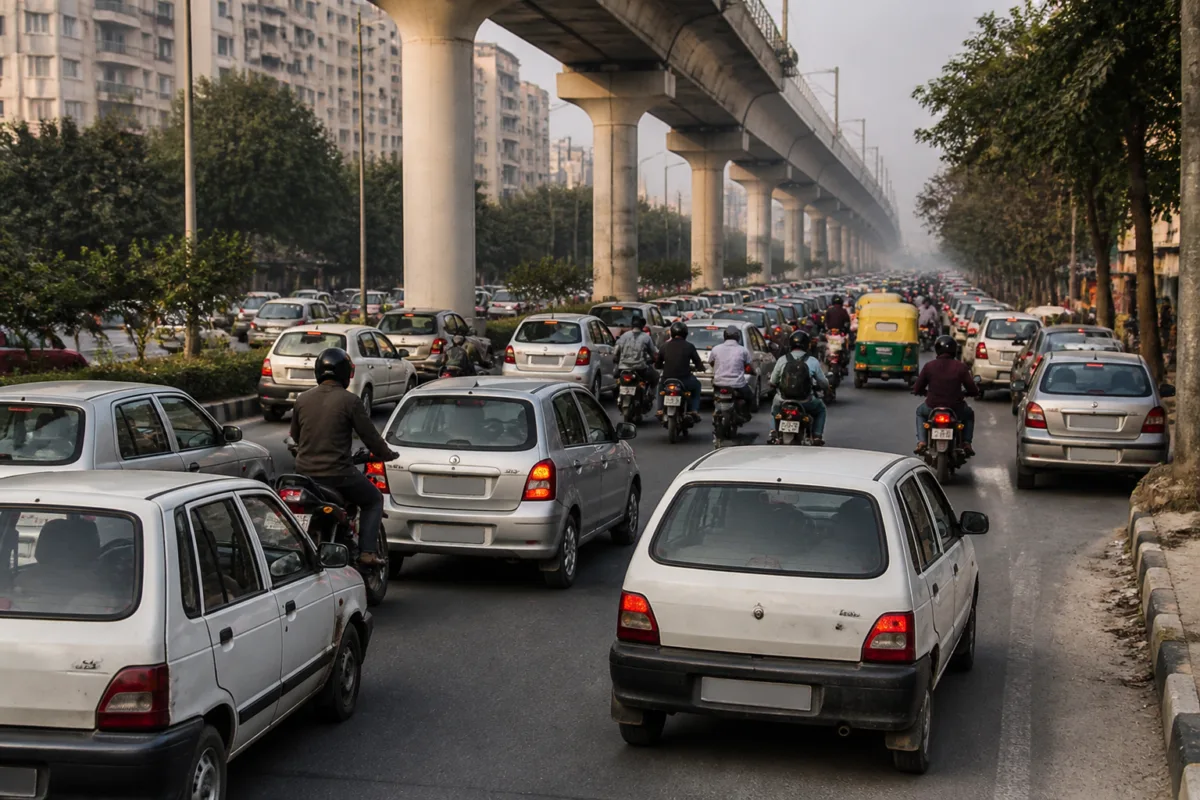
More than 2.36 million end-of-life vehicles are still plying on roads across Delhi-NCR, according to figures submitted by the Commission for Air Quality Management (CAQM) to the Supreme Court.
In an affidavit filed in a suo motu case examining the regulatory framework for air pollution, the commission said 2.54 million overage vehicles had been reported across Delhi, Haryana, Uttar Pradesh and Rajasthan. Of these, only 1.85 lakh had been scrapped or issued no-objection certificates, leaving more than 2.36 million vehicles still unaddressed in the data cited by the commission.
The CAQM defines an end-of-life vehicle as one that can no longer be legally registered or operated on public roads. This can include vehicles that have crossed prescribed age limits, failed fitness tests, had their registration cancelled, suffered severe damage or been voluntarily surrendered by their owners.
The figures highlight the implementation challenge facing age- and fitness-based vehicle controls in the National Capital Region. Identifying an overage vehicle does not by itself ensure that it has been removed from the road, scrapped or otherwise taken through the required regulatory process.
According to the affidavit, two-wheelers make up 65.2 per cent of Delhi-NCR’s vehicle population, while four-wheeler light motor vehicles account for another 28.9 per cent. The vehicle mix is significant for enforcement because two-wheelers form the largest reported segment of the region’s fleet.
The commission also told the court that older vehicles emit considerably higher quantities of pollutants than vehicles compliant with Bharat Stage-VI emission standards. The filing therefore links the continued operation of end-of-life vehicles to the wider air-pollution regulatory issue being considered by the Supreme Court.
The report does not specify in the available material how the remaining vehicles will be located, restricted, scrapped or monitored, nor does it provide a vehicle-wise breakdown for each state or city. Those implementation details will be important in assessing whether the region’s end-of-life vehicle framework can translate reported identification into measurable reductions in on-road emissions.

