


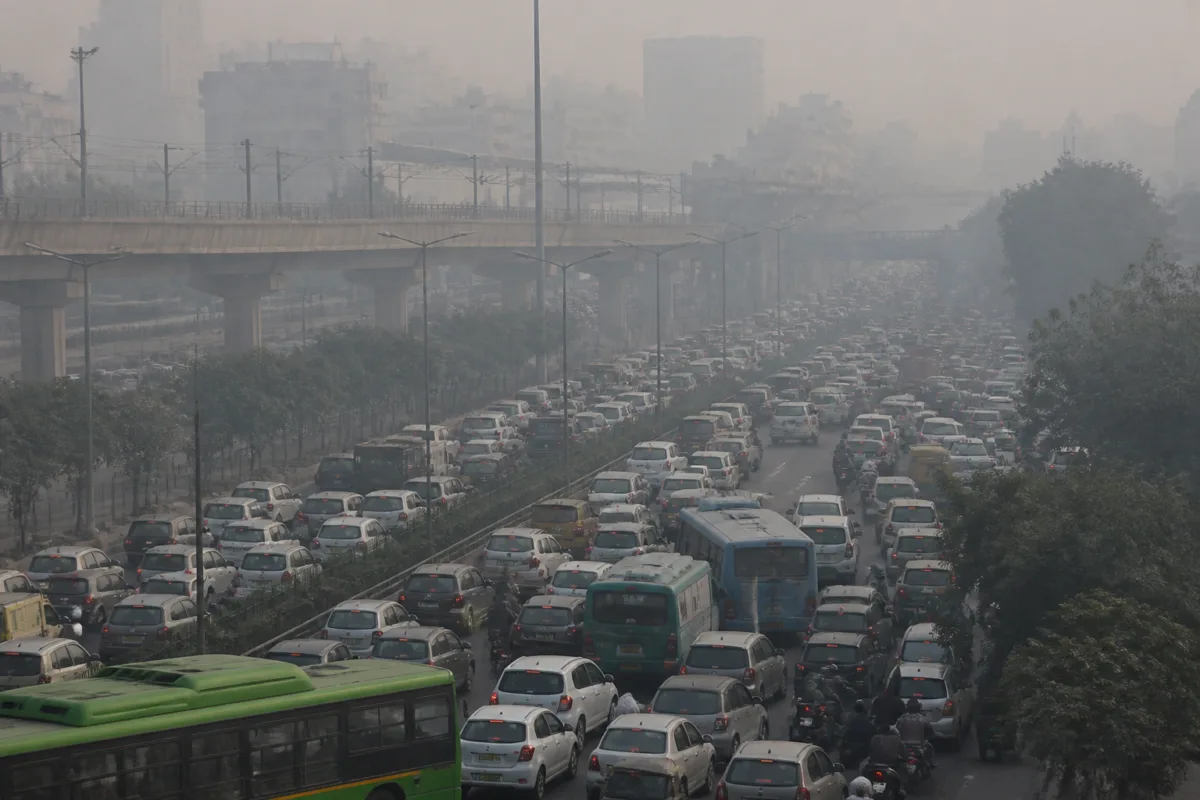
The Supreme Court has sought detailed reports within two weeks from Delhi, Uttar Pradesh, Rajasthan and Haryana on steps to control vehicular pollution across the National Capital Region, including restrictions on the entry and movement of older vehicles.
A bench headed by Chief Justice of India Suryakant, along with Justices Joymalya Bagchi and V. Mohana, expressed serious concern over the reported increase in pollution from vehicles and directed the states and relevant authorities to outline both immediate and long-term measures.
The court has asked the governments of Delhi, Uttar Pradesh, Rajasthan and Haryana, along with the Municipal Corporation of Delhi and Delhi Police, to explain what action is being taken to reduce vehicle emissions and limit the contribution of transport to worsening pollution in Delhi-NCR. Their responses are expected to cover enforcement arrangements within the region and proposed timelines for further action.
The requested reports will also have to address the movement of older vehicles into Delhi-NCR. The authorities must provide details of steps taken to prevent such vehicles from entering the region and explain how those measures are being implemented. The court has additionally sought information on pollution-under-control certificate checks and challan action against violations.
The directions place responsibility on multiple governments and agencies because vehicle movement in the NCR cuts across state and municipal boundaries. Vehicles registered or operating outside Delhi can enter the capital through neighbouring parts of Uttar Pradesh, Haryana and Rajasthan, making enforcement dependent on coordination between jurisdictions. The court has specifically sought information on how that coordination is being carried out.
The authorities have also been asked to distinguish between short-term actions and measures intended for longer-term implementation. This requires them to set out not only immediate enforcement steps but also the proposed timeline for reducing vehicular pollution over a sustained period. The supplied report does not provide details of any specific new restrictions ordered by the court beyond the requirement to submit the requested information.
The court’s intervention comes as vehicular emissions remain a central concern in discussions about air pollution in Delhi-NCR. The directions focus on the administrative chain responsible for checking vehicle compliance, controlling the movement of older vehicles and coordinating enforcement across the region. The responses will show what measures each government and agency has adopted and what additional steps it proposes.
Delhi, the NCR state governments, MCD and Delhi Police have two weeks to file their detailed replies before the Supreme Court. Their submissions are expected to set out the measures already taken, the proposed short- and long-term actions, and the timelines for implementation.

