


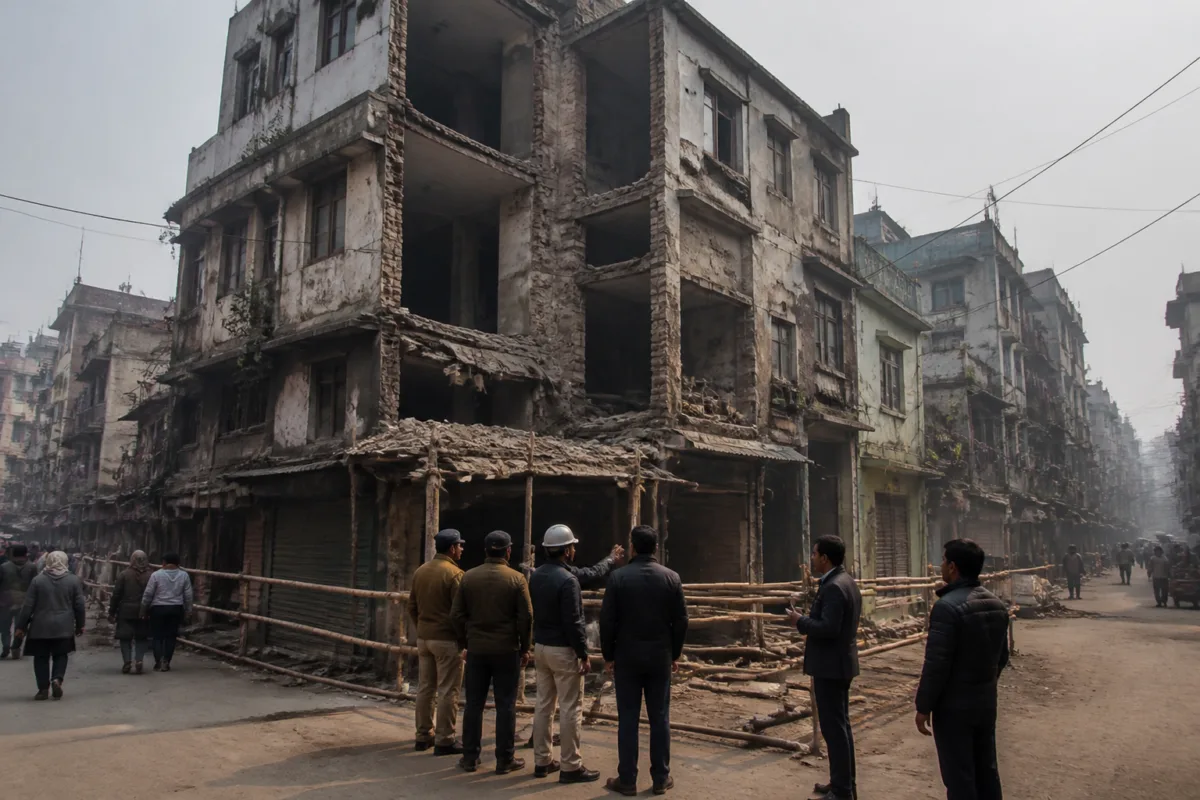
The Delhi High Court has directed the Municipal Corporation of Delhi (MCD) Commissioner to consult the Chief Minister and constitute a high-level committee within one week to recommend how dangerous and dilapidated buildings should be repaired, sealed or demolished during restrictions under the Graded Response Action Plan (GRAP).
A bench led by Justice Saurabh Banerjee said action against buildings posing an immediate danger could not be deferred solely because pollution-control measures restrict demolition and construction activity. The court said the restrictions could not be ignored, but authorities also could not overlook the risk posed by unsafe structures and unauthorised construction in the capital.
According to the report, demolition activity is restricted during the relevant GRAP period, creating a regulatory conflict when a building is considered dangerous and needs urgent intervention. The committee has been asked to suggest an effective mechanism for dealing with repairs, sealing and demolition in such circumstances.
The court referred to building-collapse incidents in Satya Niketan and Chawri Bazar while hearing the issue of risks from dilapidated structures. It said courts could not remain silent spectators when events in different parts of Delhi showed that residents faced avoidable danger within a short period.
The proceedings began through the court’s suo motu consideration of the threat posed by unsafe buildings. The bench said the right to life places a responsibility on the government to take appropriate and effective steps to protect people from foreseeable risks. It also made clear that the MCD could not discharge its responsibility merely by conducting inspections or issuing notices if the danger continued and officials waited for an accident to occur.
The order places municipal enforcement at the centre of the issue. Identifying a dangerous building is only one part of the process; the civic administration must also determine whether the structure can be repaired, whether it needs to be sealed, or whether demolition is necessary, while complying with environmental restrictions. The proposed committee is intended to recommend how these decisions should be managed during GRAP curbs.
The court also cautioned that large-scale unauthorised construction within its jurisdiction could not be disregarded because it may have serious consequences. The observations link building safety not only to the condition of individual structures but also to the effectiveness of planning and enforcement systems responsible for preventing unsafe development.
The matter is scheduled for its next hearing on January 20, according to the report. The committee’s constitution within one week and its recommendations on handling dangerous buildings during GRAP restrictions are the immediate steps arising from the order.

