


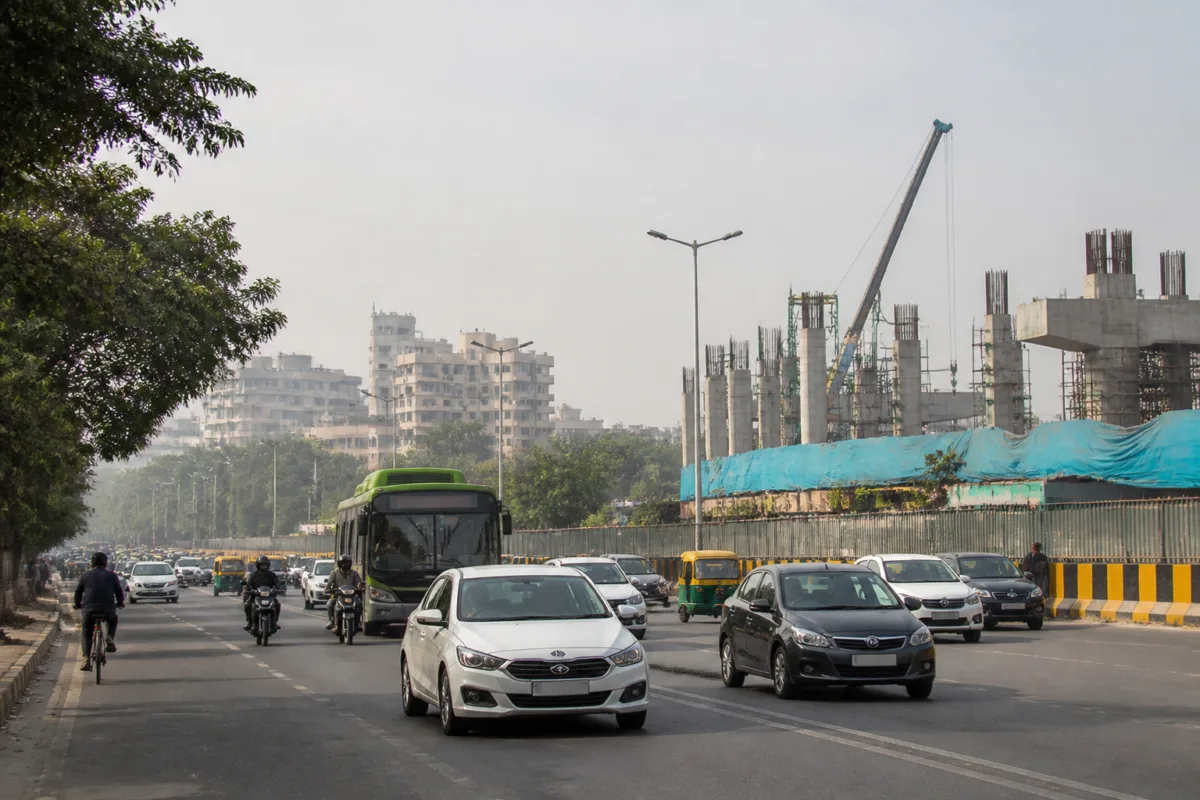
The Commission for Air Quality Management (CAQM) has withdrawn GRAP Stage III restrictions across Delhi-NCR after Delhi’s Air Quality Index improved to 204, allowing activities halted specifically under the emergency stage to resume while lower-level pollution controls remain in force.
The decision was taken after a review of air-quality conditions and pollution forecasts. The CAQM said pollution levels had shown a downward trend, but clarified that restrictions under GRAP Stages I and II would continue across the National Capital Region. Measures specified in the commission’s order dated October 30, 2026, will also remain applicable.
Stage III restrictions were imposed on November 6, when Delhi recorded a daily average AQI of 382, placing the city in the ‘very poor’ category. The measures included curbs on certain construction and demolition activities, restrictions on the movement of specified categories of older vehicles, and additional steps to reduce dust and vehicular emissions.
With Stage III withdrawn, construction and demolition activities prohibited specifically under that stage can resume, subject to applicable regulations and the continuing requirements under Stages I and II. The relaxation also provides relief to businesses, commuters and residents affected by the tighter restrictions, but does not amount to a complete withdrawal of pollution-control measures.
Authorities will continue measures targeting road dust, vehicle emissions, industrial pollution and other sources contributing to deteriorating air quality. The latest improvement followed stronger winds and light rainfall, which helped disperse accumulated pollutants over the capital in recent days.
Delhi’s air quality had improved to the ‘poor’ category on Monday, when the AQI was recorded at 216 at 7 am. The latest reading of 204 remains within the ‘poor’ category under the Central Pollution Control Board’s classification. AQI readings between 201 and 300 are classified as ‘poor’, while 301 to 400 is ‘very poor’ and 401 to 500 is ‘severe’.
The AQI level continues to pose health concerns, particularly for children, older people and individuals with respiratory or cardiovascular conditions. The persistence of Stage I and II measures means that restrictions on emissions and dust-generating activities remain part of the active response across the region.
The GRAP framework uses progressively stricter measures based on air-quality levels and forecasts. The CAQM reviews pollution trends and meteorological conditions before deciding whether to impose, retain or withdraw restrictions. The commission is expected to continue monitoring Delhi-NCR’s air quality and review the measures if pollution levels change.

