


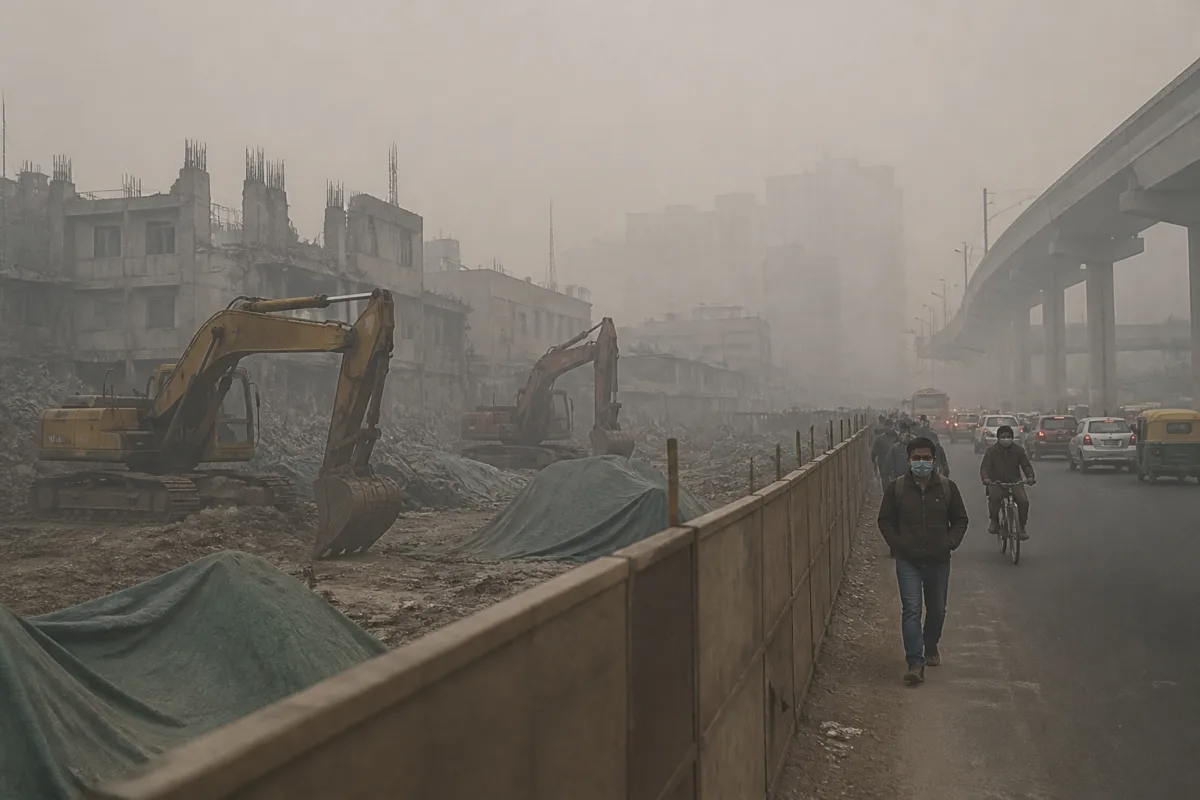
Delhi-NCR air pollution has reached hazardous levels, with reported AQI readings crossing 700 in parts of the region and authorities restricting dust-generating construction and demolition work from November 5 to November 20. The measure is intended to limit fresh particulate emissions during a period of severe smog and reduced visibility.
Jagran – New Delhi reported that Ghaziabad recorded an overall AQI of 704, while Noida recorded 636. Greater Noida was also reported to be in the ‘very severe’ air-quality category. The report did not identify the specific authority that issued the restriction, but said the curbs took effect across the National Capital Region on Thursday.
The restrictions do not cover every development activity. They apply to construction and demolition work that generates dust and pollution, while hospital-related construction has been exempted. Selected projects considered essential to urban services and national infrastructure have also been allowed to continue under specified exemptions.
The exempted categories listed in the report include metro, railway, airport, interstate bus terminal, water-supply and sanitation projects, along with certain projects classified as being of national importance. The restrictions therefore distinguish between dust-intensive activity and infrastructure work considered essential for transport, utilities or public services.
The immediate impact is expected to be felt by ongoing construction sites, redevelopment projects and contractors working across Delhi-NCR. Projects that remain operational under exemptions will still need to comply with applicable pollution-control requirements, although the report does not provide details of the enforcement mechanism, inspection schedule or penalties for violations.
Visibility was also affected on November 5 as dense morning smog covered parts of Delhi. The report placed average visibility at around 3.5 to 4 kilometres, with visibility falling further in some heavily polluted areas during the morning. Reduced visibility can affect road traffic and other outdoor activity, although the report did not cite any specific transport disruption.
The pollution episode has also raised immediate health concerns. The report said residents were experiencing breathing difficulty, eye irritation and throat-related problems, and cited health experts advising people to avoid unnecessary outdoor exposure, use air purifiers indoors and wear masks outside. These recommendations were reported in the context of the current pollution episode; the source did not provide hospitalisation figures or an official health advisory.
The construction restrictions coincide with wider air-quality control measures in the region. The report referred to the implementation of Stage II of the Graded Response Action Plan and earlier notices issued by the Commission for Air Quality Management to districts in Punjab. However, it did not provide the full order or details of the enforcement responsibilities of Delhi, neighbouring states or local civic bodies.
The restriction is scheduled to remain in force until November 20. The next significant developments will be whether the air-quality situation improves, whether the curbs are extended or relaxed, and how authorities enforce the distinction between prohibited dust-generating work and exempted essential infrastructure projects.

