


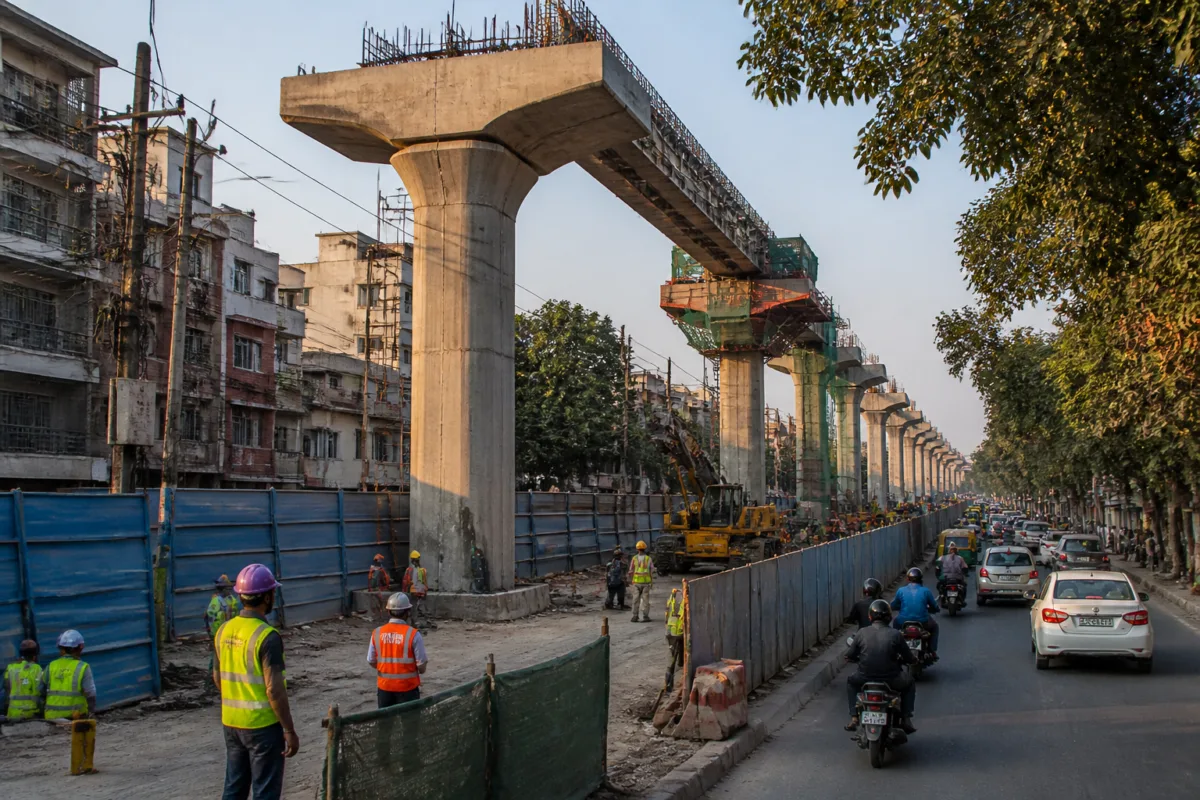
A proposed 8.3-km Delhi Metro corridor between Lajpat Nagar and Saket G Block is set to introduce three-coach trains to the network, while adding eight elevated stations across important South Delhi neighbourhoods.
The corridor is part of Phase IV, and according to Live Hindustan’s report citing the Delhi Metro Rail Corporation (DMRC), construction began on 12 December 2025. The project is intended to connect Lajpat Nagar, Andrews Ganj, Greater Kailash-I, Chirag Delhi, Pushpa Bhawan, Saket District Centre, Pushp Vihar and Saket G Block.
All eight stations are planned to be elevated. The alignment is expected to improve access to the metro system for residents and visitors in areas that currently rely on road-based travel or connections to stations elsewhere in the network.
The project’s main operational distinction is the proposed use of three-coach trainsets. Delhi Metro currently operates trains with four, six and eight coaches on its network, while the shorter trains on this corridor have reportedly been selected in line with estimated passenger demand.
The report states that each coach is expected to accommodate about 300 passengers, giving each three-coach train an estimated capacity of around 900 passengers. A smaller trainset could allow operations and maintenance requirements to be aligned more closely with the projected demand on this route, although the report does not provide a detailed ridership forecast or operating frequency.
The corridor is also planned to provide connections with existing and proposed metro routes. Lajpat Nagar is expected to offer interchange access to the Pink and Violet lines. Chirag Delhi is planned to connect with the Magenta Line, while Saket G Block is expected to provide an option to connect with another section of the planned Golden Line.
These links could make cross-city journeys more practical for passengers travelling between South Delhi neighbourhoods and the wider metro network. The usefulness of the interchanges, however, will depend on the final station arrangements, walking connections, integration between lines and the eventual operating plan.
The corridor remains under construction, and no confirmed date for the start of passenger services or the operation of the three-coach trains has been reported. Until those details are announced, the project’s immediate significance lies in the expansion of metro access and the introduction of a train configuration tailored to a specific corridor rather than in any service currently available to passengers.

