


The cutting of three signalling cables between Shahid Sthal and Welcome stations has exposed how a physical breach in a restricted rail corridor can quickly become a system-wide safety concern. The incident caused 15 track circuits on the down line to drop, forcing Delhi Metro Rail Corporation (DMRC) staff to restore operations through an emergency arrangement before normal movement was brought back.
According to a complaint filed by DMRC junior engineer/signalling and telecommunications employee Ompal, the disruption was detected at about 3:56 am on November 8, when a signal controller informed the control room that 15 track circuits had permanently dropped. The affected section lies between Shahid Sthal and Welcome on the Delhi Metro network, connecting the Ghaziabad side of the system with the wider urban transit network.
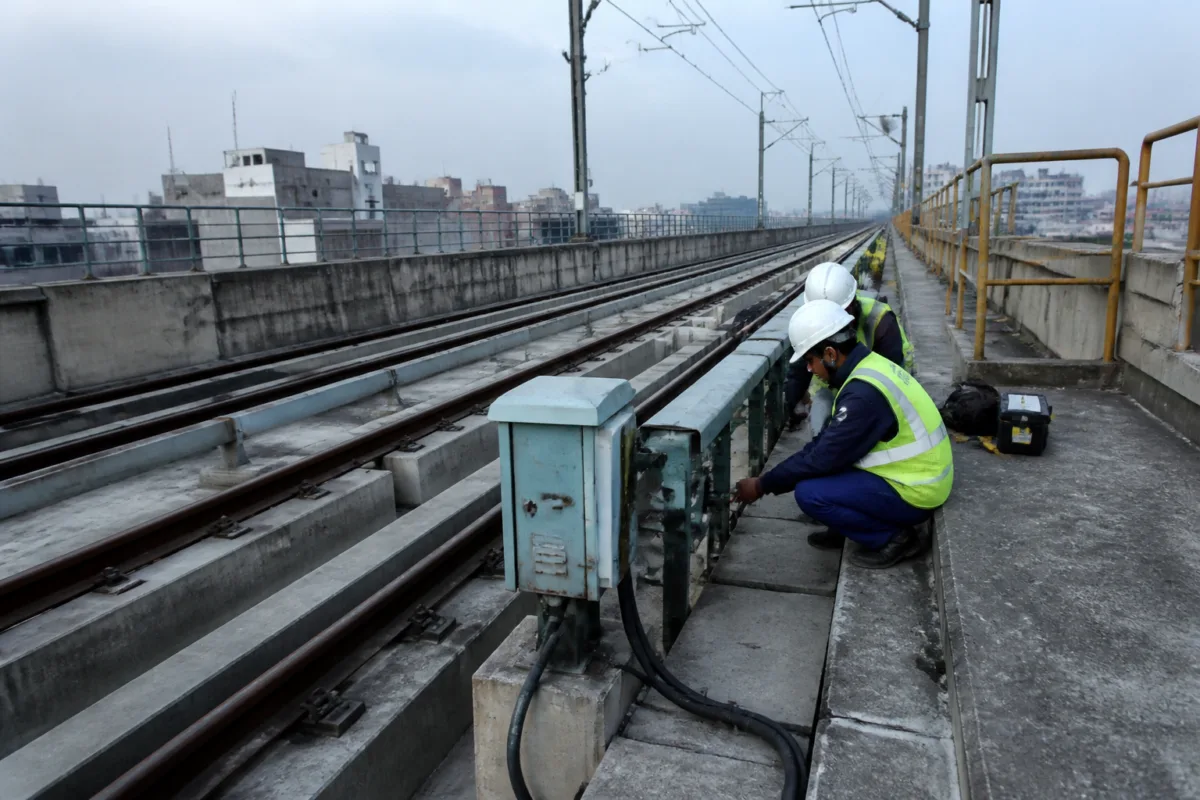
The immediate operational response was carried out by DMRC’s signalling team. Employees reached the site, inspected the track and found that three quad cables had been cut at three separate locations on the down line. The complaint states that the cables had been damaged after an unknown person or persons entered the track area without authorisation. The team then created an emergency temporary arrangement from the outdoor side of the system and restored the affected track circuits.
The significance of the incident lies in the role played by track circuits. They provide information about the presence and position of trains on a track. When a track circuit drops, the signalling system no longer receives the expected indication from that section. The supplied report does not establish that a train entered an unsafe movement or that passenger service was suspended, but it does show that the damage affected a safety-critical layer of the railway’s operating system.
That distinction is important. A signalling failure is not automatically evidence of an accident, but it is also not comparable to an ordinary equipment fault. Metro operations depend on several linked systems working together: trackside equipment, cables, signal control, train movement information and the staff responsible for responding when an abnormal indication appears. Damage to a cable can therefore create an operational problem even when trains themselves remain intact and emergency procedures prevent the disruption from escalating.
The report says DMRC employees restored all 15 affected track circuits through a temporary emergency arrangement so that passenger movement would not be disrupted. It also says that a detailed inspection and permanent repair of the cables were to be undertaken later. This separates the response into two stages: first, stabilising the system sufficiently to maintain safe operations, and second, determining the full extent of physical damage and completing lasting repairs.
That sequence is typical of infrastructure systems that cannot simply be taken offline for unlimited periods. Delhi Metro is described in the complaint as a major public transport system for Delhi-NCR, carrying about 70 to 80 lakh passengers each day. The scale of that daily dependence means that even a localised technical fault must be managed without losing control of the wider network. The report does not provide the duration of the disruption or identify any confirmed passenger delay, so the direct service impact cannot be quantified from the available information.
The case also brings access control into focus. The central unanswered question is not only who cut the cables, but how an unauthorised person or group reached a restricted track area containing vital signalling equipment. The report says police are examining how the individuals entered the prohibited zone and what their purpose was. Until that investigation establishes the route of entry and the motive, it is not possible to determine whether the damage resulted from trespass, deliberate sabotage, theft-related activity or another cause.
The police case was registered at Nandgram police station on November 16 on the basis of the DMRC complaint. Nandgram ACP Ziauddin Ahmed said the investigation would examine the access breach and whether the incident involved mischief or a planned conspiracy. These remain investigative possibilities, not established findings. No person has been identified in the supplied report, and the available material does not confirm an arrest or prosecution.
From an institutional perspective, the incident shows the different responsibilities that meet at a metro corridor. DMRC is responsible for operating and maintaining the railway infrastructure, detecting failures and restoring the system. Its signalling personnel documented the damage and initiated the emergency response. The police are responsible for investigating the alleged unauthorised entry and cable cutting. The safety of passengers therefore depends not only on engineering controls but also on physical security, incident reporting and coordination between the operating agency and law enforcement.
The event also illustrates why redundancy and rapid fault detection matter in urban rail systems. The supplied report does not describe the complete signalling architecture or identify whether the affected corridor has alternative communication or protection systems. It does establish that the control room received an abnormal indication, maintenance teams inspected the corridor, and an emergency arrangement allowed the affected track circuits to be normalised. Those steps limited the immediate operational consequences, but they do not by themselves answer whether the underlying vulnerability has been permanently addressed.
The available numbers show the scale of the immediate technical impact: three quad cables were cut at three locations, and 15 track circuits dropped. The wider public-service context is the reported daily ridership of approximately 70 to 80 lakh passengers across Delhi-NCR. These figures should not be conflated. Fifteen affected track circuits do not mean that 15 trains or 15 stations were affected, and the ridership figure does not establish how many passengers encountered disruption during this particular incident. What the numbers do show is the contrast between a physically localised act and the potentially broad operational responsibility carried by the metro system.
The case raises a larger urban infrastructure question: how should high-capacity public transport systems protect small but critical assets distributed across long, difficult-to-monitor corridors? Metro networks are often judged by visible assets such as stations, trains and viaducts. Yet safe movement also depends on less visible components—track circuits, signalling cables, control equipment and communications links. These assets may occupy narrow stretches of the right of way, but a failure can require immediate intervention because the system must know where trains are before normal movement can continue.
The report confirms that DMRC was able to detect the failure, inspect the affected stretch, establish a temporary arrangement and restore the track circuits. It also confirms that a police investigation is underway into the unauthorised access and cable damage. What remains unresolved is how the breach occurred, whether the permanent repair has been completed, whether security controls will change and whether investigators identify those responsible. Those are the next facts that will determine whether this was an isolated corridor intrusion or evidence of a wider weakness in protecting signalling infrastructure across the network.

