


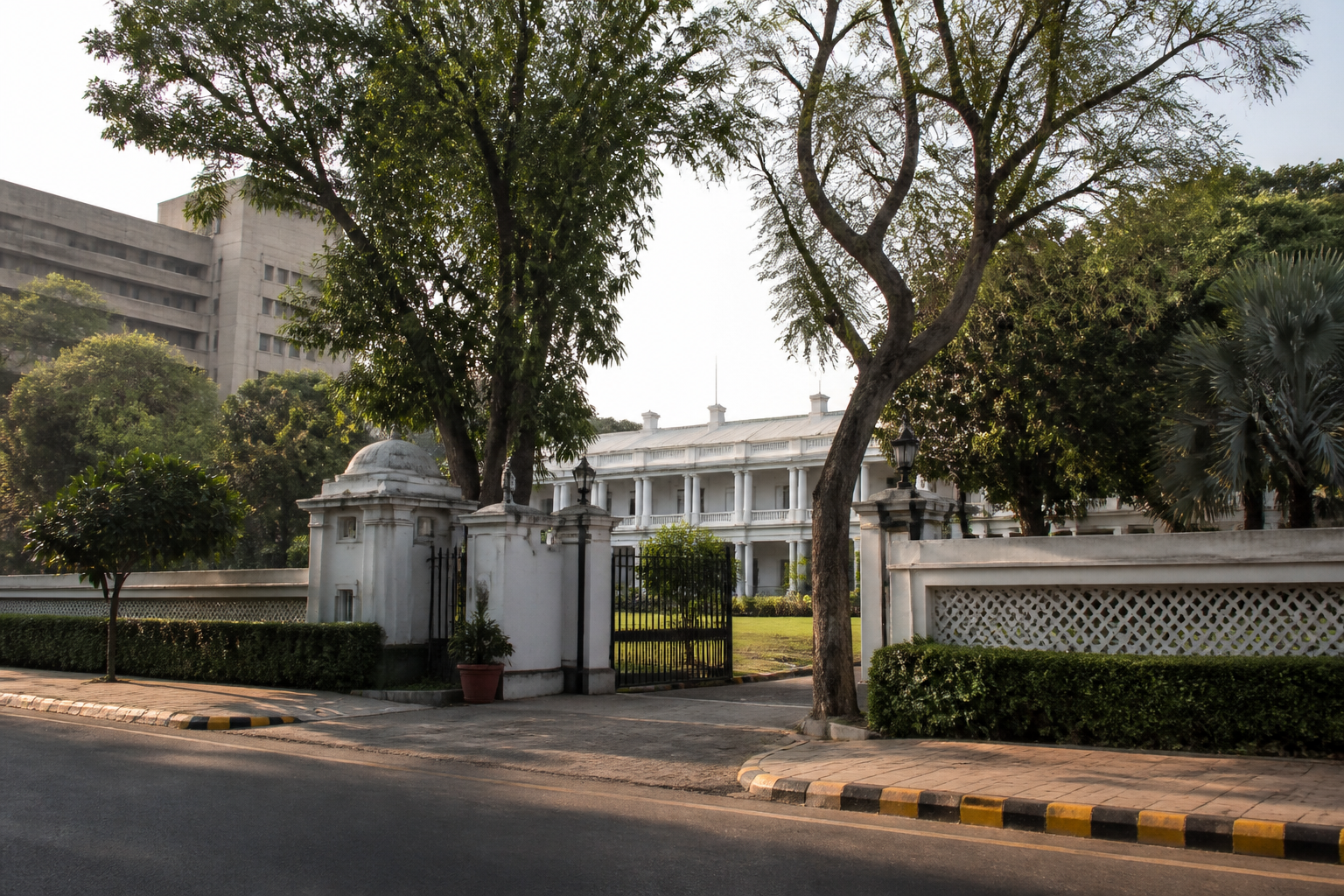
The Delhi High Court will hear on September 29 petitions challenging the Centre’s proceedings to terminate the lease and evict the Delhi Gymkhana Club from its 27.3-acre premises on Safdarjung Road, with the government arguing that the land is required for defence, security and public-interest infrastructure.
The petitions have been filed by Gymkhana member Vijay Khurana and the Delhi Gymkhana Club Ltd Staff Welfare Association against a May 22 order issued by the Land and Development Office (L&DO). The order terminated the club’s perpetual lease and directed it to return the land by June 5, citing the need for “strengthening and securing defence infrastructure”.
The petitioners have also sought a stay on a June 29 show-cause notice issued by an L&DO estate officer to the club’s management as part of the eviction process. The Centre has previously told the court that it would not take coercive action in relation to the proceedings while the matter is under consideration.
In its written response, the Centre has sought dismissal of the pleas, arguing that club members cannot restrain the government from enforcing rights arising from the lease deed after its termination. The government said members did not have a personal estate in the land or an independent right to enforce the terms of an agreement to which they were not parties.
“The plaintiff cannot claim a personal estate in the land, or a right to enforce the terms of an instrument to which he is not privy, merely by describing his membership privileges as a right to enjoy the club premises,” the Centre said in its reply, filed through standing counsel Ashish Dixit.
The government described the premises as being in a sensitive and strategic area and said the land was required not only for defence infrastructure but also for public security, institutional and governance infrastructure, and public-interest projects integrated with adjoining government land. It argued that the site’s historical use as a private club did not make those proposed uses legally impermissible.
The Centre has further relied on the Public Premises (Eviction of Unauthorised Occupants) Act, arguing that the law bars civil-court jurisdiction over proceedings concerning eviction from public premises. It has also submitted that courts cannot grant an injunction restraining action by the estate officer under the Act.
The government’s position is that the lease deed was a bilateral agreement between the Centre and the Delhi Gymkhana Club, and that an individual member who was not a party to it cannot independently prevent the authorities from exercising their contractual rights.
Khurana has challenged the stated grounds, describing the Centre’s references to defence infrastructure and security as vague and generalised. He has alleged that the stated reasons are a “sham” and that the proceedings amount to an attempt at forced eviction rather than action following due process.
The High Court’s September 29 hearing will consider the members’ petitions and the challenges to the eviction-related proceedings. The court’s consideration will determine the next stage of the dispute over the club’s lease and occupation of the Safdarjung Road site.
