


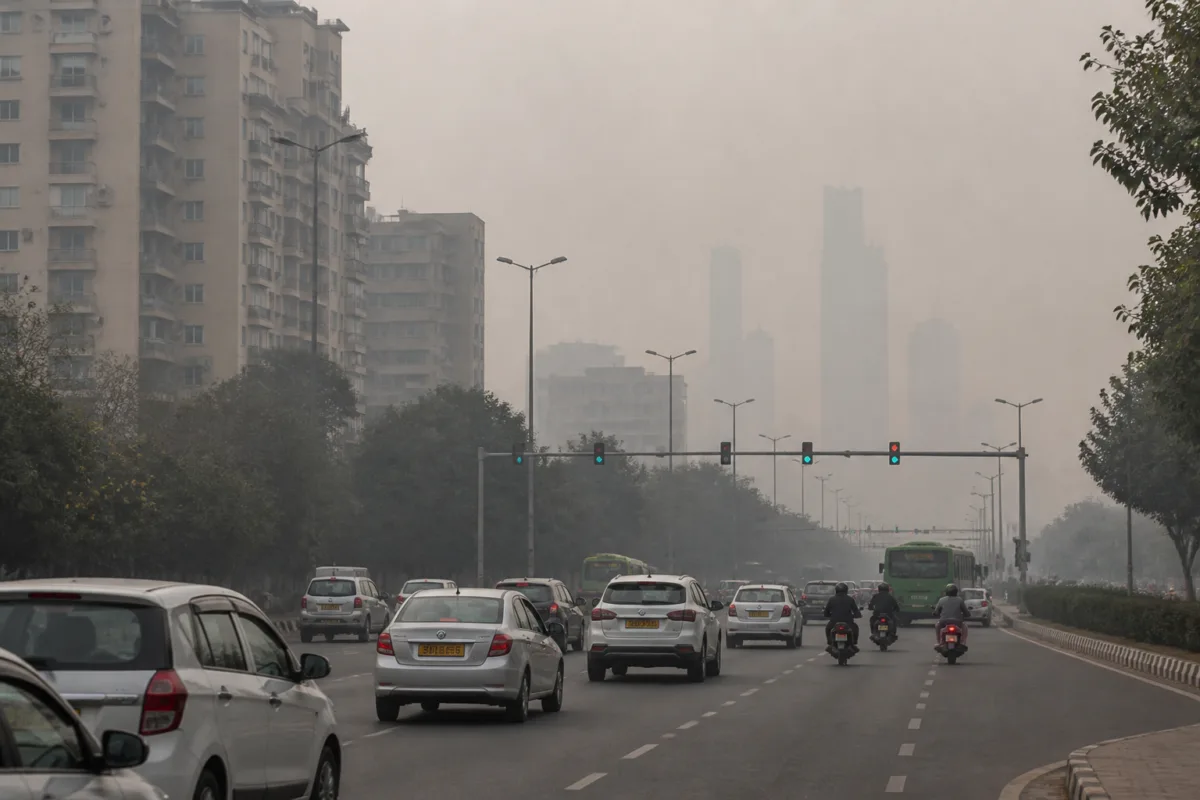
Delhi’s air quality deteriorated sharply on Monday, with the city recording its first “very poor” Air Quality Index reading of the season and three monitoring stations reporting AQI above 400. The Central Pollution Control Board recorded Delhi’s average AQI at 324, while the weather department forecast morning haze on November 3 and 4.
The city’s average AQI was the highest recorded since February 4, when it stood at 339, according to the report citing Press Trust of India. Monday’s reading was also the worst air pollution level recorded in Delhi in 271 days, or roughly nine months.
At 4 pm, Jahangirpuri recorded the highest AQI among the monitored locations at 436, placing it in the “severe” category. Rohini recorded an AQI of 415, while Punjabi Bagh recorded 413. Delhi’s average AQI had stood at 312 at 9 am, indicating that pollution levels remained high through the day.
The CPCB identified PM2.5 as the principal pollutant in Delhi’s air. Fine particulate matter can remain suspended in the atmosphere and is a key indicator used to assess pollution exposure across the city. The reported readings show that deterioration was not limited to the citywide average but was particularly acute in several localities.
The India Meteorological Department has forecast morning haze in Delhi on November 3 and 4. The weather outlook indicates that the city is unlikely to receive immediate relief from pollution during those two days. No rain is forecast in Delhi this week, according to the report.
Maximum temperatures are expected to remain around 28 to 30 degrees Celsius on November 3, 5, 6 and 8. On November 4 and 7, temperatures are expected to remain between 27 and 29 degrees Celsius. The weather conditions are being monitored as the absence of rainfall and the presence of morning haze can coincide with continued poor visibility and persistent pollution levels.
The deterioration in Delhi-NCR’s air quality comes as severe Cyclone Murasu moves across the Bay of Bengal. The cyclone was expected to cross the coast near Ongole, between Nellore and Narasapuram, late Monday night or early Tuesday, with wind speeds of 100 to 110 kilometres per hour at landfall. Heavy rain and strong winds were forecast in several parts of the country because of the system.
However, the report said the cyclone was not expected to have an immediate impact on weather conditions in Delhi and the National Capital Region. The next developments for the capital will therefore depend on the forecast haze and the air-quality readings recorded by monitoring stations across the city.

