


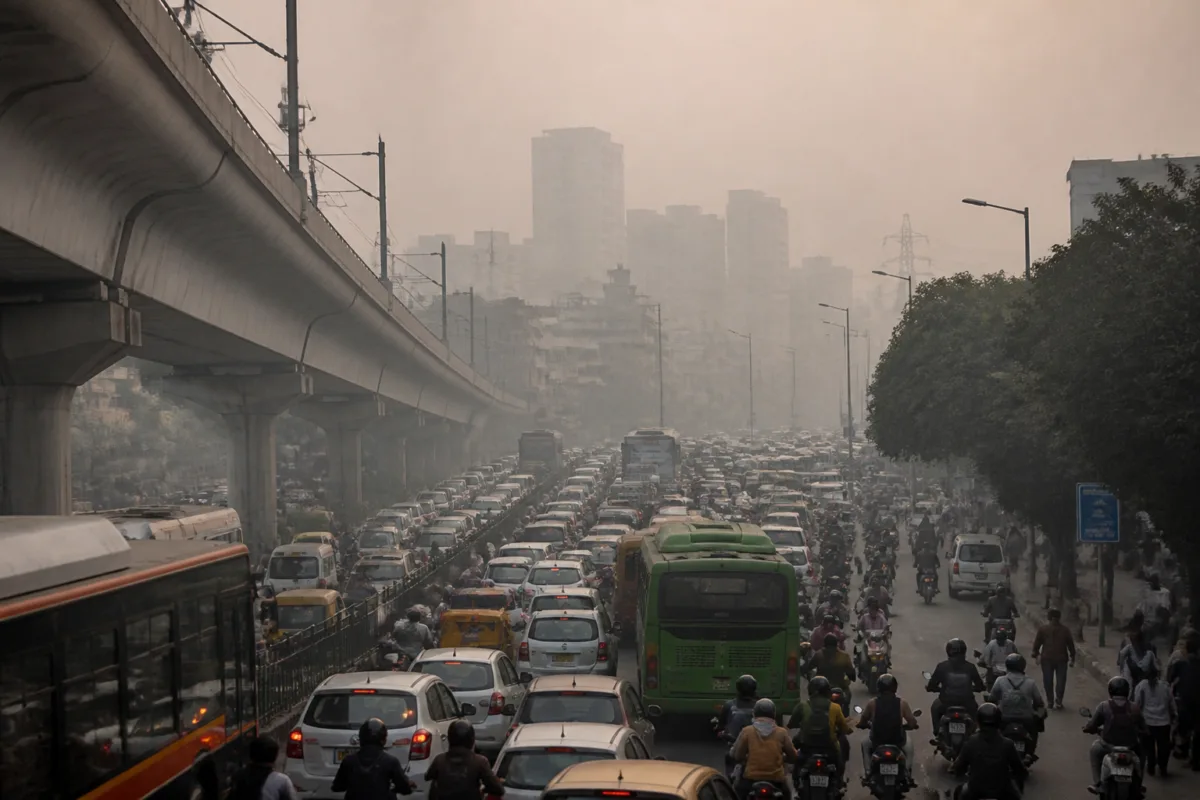
Delhi-NCR has entered a severe pollution episode, with the air quality index crossing 400 in several monitoring areas and the Commission for Air Quality Management imposing Stage 2 restrictions under the Graded Response Action Plan. The measures include stronger dust-control action, expanded road cleaning and water sprinkling, and an appeal to residents to use public transport instead of private vehicles.
Data displayed on the Central Pollution Control Board website at 8:30 am on Tuesday showed the highest AQI in Jahangirpuri at 451. Rohini recorded 431, Punjabi Bagh 424, Alipur 415, Vivek Vihar 411, Bawana 409, Delhi Technological University 409 and Narela 408. More than 20 other areas recorded AQI readings between 300 and 400.
Delhi’s average AQI was 324 on Monday, placing it in the very poor category. The average had been 261 on November 1 and 117 on October 31, indicating a sharp deterioration over two days. The report attributed the worsening conditions to unfavourable weather and said pollution levels were expected to remain in the very poor range in the coming days.
Under the GRAP framework, an AQI between 301 and 400 is classified as very poor, while readings between 401 and 500 fall in the severe category. GRAP-2 includes the measures introduced during the first stage as well as additional restrictions intended to limit pollution from dust, traffic and other urban sources.
The CAQM has asked residents to prefer buses and the Metro over private vehicles and to consider working from home where possible. The Delhi Metro has announced 20 additional train trips because of the rise in pollution. The measures are intended to provide greater public transport capacity while reducing the use of private vehicles during the episode.
Road agencies will increase mechanical sweeping and water sprinkling on major roads. Dust-control measures will also be intensified at identified pollution hotspots and construction sites. Resident welfare associations have been asked to focus on cleanliness, while residents have been advised not to burn wood or waste in the open.
The pollution episode is also visible along the Yamuna. Toxic foam was reported floating again near Kalindi Kunj, ahead of the Chhath festival. Preparations have begun to address the foam, including chemical spraying in the river, according to the report.
CAQM’s GRAP sub-committee decides on restrictions using air-quality readings and weather forecasts. The current restrictions will remain in force as Delhi-NCR authorities respond to the worsening readings and implement the announced dust-control, transport and public-advisory measures.

