


Delhi and adjoining districts in Uttar Pradesh, Haryana, Rajasthan and Punjab have completed only 40% to 60% of the anti-pollution measures listed in their annual action plans, with several deadlines missed before the winter pollution season, according to official sources cited by The Hindu.
The plans were submitted to the Commission for Air Quality Management in the National Capital Region and Adjoining Areas in January and finalised in February. Although the measures cover the full year, States were expected to complete major portions by October 31 ahead of the seasonal deterioration in air quality.
An official source said the current level of implementation was “not satisfactory”, although work had begun in different sectors. The States have been directed to accelerate their efforts, the source said.
The progress figures are based on a weighted assessment of actions completed by the States as of September 30. Rajasthan was identified as the worst performer and Uttar Pradesh as the best. Greater weight was given to concrete measures intended to reduce emissions, including road redevelopment and increasing the number of electric buses.
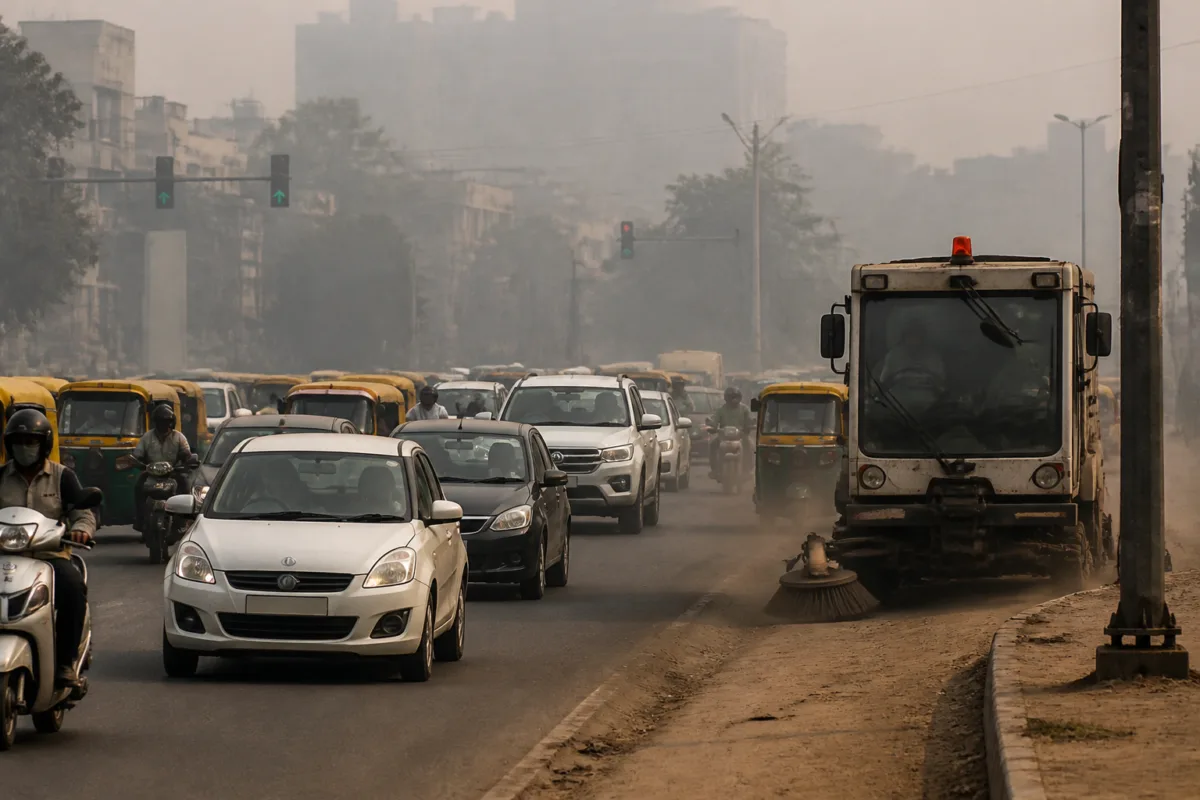
Road redevelopment remains a major weak point. Almost all the States had completed less than half of their targets in this area, according to the official source. Poorly maintained and dusty roads are among the urban infrastructure issues covered by the action plans because road dust contributes to deteriorating air quality across the National Capital Region and nearby areas.
Delhi’s own commitments also remain incomplete. The Delhi government had set a target of deploying 70 mechanical road-sweeping machines for wide roads and another 70 for smaller roads by the end of July. None of the new machines had been deployed by the time of the assessment. The target for smaller roads was subsequently reduced to 30 machines.
Delhi Environment Minister Manjinder Singh Sirsa said on October 12 that part of the fleet of 70 machines for large roads was expected to arrive by the end of November. The action plan does not therefore translate immediately into operating capacity on the city’s roads, where sweeping, dust control and maintenance depend on equipment deployment as well as administrative deadlines.
Another measure remains pending across NCR districts in Haryana, Uttar Pradesh and Rajasthan. A mandate requiring fuel stations to deny fuel to vehicles without a valid Pollution Under Control Certificate was scheduled to take effect on October 1. Monitoring was to be carried out through automatic number plate recognition cameras or other technology, but the system had not been implemented in those districts, according to the report.
The action plans cover vehicular emissions, dust mitigation, crop-residue management and other sources of pollution. Punjab’s plan was limited specifically to controlling stubble burning. The seasonal pollution burden is also shaped by low wind speeds and falling temperatures, while crop-residue burning in October and November, festive firecrackers, vehicle emissions and dust add to the existing load.
Delhi’s air quality index and that of neighbouring cities had already entered the poor and very poor categories, according to official data cited in the report, with further deterioration expected. The authorities’ immediate next steps are to accelerate implementation of the pending measures and complete the delayed equipment, enforcement and infrastructure actions.

