


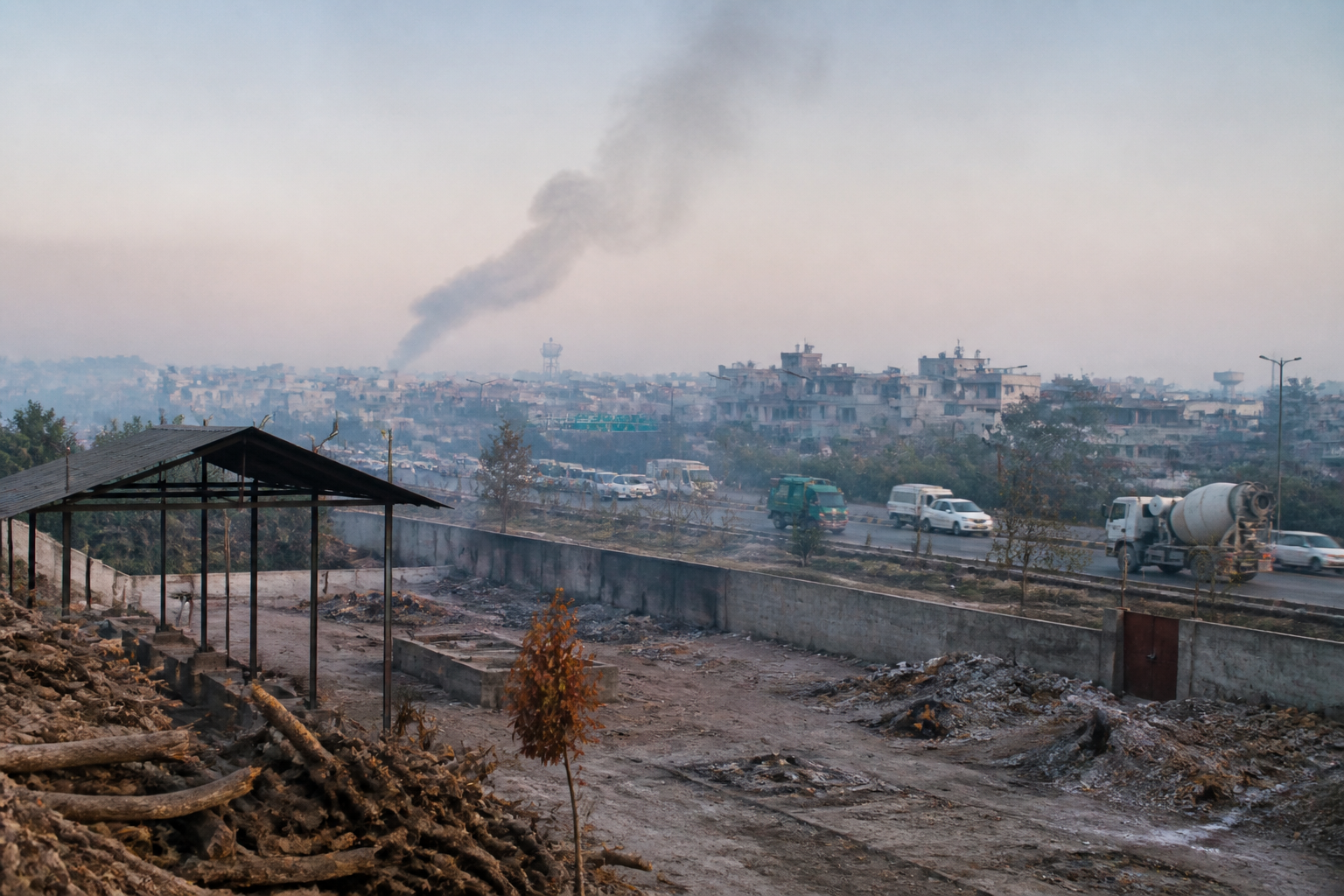
Delhi’s air pollution crisis prompted a short-term proposal in the Municipal Corporation of Delhi House to restrict wood-based cremations for four months, alongside demands for stricter action against waste, open construction material and weak implementation of pollution-control rules.
The proposal was made by BJP councillor Rajpal Singh during a discussion on air pollution at the MCD House meeting chaired by Deputy Mayor Monika Pant. Singh suggested encouraging cremations using cow-dung cakes, compressed natural gas or electric systems instead of wood during the four-month period.
Singh said around 200 cremations take place daily using wood in Delhi and claimed that restricting the practice could save about 100 tonnes of wood every day while reducing pollution from its burning. The report did not indicate that the MCD House had adopted the proposal as a binding policy.
The discussion also focused on enforcement beyond cremation grounds. Councillor Ritu Goyal said pollution control would remain ineffective without better sanitation. She alleged that the waste-collection company operating in the Rohini zone was not working properly and demanded action against people who leave construction material in the open along roads.
Congress councillor and party leader Nazia Danish also called for pollution-control measures to be implemented at ground level. The demands reflect the range of responsibilities that municipal bodies carry during Delhi’s pollution episodes, from waste collection and road maintenance to action against unauthorised construction activity and material storage.
The meeting was also disrupted by a dispute involving Leader of the Opposition Ankush Narang. According to Leader of the House Jai Bhagwan Yadav, Narang pushed and manhandled security personnel after arriving during the discussion and moving towards the mayor’s chair. Narang denied the allegation and claimed that MCD security guards had prevented Aam Aadmi Party councillors from entering the House.
Narang also demanded registration of a first information report in connection with an alleged matter involving Parvesh Verma, saying the police had not acted on it. The supplied report does not provide further details of that allegation or record an independent confirmation of either side’s account.
The meeting’s pollution discussion highlights how Delhi’s air-quality response is divided across several municipal functions. A proposal concerning cremation practices addresses one specific source of emissions, while the other demands raised in the House concerned everyday civic operations such as waste lifting, construction activity and road cleanliness. None of the proposals reported from the meeting was presented as a final, citywide order.
The immediate next steps are the MCD’s consideration of the demands and enforcement of existing rules concerning waste, construction material and sanitation. The report does not specify whether the proposed four-month restriction on wood-based cremations will be placed before the corporation for a formal decision.
