


The Delhi Development Authority will convene a one-day roundtable on November 20 to discuss the restoration and management of the Yamuna floodplains, bringing government officials, experts and civil society representatives together to frame priorities for the river’s 52-kilometre urban stretch in Delhi.
The event, titled ‘Yamuna Dialogues’, will be held at Baansera in New Delhi and is scheduled to be inaugurated by Lieutenant Governor Sardar Taranjit Singh Sandhu. The discussions will include national and international experts, senior government representatives, scientific institutions, urban planners and civil society representatives.
The roundtable will be organised through six thematic sessions. These will cover governance mechanisms; floodplain planning and ecological measures; water quality and drainage management; river–people connect and ghat development; sustainable financing; and emerging technology, research and innovation.
The DDA said the recommendations from the sessions will be compiled into a proposed ‘Delhi Yamuna Report’. The report is expected to outline priority interventions, institutional responsibilities, potential partnerships and pathways for implementation. The proposed structure places the river’s restoration within a wider administrative framework involving planning, ecology, drainage, public access, financing and technology.
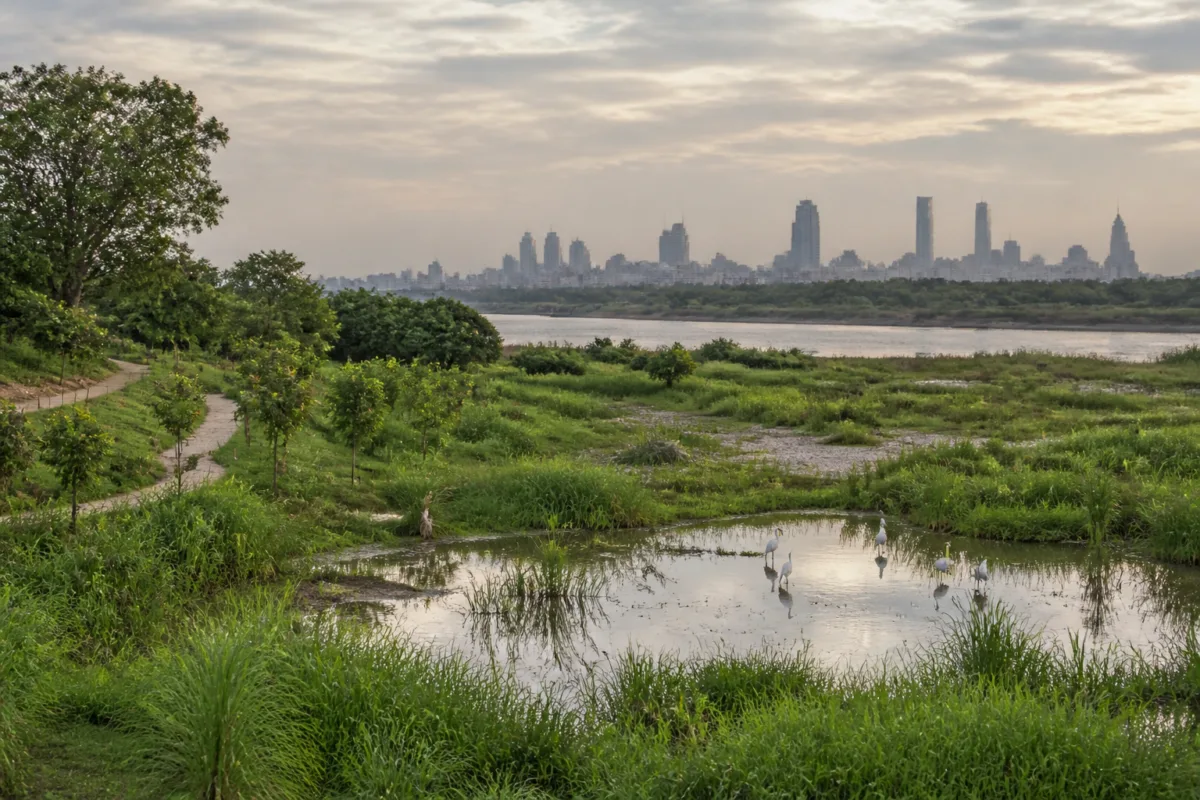
The meeting comes as the DDA continues restoration work across the Yamuna floodplains. More than 1,700 hectares are currently under active restoration, according to the information released for the event. The authority has also reported the revival of 35 wetlands and the planting of more than seven lakh native trees.
The restoration programme has additionally involved the removal of around 88,000 metric tonnes of construction and demolition waste from the floodplain areas. Such waste has been a visible urban management challenge along river and drainage corridors, where unregulated dumping can affect land, water flow and ecological restoration efforts.
At Asita, one of the DDA’s major restoration sites, the number of recorded bird species has risen from 63 to approximately 200, according to the authority’s account. The figure is being cited as an ecological indicator of changes at the site, although the supplied information does not provide the period over which the increase was recorded or the methodology used for the count.
The November 20 discussions will therefore address both the physical restoration of floodplain land and the institutional arrangements needed to manage the river corridor. The proposed Delhi Yamuna Report is intended to consolidate the roundtable’s recommendations and identify responsibilities and implementation pathways following the event.

