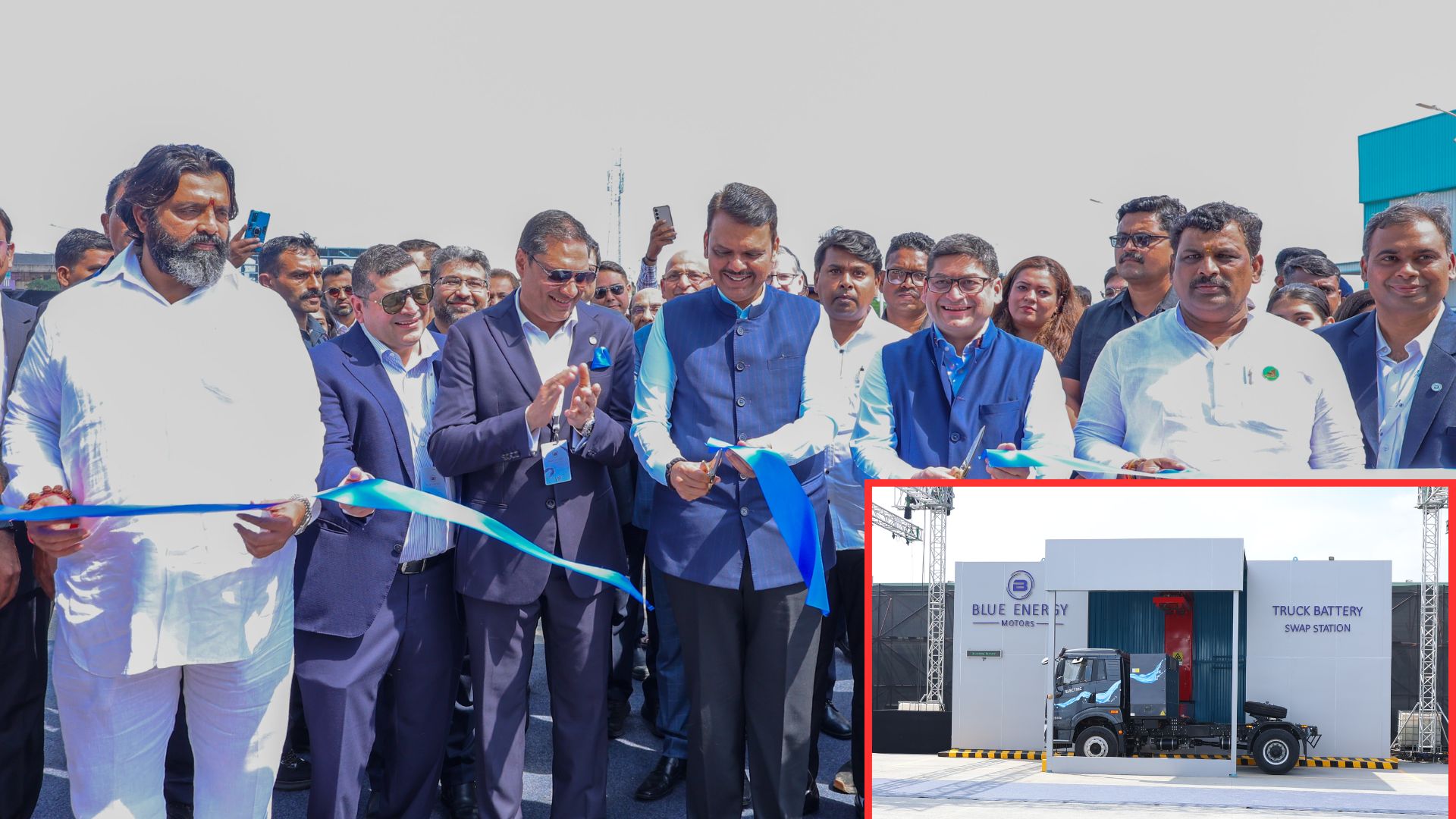
CM Devendra Fadnavis inaugurated India’s first electric highway corridor connecting Mumbai and Pune. This pioneering initiative marks the country’s first fully electrified national highway, aimed at transforming freight movement into a cleaner, more efficient system. Officials stated that the corridor is a critical milestone in India’s ambitious plan to electrify all major national highway routes within the next three years, advancing the nation’s Net Zero goals.
The corridor features state-of-the-art infrastructure to support electric heavy-duty trucks, including battery swapping stations and charging points along the route. At the event, the first electric heavy-duty truck of Blue Energy Motors (BEM) was unveiled at its Chakan facility in Pune. Experts highlighted that the truck, equipped with advanced battery-swapping technology, demonstrates India’s growing capabilities in sustainable commercial vehicle manufacturing and showcases the potential for reducing carbon emissions in logistics. Officials emphasized that the electrification of the Mumbai-Pune highway is expected to significantly reduce greenhouse gas emissions and operational costs for transport operators. The corridor also serves as a testbed for integrating smart technologies in freight corridors, including real-time vehicle monitoring and optimized charging infrastructure. Experts noted that such corridors could accelerate India’s transition to electric mobility, encouraging private players to invest in cleaner logistics solutions.
Transport authorities have ensured that the corridor adheres to international safety and performance standards, making it suitable for high-capacity freight vehicles. Officials added that the project also prioritizes gender-neutral facilities at charging and service stations, aligning with broader sustainability and inclusivity goals. The launch of this electric corridor is seen as a model for other national highways, demonstrating how large-scale infrastructure projects can simultaneously improve efficiency, reduce environmental impact, and encourage adoption of green technologies. While initial deployments will focus on freight vehicles, officials revealed plans to expand electric mobility for passenger transport along major corridors in the near future.
Experts noted that public-private partnerships will be crucial for scaling such initiatives, with investments in research and innovation required to make battery technology more efficient and economically viable. Authorities also stressed that monitoring and maintenance systems are being established to ensure the corridor functions optimally and supports India’s long-term climate and transport targets. As the Mumbai-Pune electric corridor becomes operational, it signals a significant step towards decarbonising India’s transport sector. Officials confirmed that the corridor will serve as a blueprint for replicating similar green highways across the country, paving the way for a cleaner, sustainable, and technologically advanced logistics ecosystem.
CM Devendra Fadnavis Inaugurates Indias First Electric Highway Corridor Mumbai Pune