


The Chennai police mistaken identity case involving economist and Madras Institute of Development Studies associate professor A Kalaiyarasan is not only about one wrongful pickup. As described in a complaint to the Director General of Police and in accounts cited by The Indian Express, it shows how quickly a digital image can become a substitute for identity verification when police are responding to political complaints about online speech.
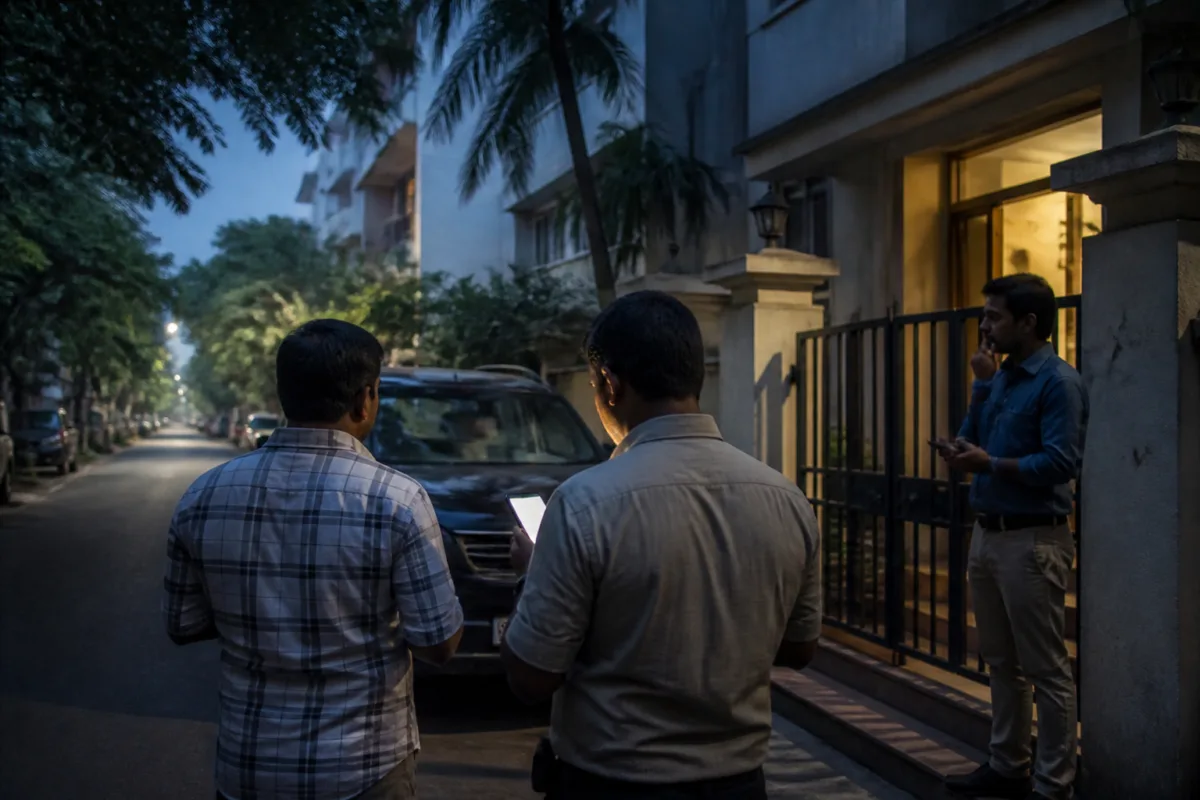
Three plainclothes policemen arrived at Kalaiyarasan’s Adyar home at about 5 am on October 28, took his phone and placed him in a rented car, according to his complaint. They were travelling towards T4 Sankar Nagar police station in Pammal, south of Chennai, in connection with an allegedly abusive Instagram comment targeting Pallavaram TVK MLA J Kamatchi. Kalaiyarasan told the officers that he did not have an Instagram account and had no connection with the account under investigation.
The central mistake, according to the report, was not that the police had found no clue. They had found an image. The account, displayed under the name Vijaya Manikandan and the handle @youvijayamani, carried Kalaiyarasan’s photograph. A senior officer said officers used a Google reverse image search, identified the person whose face appeared in the image and went to his home. Whether the account actually belonged to him was checked later.
That sequence matters because image matching and account attribution answer different questions. A reverse image search may establish where a photograph has appeared or who is associated with it elsewhere. It does not, by itself, establish who controls an account, who wrote a comment, or whether the person pictured consented to the use of the image. In this case, the distinction appears to have been treated as an operational detail rather than as the first condition for taking someone into custody or transporting them for questioning.
The report says Kalaiyarasan was taken away in his nightclothes without being given an opportunity to inform his family. He said the officers did not provide a copy of the complaint or an FIR, or any document authorising the inquiry. He also said he tried to explain that he knew neither the account nor the MLA. His complaint describes the episode as unlawful detention and seeks action over the alleged misuse of his photograph.
The police response, as reported, indicates that the error became apparent only after the journey had begun. After the car crossed Guindy, Kalaiyarasan was allowed a few minutes with his phone following repeated requests. He contacted friends, who alerted senior police officials after 7 am, according to sources cited in the report. The officers were subsequently traced near Chennai International Airport while travelling towards Pammal and were told to stop. A roadside wait in Pallavaram lasting about 45 minutes followed, during which calls were made and received and preliminary verification began.
The order of events is the most consequential part of the case. Verification did not precede removal from the home; it followed intervention by people outside the police team. The account does not establish whether the officers had a formal arrest, detention or notice procedure in place, and it does not report a completed departmental inquiry. But it does establish, through the professor’s complaint and an admission attributed to a police officer, that the identification process failed before the man was taken towards the station.
“Our officers were at fault,” an officer told The Indian Express. Once the mistake became clear, the team returned Kalaiyarasan home. During the return journey, officers showed him a screenshot, and he suspected that his photograph had been taken from Harvard University’s website, where he had been a research affiliate. At his apartment, he said he was required to provide a written denial of any connection with the account. His phone was returned and he reached home at about 7.45 am.
The episode also exposes a second institutional problem: the unequal burden created by a police error. The person whose photograph was allegedly used by someone else became the person required to explain the stranger’s online conduct. Kalaiyarasan’s complaint captures this reversal by stating that he was the victim in the matter. The report does not say whether the account holder has been identified or whether action has been taken over the alleged impersonation and use of the photograph.
That gap is important in a city where public and private life increasingly leave searchable digital traces. Photographs of academics, professionals, activists and ordinary residents are routinely available on institutional websites and social-media profiles. The report says Kalaiyarasan believed his photograph had been lifted from a Harvard website. If the allegation is established, the image’s public availability may have helped create the false association. But availability is not authorship, and visibility is not consent.
The case began after complaints from Kamatchi’s team about sustained online abuse, according to police sources. The report says progress on the complaints was slow, while pressure from the MLA’s office increased and local officers took up some complaints for action. This context does not establish political direction in the mistaken pickup. It does, however, show how complaint pressure can shape the pace and priorities of local policing, particularly when the alleged offence involves political speech and online criticism.
A senior officer quoted in the report said police personnel at Pammal station and TVK leaders did not know about Kalaiyarasan, his book or his academic work before the incident. That statement was offered as a response to political explanations that emerged online. Former Chief Minister M K Stalin later questioned whether the professor had been deliberately targeted and demanded a public apology from the Chief Minister and the police. His allegations remain political claims; the supplied report does not provide independent evidence establishing deliberate targeting.
The institutional response from MIDS was more limited but significant. Director M Suresh Babu said the institute had learnt of the incident involving a faculty member and was concerned about the hardship caused. He said he hoped the offenders would be booked at the earliest. The statement records the impact on an academic institution, but the supplied material does not identify a completed police action against any officer or against the person allegedly operating the account.
This is where the incident moves beyond a question of individual conduct. The failure described in the report occurred across several stages: interpreting an online complaint, identifying a person through a photograph, deciding that the identification was sufficient to reach his home, transporting him before confirming account ownership, and requiring a written denial after the mistake became clear. Each stage involved an opportunity for verification. The error was not corrected by the original process; it was interrupted by calls to senior officials.
The case also illustrates the limits of technology when it is used without procedural safeguards. A search tool can help investigators locate a photograph, but it cannot determine authorship, intent or control of a digital account. Those questions require additional evidence. The report does not specify what further verification methods were attempted before the police arrived at Kalaiyarasan’s home, nor does it state whether investigators had contacted the account holder, the platform or other witnesses.
For Chennai’s residents, the practical issue is not limited to Instagram. It concerns the conditions under which a person can be identified, approached and taken away when the initial evidence is digital and potentially deceptive. The report records no allegation that Kalaiyarasan wrote the comment, yet the consequences of the allegation reached his home before the basic identity question had been settled. That is precisely the kind of institutional asymmetry that makes documentation, notice and accountability important even in fast-moving online investigations.
The available evidence confirms that a professor was taken towards a police station after officers linked his photograph to an Instagram account, that verification followed intervention from senior officials, and that he was returned home after the mistake became clear. It does not establish whether the incident was deliberate, whether officers violated a specific legal provision, or who operated the account. Those questions require the inquiry sought in Kalaiyarasan’s complaint and any documentary findings that follow. The developments to monitor are the police response to the DGP complaint, action over the alleged use of his photograph, and whether the department explains what verification was conducted before the early-morning pickup.

