


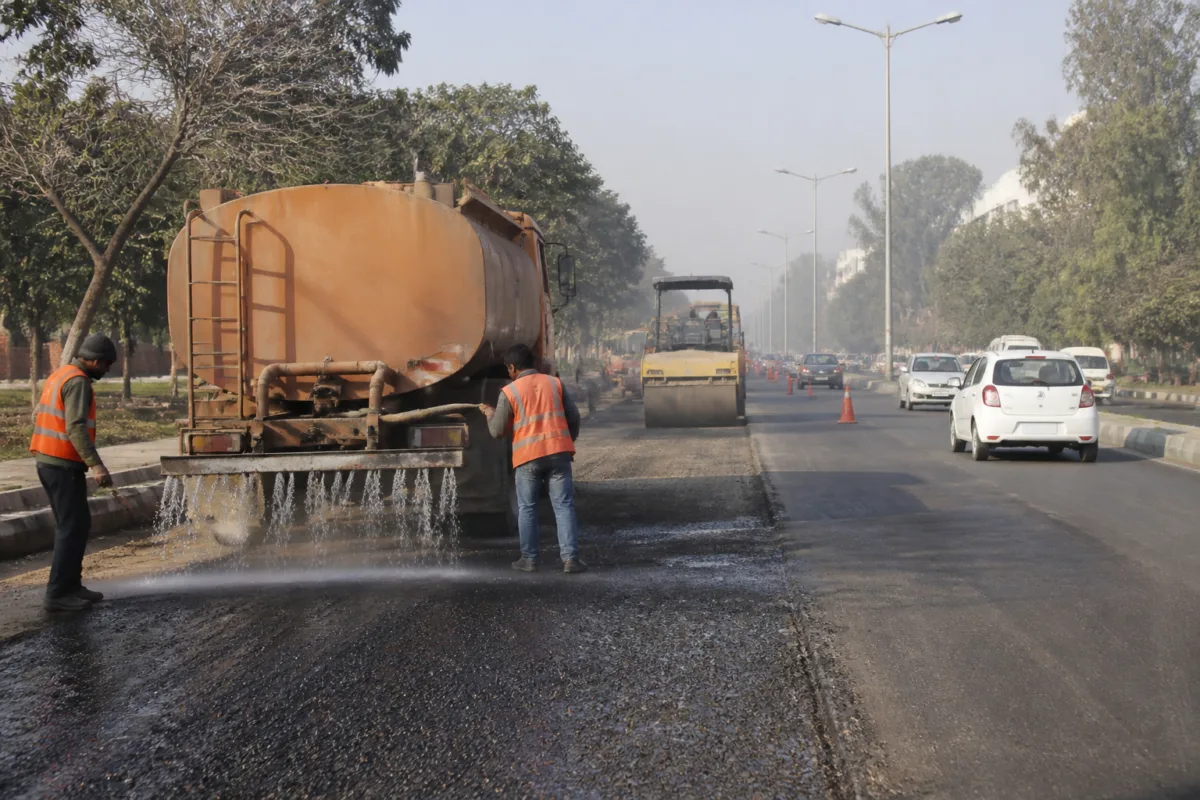
Chandigarh’s overall Air Quality Index rose to 146 on Wednesday, moving the city into the Central Pollution Control Board’s ‘moderate’ category as road recarpeting and weak atmospheric dispersion contributed to worsening particulate pollution, The Tribune reported.
The CPCB’s daily bulletin recorded a sharp increase from an AQI of 109 on Tuesday. Readings from Continuous Ambient Air Quality Monitoring Stations showed significant variation across the city. Sector 53 recorded the highest AQI at 153, followed by Sector 25 at 146, while Sector 22 reported a reading of 116.
The report attributed the deterioration to dust from ongoing road recarpeting works, lower night temperatures and sluggish wind speeds. These conditions can trap dust and other pollutants close to the ground instead of allowing them to disperse.
Under CPCB parameters, an AQI between 101 and 200 is classified as moderate. At this level, people with lung diseases, including asthma, as well as children and older adults, may experience breathing discomfort.
Health experts cited in the report advised vulnerable residents to limit prolonged outdoor exertion, particularly during the early morning and late evening, when particulate concentrations may be higher.
With no immediate rain forecast, the report said dust-mitigation measures would require strict enforcement along roadwork stretches. Regular water sprinkling was identified as a necessary step to control dust and reduce the risk of the city’s air quality deteriorating further into the poor category.
The readings highlight the connection between construction and road-maintenance activity and short-term exposure conditions in different parts of Chandigarh. The station-level variation also indicates that residents’ exposure may depend significantly on local worksites and neighbourhood conditions.

