


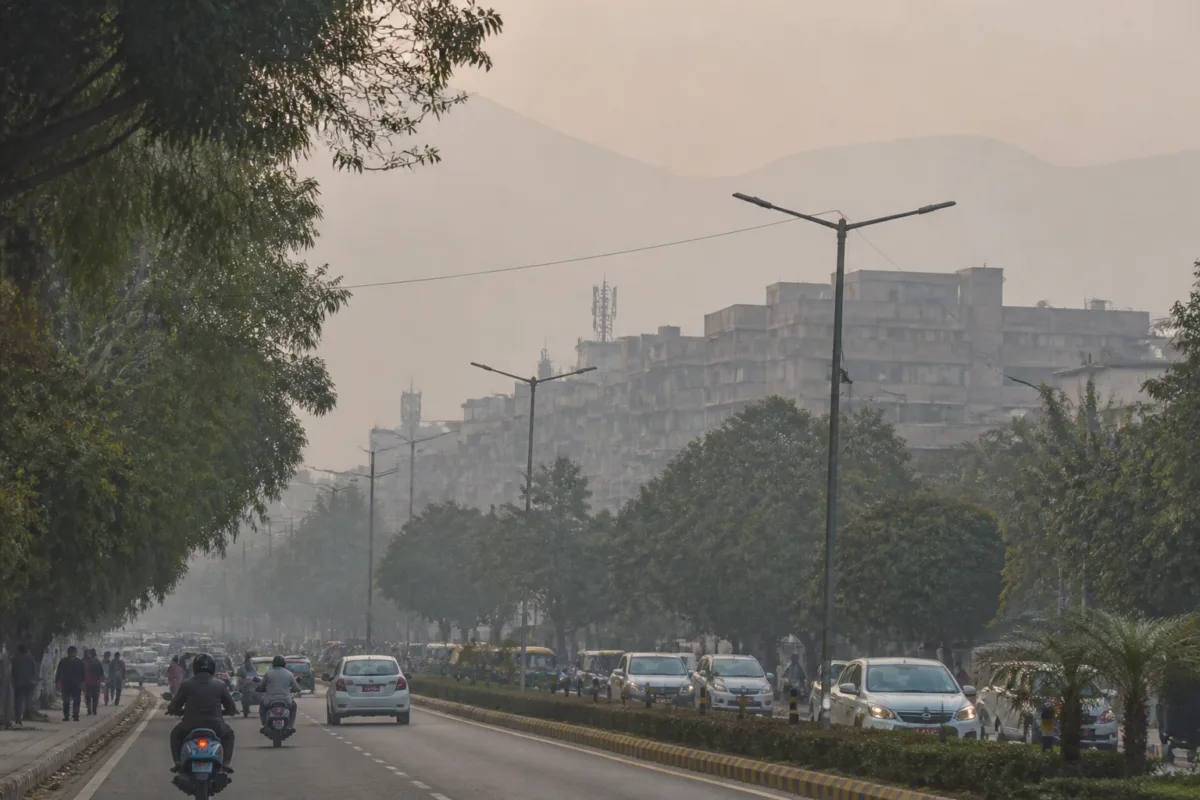
Chandigarh’s air quality deteriorated on Friday as the city’s air quality index (AQI) rose to 117, moving back into the moderate category after two days of satisfactory readings. PM10 was identified as the predominant pollutant, while the Central Pollution Control Board’s advisory warned that the conditions could cause breathing discomfort for vulnerable residents.
The latest AQI reading was updated at 9.05pm, after the city recorded a reading of 103 at 4pm. Friday’s final reading was 29 points higher than Thursday’s AQI of 88, marking a fresh deterioration in air quality.
Chandigarh had remained in the satisfactory category on November 11 and 12, with AQI readings of 89 and 88 respectively. The improvement followed a sharper deterioration earlier in the month, when the city’s AQI reached 148 on November 9 and 150 on November 10.
The pattern shows repeated movement across the satisfactory and moderate categories during the first half of November. Air quality readings remained below 100 on eight of the month’s first 13 days, while pollution levels crossed the 100 mark on five days. The lowest AQI recorded during this period was 70 on November 6.
According to the CPCB advisory cited in the report, moderate air quality can cause breathing discomfort among people with lung disorders, asthma and heart diseases. Children, elderly people and residents with existing respiratory conditions have also been advised to exercise caution when air quality deteriorates.
The predominant pollutant on Friday was PM10, a category of particulate matter that can affect respiratory health. The reading comes as winter begins and weather conditions change, a period during which air-quality conditions in the city can fluctuate. A UT official said air quality was likely to remain a concern in the coming weeks.
For residents, the immediate public-health concern is concentrated among people with pre-existing respiratory and cardiac conditions, as well as children and older adults. The latest reading does not represent the most severe level recorded in November, but it reverses the improvement seen over the previous two days.
The city’s next AQI readings will indicate whether Friday’s rise is a short-term fluctuation or part of another sustained deterioration. Authorities’ continuing monitoring of particulate pollution and public advisories will remain important as winter conditions develop.

