


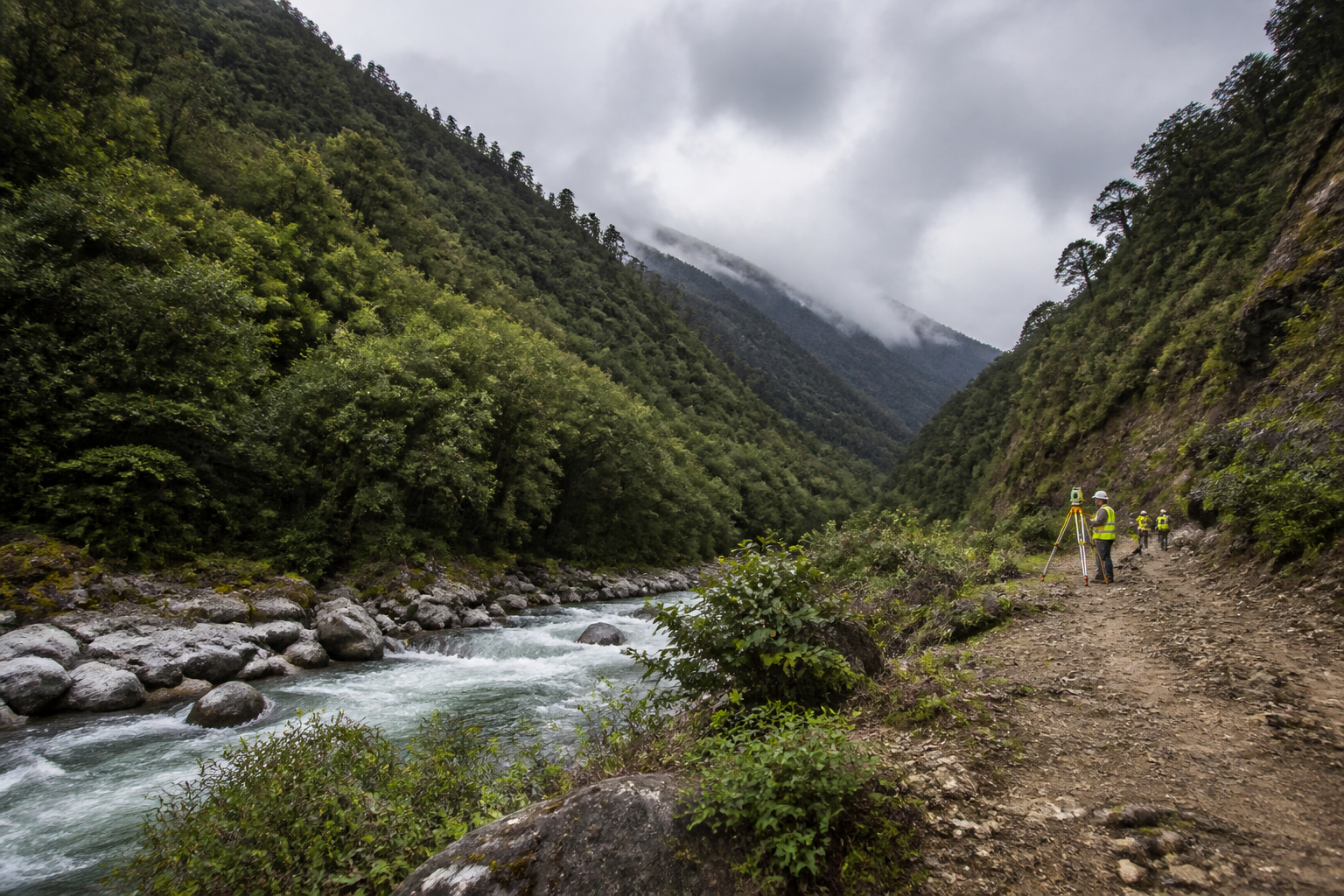
The 770 MW Chamkharchhu-I hydropower project is being positioned as more than a new generating station in Bhutan. Its proposed operating model—meeting Bhutan’s winter peak demand and sending surplus electricity to India during summer—shows how the two countries are trying to align seasonal energy needs through a cross-border infrastructure partnership.
Adani Power and Bhutan’s state-owned Druk Green Power Corporation Ltd (DGPC) have signed a Shareholders Agreement for the project, which will be built on the Chamkharchhu River in Zhemgang district in central Bhutan. Construction is expected to begin in the first half of 2027, with commissioning targeted within six years of groundbreaking.
The project will be developed through a 49:51 equity partnership. Adani Power will hold 49 per cent and DGPC will hold 51 per cent. It will follow the Build, Own, Operate and Transfer model and carry a 30-year concession from the date of commercial operation. These terms place the project within a long-duration public-private framework rather than treating it as a short-term generation contract.
The central challenge the project is intended to address is seasonal. According to the project announcement, Chamkharchhu-I is a peaking run-of-river project expected to help meet Bhutan’s peak winter electricity requirements. During summer, when surplus generation is available, the power is expected to be exported to India. The arrangement therefore links domestic energy security in Bhutan with a cross-border market for surplus clean electricity.
That seasonal structure is important because the project’s stated purpose is not simply to add capacity. Bhutan’s energy requirement varies across the year, and the project has been described as a means of strengthening energy security during the winter months while allowing surplus generation to be optimised and exported during summer. The available project information does not specify the proposed tariff, export mechanism, transmission arrangements or the expected annual generation. Those details will be important for assessing how the seasonal exchange will work in practice.
The agreement also illustrates the institutional architecture behind the project. DGPC is Bhutan’s leading renewable-energy generation company and is wholly owned by Druk Holding & Investments, the commercial arm of the Royal Government of Bhutan. The signing was attended by Bhutan Prime Minister Lyonchen Dasho Tshering Tobgay, the country’s Finance Minister and Minister of Energy and Natural Resources, as well as representatives of Druk Holding & Investments, Bhutan Power Corporation, the DGPC board and management, and Adani Power.
This participation gives the project a clear public-sector anchor. DGPC is not merely a private project partner; it is the country’s state-owned generation utility and operates within Bhutan’s government-owned commercial structure. The 51 per cent stake also leaves the Bhutanese utility as the majority shareholder. At the same time, Adani Power’s participation brings a major Indian corporate partner into the development and creates a formal ownership link between the two countries.
The project is part of a wider partnership rather than an isolated transaction. The two partners signed an agreement for the 570 MW Wangchhu Hydroelectric Project in September 2025. Chamkharchhu-I also falls under a broader 5,000 MW hydropower development partnership between the Adani Group and the Royal Government of Bhutan, based on a memorandum of understanding signed with DGPC in May 2025.
Taken together, these agreements indicate an attempt to establish a portfolio of projects instead of negotiating each hydropower station independently. A portfolio approach can create continuity in planning, financing and project development, but the supplied information does not establish the delivery schedule, financing structure or implementation status for the wider 5,000 MW partnership. For now, Chamkharchhu-I is the project for which the partners have announced a shareholders agreement and a proposed construction timeline.
The choice of the BOOT model also gives the project a defined institutional life cycle. Under this arrangement, the project is to be built, owned and operated before being transferred according to the agreed concession framework. The 30-year concession begins from commercial operation, meaning the concession period is tied to the date the project starts generating commercially rather than to the signing of the shareholders agreement or the start of construction.
That distinction matters for public infrastructure. The timeline currently available has several stages: construction is expected to start in the first half of 2027; commissioning is targeted within six years of groundbreaking; and the concession is to run for 30 years from commercial operation. The announcement does not provide a specific groundbreaking date, a detailed construction schedule or milestones for land, clearances, financing, transmission and contracting. These will determine whether the stated commissioning target can be achieved.
The project’s cross-border role also means that generation alone will not define its success. The power must be integrated into Bhutan’s electricity system during winter and moved to India when surplus generation is available during summer. That requires coordination between the generation project, Bhutan’s power system and the arrangements governing export to India. The announcement identifies the intended seasonal use of electricity but does not disclose the associated transmission or power-sale agreements.
Adani Power Managing Director Anil Sardana said hydropower would play a pivotal role in South Asia’s energy transition and that the project would contribute to energy security, lower carbon intensity and shared sustainability goals. He also said the project would enable surplus green power to be exported to India during summer and create long-term value for both countries.
DGPC Managing Director Dasho Chhewang Rinzin described the project as a way to strengthen Bhutan’s winter energy security while creating opportunities to optimise and export surplus clean energy to India. He said the partnership reflected the commitment of both countries to developing Bhutan’s renewable-energy resources through strategic partnerships and responsible and efficient project delivery.
These statements establish the official rationale for the project: domestic reliability first, regional energy exchange second. They do not, however, provide an independent assessment of expected demand, generation output, export volumes or the project’s financial returns. Those metrics will be necessary to understand how much of the proposed benefit will accrue to Bhutan’s electricity system and how much will depend on cross-border sales.
The project also places a long-term concession within a broader state-to-corporate partnership. Bhutan’s majority ownership through DGPC provides a public institutional role, while Adani Power is the private-sector partner with a significant minority share. The structure is therefore different from a fully state-led project and different from a privately controlled power asset. Its outcome will depend on how responsibilities are divided during construction, operation, export and eventual transfer.
For India, the project creates a potential source of imported renewable electricity, although the available announcement does not quantify the expected supply or identify the receiving states, buyers or transmission route. For Bhutan, the stated benefit is more immediate: additional clean-energy capacity designed around peak winter requirements, with the possibility of monetising surplus generation in summer. The two objectives are connected but not identical, and the operating and commercial agreements will determine how they are balanced.
The wider urban and infrastructure question is how smaller power systems can use regional partnerships to manage uneven demand without building infrastructure solely for a single seasonal peak. Chamkharchhu-I is presented as an example of matching a domestic requirement with a neighbouring market for surplus generation. Whether that model can be repeated will depend on project delivery, system integration and the clarity of the cross-border power arrangements.
What is confirmed at this stage is the 770 MW project, the 49:51 ownership structure, the BOOT model, the 30-year concession from commercial operation, the proposed construction start in the first half of 2027 and the six-year commissioning target from groundbreaking. The next developments to watch are the formal construction start, project financing and contracting, transmission and export arrangements, and progress on the associated Wangchhu and wider 5,000 MW partnership.
