


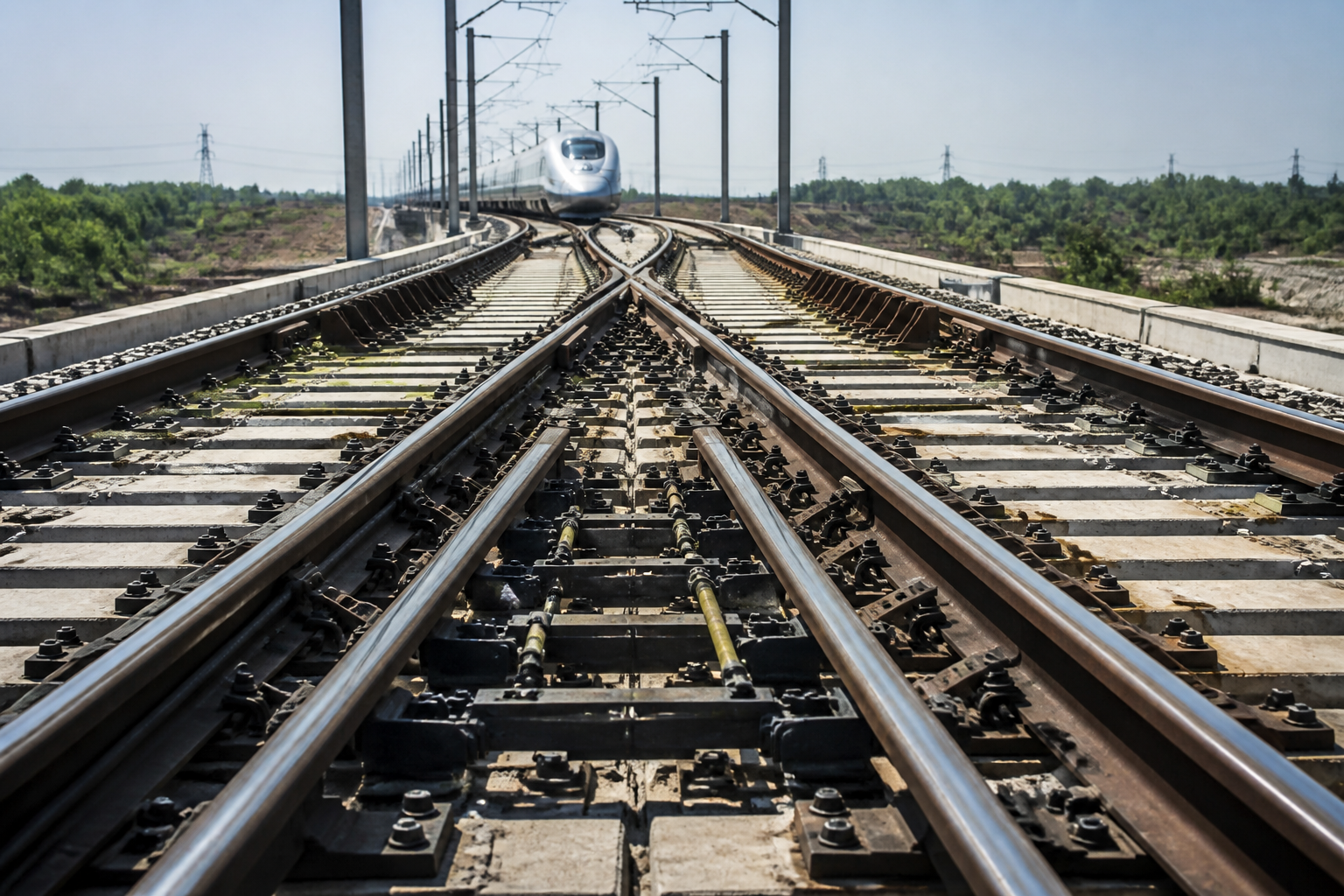
The Mumbai–Ahmedabad bullet train project is using swing-nose movable crossings for the first time in Indian Railways, a technical change designed to support the safe and smooth operation of trains travelling at up to 320 kmph.
The technology is being introduced on the high-speed rail route to replace the limitations associated with conventional fixed crossings. In a standard railway turnout, the crossing includes a gap at the point where the rails intersect. At high speeds, wheels passing over this gap can create shocks, vibrations, noise and increased wear on both wheels and rails.
According to the report, the swing-nose system addresses this problem by moving the crossing nose into the required position. This allows the wheels to receive continuous rail support while the train passes through the turnout. The arrangement is intended to reduce sudden impacts and vibrations and provide a smoother passage through the crossing.
The system is also expected to reduce noise inside train coaches and limit wear on wheels and rails. These effects are significant for a railway designed for speeds of 320 kmph, where even small irregularities in the track can affect the movement of wheels and increase operational risks.
Each high-speed railway turnout will use two independent point machines as part of a dual-point arrangement. One machine moves the entry rail into the required position and locks it. The second machine positions and secures the movable crossing nose. Both machines operate under a common control system and are coordinated before a train is permitted to pass.
The train will be allowed to use the turnout only after the system confirms that both points are in the correct position and have been locked. This interlocking sequence is intended to ensure that the route is secured before the train moves across the crossing.
The use of movable crossings marks a departure from conventional fixed-crossing technology on Indian Railways. For the Mumbai–Ahmedabad project, the change is linked to the operating requirements of a dedicated high-speed rail system rather than the lower speeds associated with conventional railway operations.
The project is being developed as India’s first high-speed rail corridor, connecting Mumbai and Ahmedabad. The report describes the swing-nose technology as an important component for safe operation and maintenance on the route. It does not provide details of the number of such crossings, their exact locations, installation timelines or the projected commissioning schedule for the corridor.

