


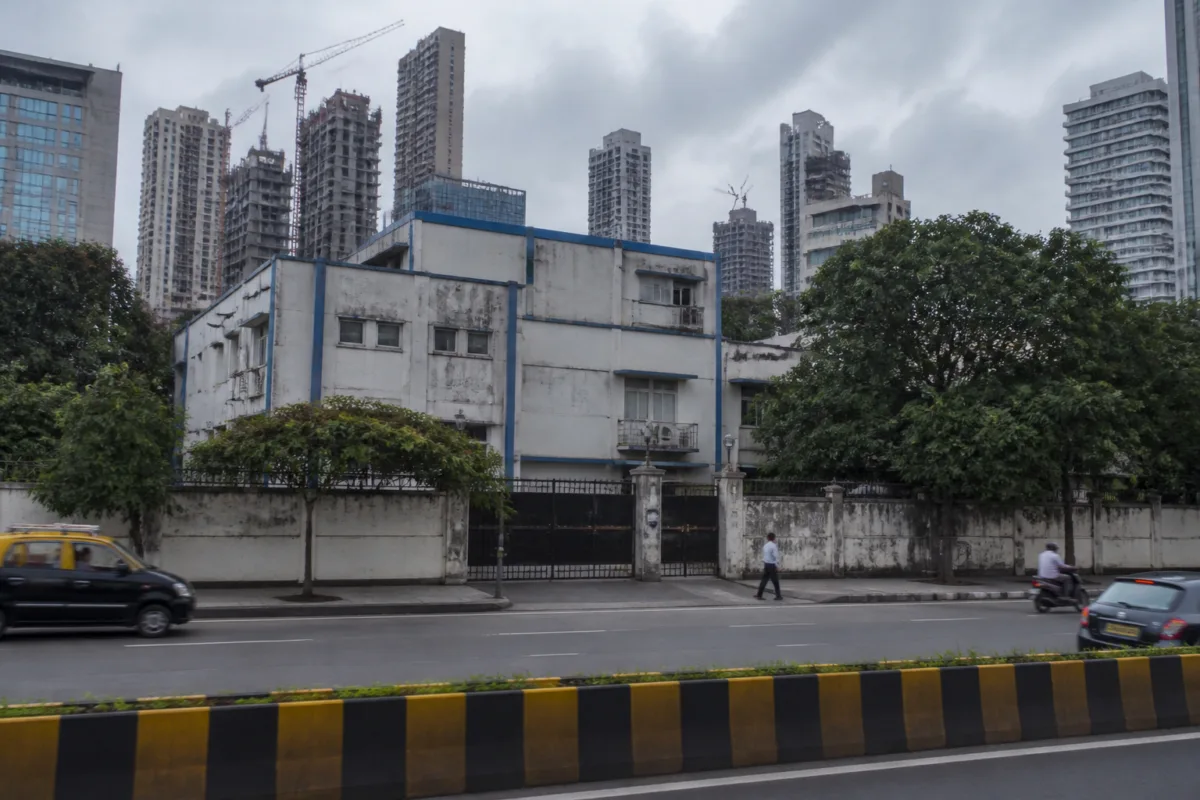
The Brihanmumbai Municipal Corporation’s proposed 60-year lease of its Lower Parel municipal laboratory plot is more than a land transaction. It is a test of how Mumbai plans to monetise valuable public land while protecting the civic services that currently operate on it.
The BMC has received a highest bid of Rs 470 crore from Skystead Constructions LLP for the 5,166-square-metre property in G/South ward. The plot houses the civic body’s municipal testing and laboratory facility. Under the proposal placed before the improvements committee, the land would be leased to the developer for 30 years, with a possible extension of another 30 years. The second period would be subject to the policy applicable at the time of renewal.
The immediate issue is therefore not only the value of the bid. It is the administrative sequence through which a functioning municipal facility is to be relocated, the land’s planning reservation is altered, and a private development right is created over a public asset.
The BMC has described the auction as a way to generate additional revenue and support the redevelopment of its existing testing and laboratory building. The successful bidder must construct a replacement facility with a built-up area of 1,299 square metres and hand it over to the civic body at its own cost. The existing building cannot be demolished until suitable temporary arrangements are made in consultation with the concerned department.
That condition places continuity of service at the centre of the transaction. The laboratory is not an unused parcel awaiting development; it is an operating municipal facility. The tender conditions recognise this by requiring temporary arrangements before demolition and a replacement building before the existing structure is removed. However, the supplied proposal does not establish the details of those temporary arrangements, their cost, their location or the timeline for commissioning the replacement facility.
This gap matters because public land redevelopment often involves a straightforward financial comparison, while the operational value of the facility is harder to measure. A civic laboratory may support municipal testing and related administrative functions that are not visible in the land’s commercial valuation. The proposal assigns responsibility for the replacement building to the developer, but the available information does not specify how the BMC will monitor construction quality, approve the facility or protect service delivery if completion is delayed.
The planning status of the plot adds another layer. The land is currently reserved for ‘Other Institutions’ under Development Plan 2034. The BMC proposal seeks approval to remove that reservation. The change would be processed under Section 37(1) of the Maharashtra Regional and Town Planning Act, 1966, which provides for modifications to an approved development plan, including the invitation of public objections and suggestions.
This means the lease is linked to a planning decision rather than being only a property disposal exercise. The letter of acceptance to the successful bidder will be issued only after the reservation is removed. The sequence gives the statutory modification a direct bearing on whether the transaction can proceed, and it creates a formal point at which the public can respond to the proposed change.
The plot also has physical planning constraints. It has direct access from Sudam Kalu Ahire Road, an 18.3-metre-wide road, and is affected by an approved road line of the same width. These conditions will shape the usable development area and the eventual form of any project on the site. The final plot area has not yet been confirmed through a joint measurement by the Superintendent of Land Records. As a result, both the measured area and the bid amount may change.
The bid itself offers a relatively narrow margin over the BMC’s base price. The civic body had fixed the base price at approximately Rs 455 crore, while Skystead Constructions LLP quoted Rs 470 crore, about 3.3% higher. Skylark Private Limited, the only other bidder, quoted Rs 459 crore. Two bids were received by the May 6 deadline, and their financial bids were opened on May 11 after both were found responsive during scrutiny.
The payment structure is designed to convert the bid into municipal revenue over a short period. The successful bidder must pay 30% of the accepted amount within one month of the letter of acceptance, followed by the remaining 70% in instalments over the next eight months. Delayed instalments will attract interest at 12% per annum. Failure to pay within the stipulated period could result in cancellation of the bid and forfeiture of deposits.
Yet the proposed lease rent is nominal compared with the upfront bid. For the first 30 years, the initial lease rent is proposed at Re 1 per square metre per annum, subject to a minimum of Rs 1,000 for open land. Rent for the subsequent period would be determined under the policy in force at that time. The structure therefore places the financial emphasis on the initial premium while leaving the terms of the possible second 30-year period to a future policy framework.
That arrangement highlights the importance of separating the one-time revenue from the longer-term value of the land. A 60-year lease can shape the use and control of a strategically located urban parcel across multiple administrative and market cycles. The current proposal provides for a 30-year term and a possible 30-year extension, but the available material does not establish the conditions that would govern renewal beyond the reference to the policy prevailing at that time.
The Lower Parel proposal also follows an emerging pattern in the BMC’s treatment of municipal land. In September, the civic house of corporators cleared a proposal to lease the corporation’s 6.17-acre Century Mills land in Lower Parel to a private developer through a similar 30-year arrangement, renewable for another 30 years. The two cases involve different land parcels and facilities, but together they show how municipal land in a high-value district is being considered as a source of revenue and redevelopment capacity.
For the BMC, the attraction is clear in administrative terms. A lease can generate substantial receipts without an outright sale, while development obligations can be placed on the private party. In the laboratory case, the civic body would also receive a replacement facility. But the model depends on clearly defined safeguards: the public purpose of the land must remain protected, the replacement facility must be usable before demolition, and the planning modification process must be completed transparently.
The institutional responsibilities are divided across several steps. The improvements committee must consider the proposal to award the lease to the highest bidder. The reservation change must proceed through the Development Plan modification process under Section 37(1). Land records authorities must confirm the final area through joint measurement. The concerned BMC department must coordinate temporary laboratory arrangements and the replacement building. The successful bidder must meet the payment schedule and construction obligation.
This division makes the transaction administratively complex even though the headline figure is simple. The Rs 470 crore bid is not, by itself, the final measure of the public outcome. The final land area may alter the amount, the planning reservation must be removed, and the existing laboratory cannot be demolished immediately. Each stage can affect the timing, cost and operational consequences of the lease.
The evidence supplied with the proposal confirms the financial terms, the statutory route and the replacement-building obligation. It does not establish the final measured area, the outcome of the public objection process, the final approval by the relevant committee, the location of temporary laboratory operations or the construction schedule for the replacement facility. Those milestones will determine whether the redevelopment proceeds without interrupting the municipal service.
The larger urban question is how Mumbai should manage public land that carries both financial value and institutional value. A municipal plot can be treated as an asset for revenue generation, but it can also house a service that supports the functioning of the city. When the two values are combined in one transaction, the terms governing continuity, replacement and renewal become as important as the bid price.
The Lower Parel laboratory proposal therefore deserves to be followed through its statutory and operational stages. The next points of significance are the improvements committee’s decision, the Section 37(1) process for public objections and suggestions, the joint measurement of the plot, and the arrangements made before the existing facility can be demolished. Until those steps are completed, the Rs 470 crore bid remains a proposal tied to a wider planning and service-continuity process.

