


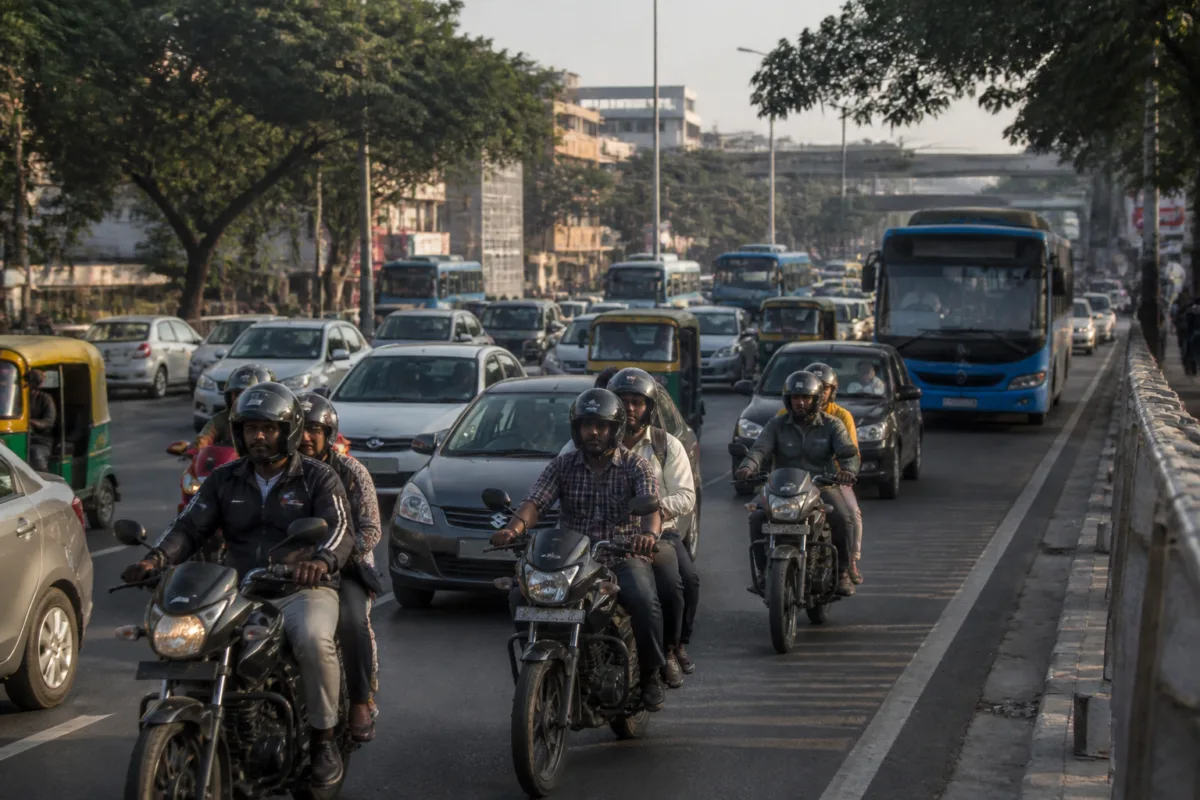
Bike taxi rules in Karnataka face renewed pressure after the Supreme Court dismissed an appeal by the state government, according to a report by Prajavani. The development has prompted the bike taxi association to demand that the transport department stop taking enforcement action under rules it says do not clearly address two-wheelers operating as taxis.
The association said the Supreme Court had upheld the position earlier taken by the Karnataka High Court, which had directed the government to frame rules for bike taxis and avoid coercive action against them. According to the report, the association alleged that the state had not formulated such rules and had instead conducted operations in which bike taxis were seized.
The dispute centres on the use of white registration plates. Existing rules prohibit privately registered vehicles from being used for commercial transport, while commercial cabs and taxis generally operate under requirements linked to yellow plates, permits and other conditions. The association argued that applying this framework directly to two-wheelers used as bike taxis creates a regulatory gap because there is no dedicated framework governing the category.
Mohammed Saleem, president of the bike taxi association, told Prajavani that the government should have created supporting rules rather than using the absence of provisions on yellow plates, permits and uniforms as grounds for registering cases against operators. The association also claimed that many drivers depend on bike taxi work for their livelihoods.
The report carried additional claims from bike taxi drivers that some vehicles had been handed over by auto-rickshaw drivers, even though auto-rickshaws could themselves be registered with aggregator companies for passenger services. These allegations were not independently substantiated in the report.
Uber and Rapido welcomed the reported Supreme Court decision. Uber said bike taxis provide an affordable and convenient travel option in congested cities while offering flexible earning opportunities to drivers. Rapido co-founder Pavan Guntupalli said the decision brought greater clarity to the bike taxi sector in Karnataka and could support first- and last-mile connectivity.
The immediate policy question is whether Karnataka will now establish a clear operating framework for bike taxis. Such rules would need to define vehicle eligibility, registration and permit requirements, driver obligations, passenger safety standards and the responsibilities of aggregator companies. Until those conditions are formally specified, enforcement based on rules designed for other commercial vehicle categories is likely to remain contested, leaving passengers, drivers and operators without a stable regulatory basis.

