


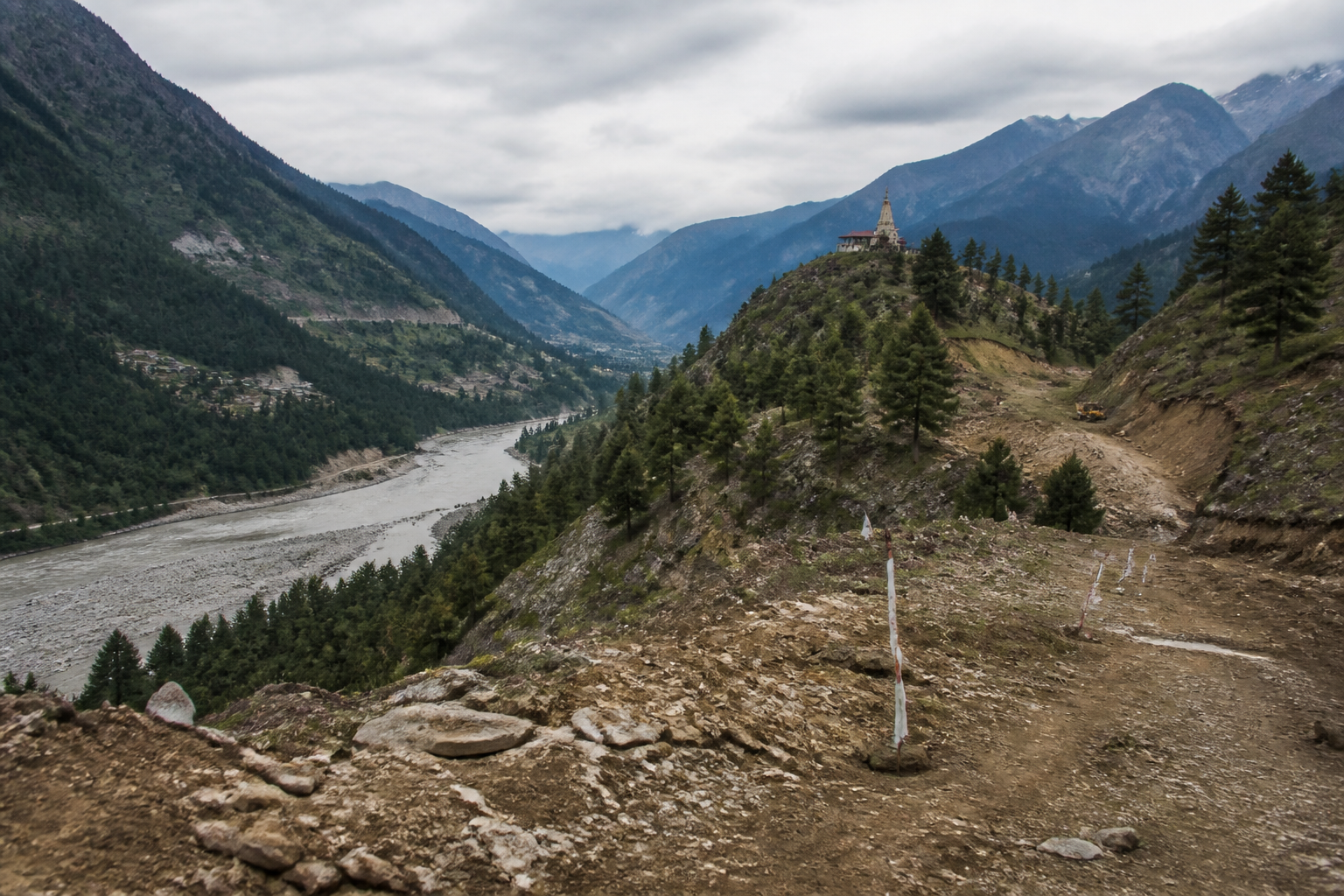
The proposed Bijli Mahadev ropeway in Kullu has moved from a tourism and mobility project to a test of how India plans infrastructure in fragile mountain environments. The National Green Tribunal has sought an additional response from the Himachal Pradesh government after the state said the project area falls under Seismic Zone VI, while the project’s own feasibility report identifies earthquake, landslide and flood risks.
The proposed 2.4-km ropeway is planned from Mohal near Bhuntar to Bijli Mahadev, located at an altitude of about 2,460 metres. National Highways Logistics Management Ltd is developing the project at an estimated cost of Rs 278.6 crore. It is designed to handle up to 36,000 passenger trips a day, with the journey to the mountaintop expected to take about seven minutes.
Those figures indicate the scale of the intervention. This is not simply a small access facility for a hill shrine. A system designed for tens of thousands of passenger trips daily requires towers, stations, foundations, access arrangements and operating systems capable of functioning in difficult terrain. The tribunal’s intervention places the safety and environmental conditions for that infrastructure at the centre of the project’s future.
During a recent hearing, Himachal Pradesh advocate general Anup Rattan told the tribunal that the area now falls under Seismic Zone VI and that the state would file an additional response addressing the issue within four weeks. A bench headed by NGT Chairperson Justice Prakash Shrivastava, with expert member Dr Afroze Ahmad, directed that the matter be listed on December 17.
The seismic classification matters because the tribunal had already flagged the project’s location as vulnerable to earthquakes, landslides and flooding. In an order issued in December last year, the tribunal noted that the Bureau of Indian Standards places the region in Seismic Zone VI and said the planning and execution of the project should take account of the requirements of a high-risk zone.
The proceedings therefore point to a central institutional question: whether risk identification is being converted into enforceable design and construction requirements. The feasibility report has identified the hazards, but the tribunal is seeking further clarity from the state on the seismic implications. The next stage is not merely about acknowledging that the area is vulnerable; it is about demonstrating how the project will be designed, built and operated under those conditions.
The feasibility report calls for special attention to the structural foundations and recommends measures to ensure the stability of ropeway structures in an area prone to landslides. In a mountain project, foundations are particularly important because the ropeway’s alignment depends on structures that must remain stable despite steep slopes, geological instability and extreme weather conditions. The supplied report does not establish what final engineering measures have been approved or whether construction can proceed under a completed risk-management framework.
The proposed valley station introduces a separate flood-management concern. The report places it close to the Beas river and recommends special flood-protection measures. This creates an infrastructure interface between the river and the project’s passenger system. Any disruption at the valley station could affect access to the ropeway, passenger safety and the continuity of operations, although the supplied material does not specify the final protection design or its implementation status.
The project’s public-facing promise is speed. The proposed seven-minute ride would provide a rapid connection to Bijli Mahadev compared with a longer ground journey. Its planned capacity of 36,000 passenger trips a day also suggests an attempt to manage substantial visitor demand through a fixed transport system. But high capacity can increase the consequences of design or operational failures. The planning challenge is therefore to align visitor access with the carrying capacity and hazard profile of the site, rather than treating the ropeway only as a faster way to reach the destination.
The tribunal proceedings also show that the project’s risks are not confined to structural engineering. Questions over forest rights and local consent remain part of the case. The tribunal was earlier told that forest rights had been settled in only four villages, while rights in 14 villages were pending. The two petitioners—the Bijli Mahadev Mandir Committee and Kullu resident Nachiketa Sharma—have also questioned a no-objection certificate purportedly issued by a local panchayat. Defence counsel alleged that the NOC was forged and said a police report on the issue had been attached to the original application.
These disputes add an administrative layer to the physical-risk concerns. A major infrastructure project in a sensitive landscape requires coordination among the project developer, the state government, local institutions, forest-rights holders and communities affected by construction. The supplied report does not establish the final status of the disputed NOC or the pending forest-rights settlements. It does, however, show that the project’s approvals and local institutional processes are being examined alongside its engineering risks.
Construction activity has already generated local opposition. Protests followed the cutting of 67 trees in July, after which the project proponent stopped construction work on the ropeway. The stoppage is significant because it indicates that implementation has not proceeded as an uninterrupted build-out. It also places the project’s environmental clearance, site preparation and construction sequencing under public scrutiny, although the report does not provide the full legal status of the work stoppage.
The case illustrates the limits of treating mountain infrastructure as a conventional transport project. A ropeway can reduce the need for a long road connection in some settings, but it still requires stations, towers, foundations and construction access. It can shift the form of environmental pressure without eliminating it. In Kullu, the tribunal is examining whether the project’s design accounts for a combination of seismic risk, landslide exposure, flood vulnerability, forest-rights questions and tree loss.
The governance framework is consequently distributed. NHLML is the proposed developer, the Himachal Pradesh government is responding before the tribunal, the Bureau of Indian Standards is relevant to the seismic classification cited in the proceedings, and local institutions feature in the dispute over the panchayat NOC and forest rights. The NGT is providing the forum in which these issues are being considered together. The project’s ability to move ahead will depend on how these separate requirements are documented and addressed.
The available numbers make the institutional challenge clear. The ropeway would cover 2.4 km, rise to a destination at about 2,460 metres, cost an estimated Rs 278.6 crore and serve up to 36,000 passenger trips a day. At the same time, 67 trees have already been cut for its development, forest rights remain unresolved in 14 villages according to the tribunal proceedings, and the proposed valley station is close to the Beas river. These are not separate planning details. Together, they define the physical footprint, social obligations and safety requirements of the project.
What remains unresolved is as important as what has been identified. The supplied material does not establish the final seismic design, the completed flood-protection plan, the status of all forest-rights settlements, the outcome of the disputed NOC issue or the conditions under which construction may resume. The state is expected to file an additional response on the seismic issue within four weeks, and the matter is scheduled to return before the tribunal on December 17.
The Bijli Mahadev ropeway therefore stands at a consequential stage. Its stated objectives—improving access and moving large numbers of visitors quickly—are set against a site where the tribunal and the project’s own feasibility report identify multiple hazards. The next response from Himachal Pradesh and the tribunal’s subsequent consideration will determine whether those risks have been translated into specific, credible safeguards before the project advances further.
