


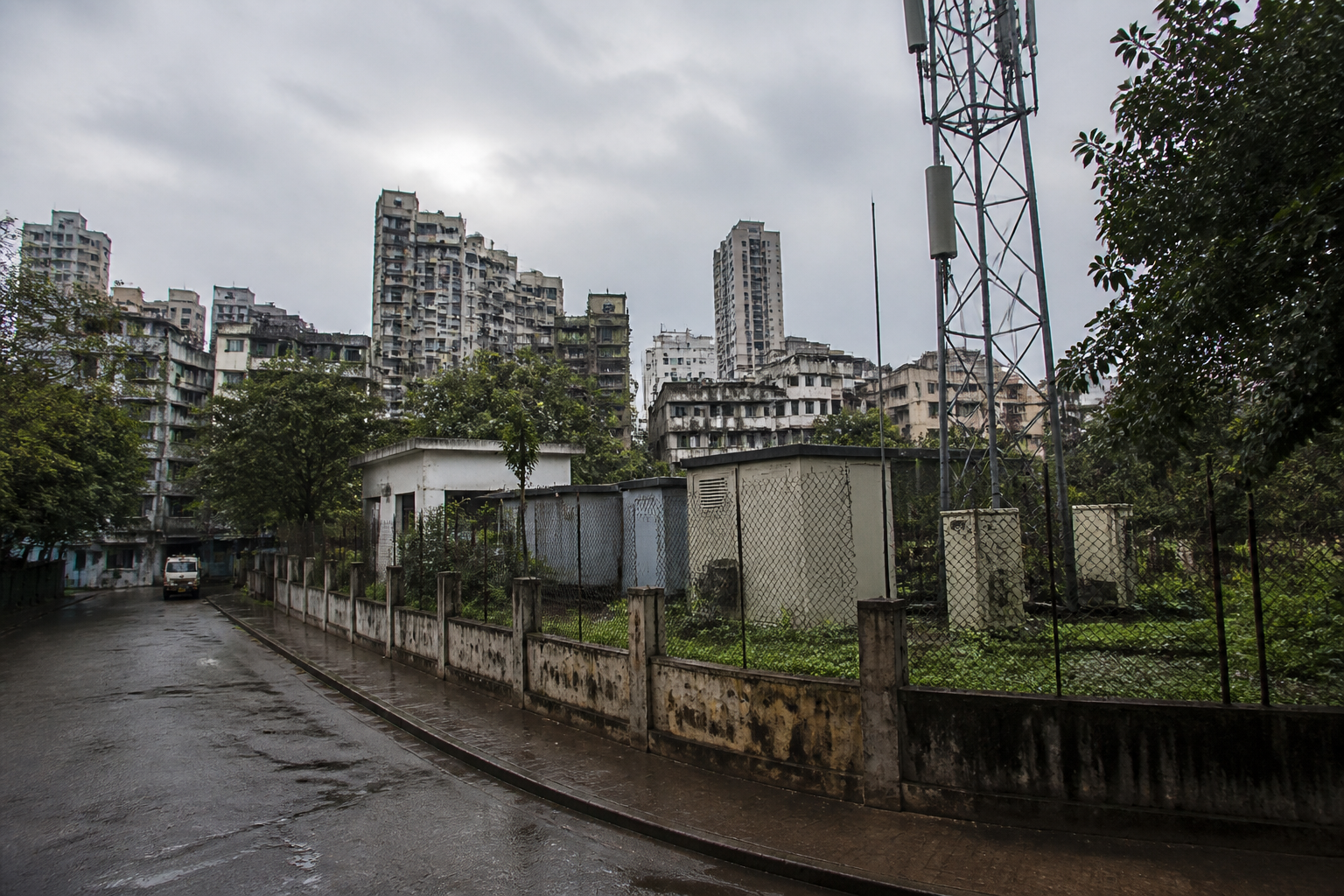
The Bombay High Court’s direction that MTNL pay appropriate compensation for 6,900 square metres of land in Bhayander brings a 37-year-old land and infrastructure dispute back into focus. The case is not only about the value of a parcel acquired for a public telecommunications facility; it also reveals how overlapping land laws, administrative reversals and delayed institutional decisions can leave property owners without either their land or compensation for decades.
According to the report by Loksatta – Mumbai, the land was taken into MTNL’s possession on 17 April 1989. The landowners have not received compensation since then. The court has directed that compensation be determined using land rates applicable in 2005, the year in which the petition was filed. The amount will be fixed by the state government, and the court has said that MTNL must pay the landowners because it has retained possession of the property.
The dispute began before the current litigation. Chirag Shashikant Shah and others purchased the land from its then-owner, Evelyn Paul Perera, in 1982. That same year, the state government issued a notification to acquire land under the Land Acquisition Act. In 1984, the competent authority under the Urban Land (Ceiling and Regulation) Act, acting through the deputy collector, declared 29,939 square metres of the petitioners’ land to be surplus.
The 6,900-square-metre portion at the centre of the case was separately acquired for MTNL in civil proceedings. Government officials had stated that Rs 9.13 lakh was deposited with the special land acquisition officer for the acquisition. The landowners agreed before the Thane civil court to transfer the land identified for MTNL. That consent, however, was conditional on lifting the status quo order relating to the remaining land declared surplus under the urban land ceiling law.
This distinction became central to the dispute. The owners were not dealing with one straightforward acquisition process. Two legal routes were involved: acquisition under the Land Acquisition Act and proceedings under the Urban Land (Ceiling and Regulation) Act. Both laws were subsequently repealed, but the consequences of the earlier proceedings continued to shape the owners’ claim and the government’s position.
In 1992, the landowners challenged an appellate authority’s decision. That decision held that they could claim compensation only under the Urban Land Ceiling Act and not under the Land Acquisition Act. The dispute therefore moved from the question of whether the land had been taken to the question of which legal framework, if any, required compensation.
The administrative position changed again in 1999. The special land acquisition officer returned Rs 9.08 lakh deposited by MTNL after stating that acquisition under the Land Acquisition Act was no longer necessary. The return of the money did not resolve the practical position on the ground: MTNL had already taken possession of the 6,900 square metres.
In 2003, government officials removed the 6,900-square-metre parcel from the list of surplus land under the Urban Land Ceiling Act. Two years later, the petitioners approached the High Court seeking either the return of the land or appropriate compensation. The proceedings thus involved a prolonged mismatch between legal classification, administrative action and physical possession.
The compensation question also raises a basic constitutional issue. The court took note of the landowners’ constitutional right to property and observed that if they were to be deprived of the land, they had to receive compensation in accordance with law. The court also noted that the relevant authorities and MTNL had been aware from the beginning that compensation would be necessary if the owners were denied possession.
The case illustrates the institutional difficulty created when a public project advances before the acquisition process is fully completed. MTNL obtained possession for its stated purpose, while the payment mechanism remained disputed across multiple proceedings. The amount initially deposited was later returned, and the owners were left to pursue either restoration of the land or compensation through litigation.
That sequence matters for cities because public infrastructure depends on land being made available through legally complete and administratively coordinated processes. A public agency may require land for a telecom facility, transport project, utility installation or other civic purpose. But when possession, title, acquisition authority and payment are handled through separate proceedings, the administrative process can outlast the project itself. In this case, the report does not establish whether the facility continues to operate on the land, but it does establish that MTNL retained possession while the compensation dispute remained unresolved.
The state government’s role in fixing compensation at 2005 rates adds another layer. The petition was filed in 2005, and the court has directed that the land value from that year be considered. The report does not provide the present market value of the parcel, the valuation method to be used, or the final amount payable. It therefore does not support an estimate of the compensation liability. What is clear is that the court rejected the idea that the owners could remain without land and without payment merely because the legal route to acquisition had changed.
The case also shows how the repeal of legislation does not automatically settle the disputes created under that legislation. The Land Acquisition Act and the Urban Land Ceiling Act were both later repealed, but the petitioners’ claims arose from actions taken when those laws were in force. Administrative decisions made under the earlier framework continued to determine whether the land could be retained, returned or compensated.
The court had earlier directed MTNL to deposit Rs 5 lakh in connection with the landowners’ compensation claim. That interim deposit did not constitute final settlement. The latest direction places responsibility for compensation on MTNL and requires the state government to determine the amount based on the specified 2005 rates.
For landowners, the case reflects the consequences of losing possession before compensation is conclusively settled. For public authorities, it underlines the risk of treating acquisition as complete when the financial and legal obligations remain contested. For urban infrastructure agencies, it demonstrates that the cost of delayed land administration can eventually return as a substantial liability, even when the initial project or facility was created decades earlier.
The Bhayander dispute therefore extends beyond a single compensation claim. It connects the constitutional protection of property, the mechanics of land acquisition and the governance of infrastructure built on acquired land. The court’s order confirms the immediate principle that continued possession by MTNL cannot be separated from the obligation to compensate the owners. The next formal step is the state government’s determination of the compensation amount using the 2005 land rates, after which the financial consequences of the decades-old acquisition will become clearer.
